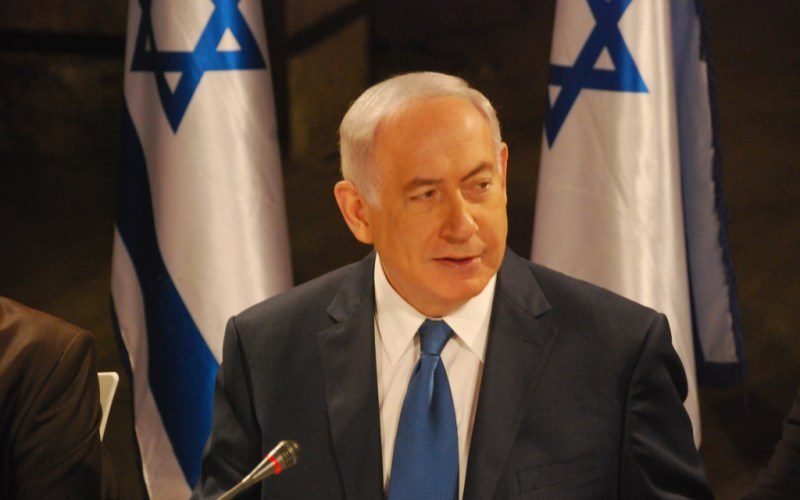
Israeli prime minister Benjamin Netanyahu is facing calls to step aside after exit polls predicted an election deadlock between his and a rival bloc.
Exit polls by major television networks showed neither Netanyahu nor his main rival Eisenkot secured the 61 seats needed for a parliamentary majority. Gadi Eisenkot, leader of the Yashar party and the rival “change” bloc, told party workers in Tel Aviv they “have made history”.
“This morning the people of Israel went to a referendum on the leadership that will lead Israel in the coming years. Tonight we received an answer. The public decided in favour of change,” he said.
With actual results still being counted, the exit polls indicated that Netanyahu’s bloc won 50 seats, the opposition won 52-53 and Arab parties won 17-18. The strong showing by Arab-led parties could allow them to decide the next prime minister, but both blocs have until now refused to partner with them.
Netanyahu, addressing a crowd in Jerusalem, said the election provided Israel a “historic opportunity” to eliminate the “Iranian threat” as he called for the formation of a “strong, right-wing” government.
Exit polls project Israel’s ultra-Orthodox parties, Shas and United Torah Judaism, to win 12-13 seats.
They may find themselves playing the role of kingmakers. If they do, the issue of military service will be crucial.
Also known as Haredim, the ultra-Orthodox have been largely exempted from military service, which they say would compromise their way of life of studying religious scripture.
But the exemption is a source of increasing anger.
Nearly all anti-Netanyahu parties have vowed to pass a new law that would see more Haredim obliged to serve.
Ahead of the election, Netanyahu maintained his political alliance with the ultra-Orthodox parties by keeping the exemption.
But it is unclear whether the ultra-Orthodox parties would join Eisenkot’s bloc or continue their coalition with Netanyahu.
Both Netanyahu and Eisenkot oppose an independent Palestinian state and appear to have ruled out working with Israel’s Arab parties.
Arab Israeli citizens, mostly of Palestinian heritage, live within Israel’s borders and not in the occupied West Bank or in Gaza, which are claimed by Palestinians as part of a future independent state.
They make up about 21% of Israel’s population of 10 million and have traditionally voted at lower rates than Jewish Israelis.
The community is represented by parties including the Joint List and Ra’am.
Netanyahu, in a last-ditch push on Tuesday to get his supporters to the polls, warned of surging Arab voter turnout.
Israeli Arab politicians denounced the tactic as racist and inflammatory.
Minor shouting ‘Allahu Akbar’ attacks guard outside Israeli embassy in Serbia
Serbian police said this morning an unidentified assailant attacked a guard with knives outside the Israeli Embassy in Belgrade and was killed just after midnight.
Interior minister Ivica Dacic said that police were treating the incident as a “terrorist attack” and had raised the terror threat to the highest level and stepped up police presence at key locations.
Dacic said that “a minor, so far unidentified … shouting Allahu Akbar, attacked the member of Gendarmerie and attacked him with two knives”.He added that the police officer “liquidated” the assailant in “self-defence” and was lightly wounded.
Dacic said that Serbia’s security agencies had been monitoring the attacker, who he said was a supporter of the Islamic State group. Dacic said that “he kept the black flag in support of the Islamic State on his Instagram” account.