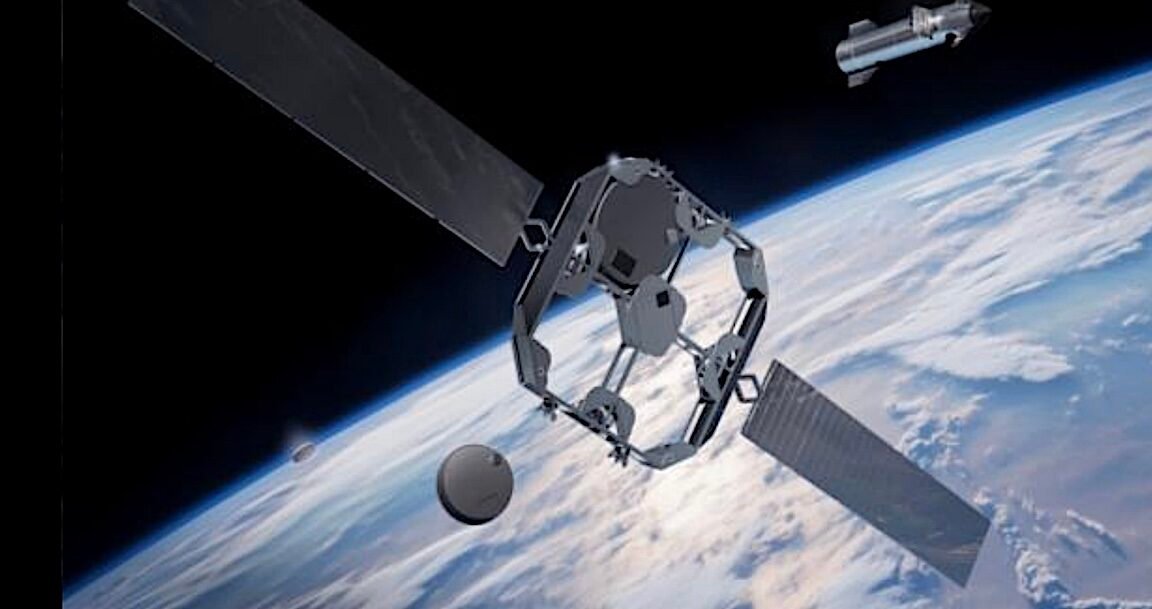
A SpaceX Falcon 9 rocket is set to launch Tuesday to test a new reentry vehicle designed to deliver cargo anywhere in the world from low-Earth orbit.
The company developed the new saucer-shaped reentry pod, called Starfall, under a veil of secrecy. Its purpose is to support the “transport and delivery of goods through space,” according to an environmental assessment published by the Federal Aviation Administration last month.
The first demonstration of the Starfall vehicle is scheduled for Tuesday morning. At least one of the Starfall vehicles will ride into orbit atop a Falcon 9 rocket from Cape Canaveral Space Force Station, Florida, perhaps alongside another undisclosed payload. After circling the planet two times, the Falcon 9’s upper stage will release Starfall to reenter the atmosphere and target a parachute-assisted splashdown in the Pacific Ocean around 800 miles west of California.
That is according to airspace and maritime warning notices telling pilots and sailors to steer clear of the Starfall splashdown zone.
The mission has a one-hour launch window beginning at 6:43 am EDT (10:43 UTC) Tuesday. SpaceX’s official webpage for the mission includes a timeline of key events during the launch, but it is devoid of any more information about the payload or the exact sequence of events for the Falcon 9’s upper stage. In its public messaging, SpaceX is effectively treating the launch like it would a classified mission for the US government.
From here to anywhere
What we do know about Starfall primarily comes from the FAA’s environmental assessment. In that document, the FAA writes that Starfall will “enable point-to-point delivery of critical cargo through space on rapid timelines” and provide access to space for commercial in-space manufacturing, a nascent market that, so far, is largely geared toward pharmaceuticals. Starfall could bring those materials back to Earth for commercial use. A private company named Varda Space Industries is already working in this area.
The FAA’s environmental review approved SpaceX’s proposal for two Starfall reentry demonstrations. It did not specify if these demos would happen on one or two missions. SpaceX intends to recover the vehicle, including parachutes and heat shields, “to the to the maximum extent practicable,” the FAA said.
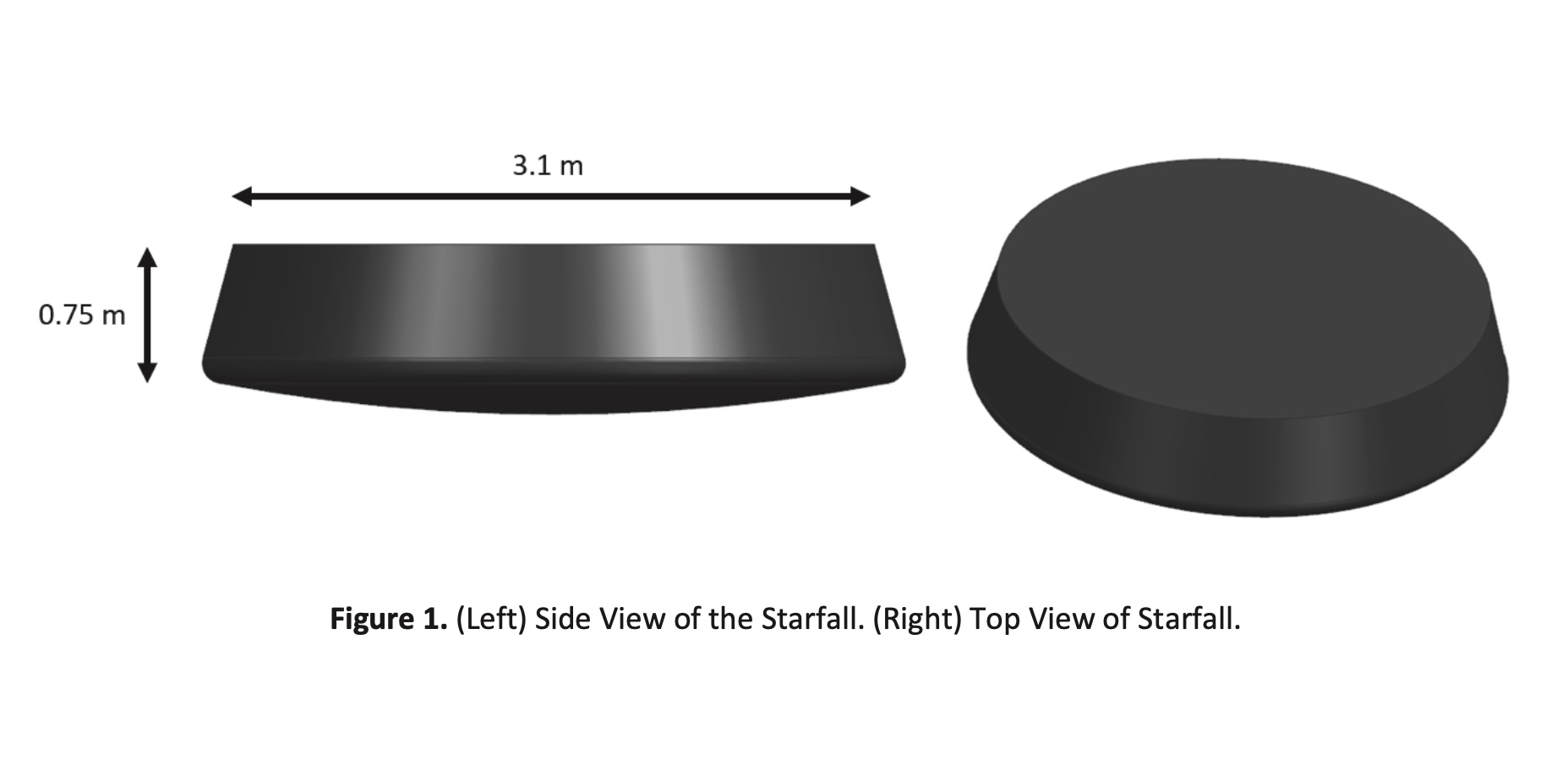
The Starfall vehicle is cylindrical in shape, with a diameter of 10.2 feet (3.1 meters) and a height of 2.5 feet (0.75 meters). Starfall weighs approximately 4,600 pounds (2.1 metric tons) with capacity for about 2,200 pounds (1 metric ton) of payload, for a total weight of 6,800 pounds (3.1 metric tons). Designed exclusively for cargo, Starfall is smaller than SpaceX’s human-rated Crew Dragon spacecraft used for ferrying astronauts to and from the International Space Station.
The first Starfall Demo mission will spend a few hours in low-Earth orbit, but the vehicle could also fly on shorter suborbital trajectories after launching on either Falcon 9 or the much larger Starship rocket. This version of Starfall is not capable of de-orbiting itself, but instead relies upon its launch vehicle to guide it back into the atmosphere. After separating from its rocket carrier, the disc-shaped vehicle uses compressed nitrogen gas to point its heat shield in the right direction for reentry.
So who might use something like Starfall? The US military is one obvious answer. The Pentagon is already working with SpaceX on a concept named Rocket Cargo or Point-to-Point Delivery, which would use Starship to deliver massive loads of equipment and supplies to far-flung locations in less than an hour. Starship is an enormous vehicle, nearly 20 stories tall and 30 feet wide, that must land at prepared sites. Starfall could prove to be a more versatile option for lighter deliveries.
The military has also signed agreements with Blue Origin, Rocket Lab, and Anduril for studies and development of technologies for global cargo delivery from space. Notwithstanding Starship, which is still undergoing experimental flight tests, SpaceX may have an early advantage with the Starfall delivery vehicle.