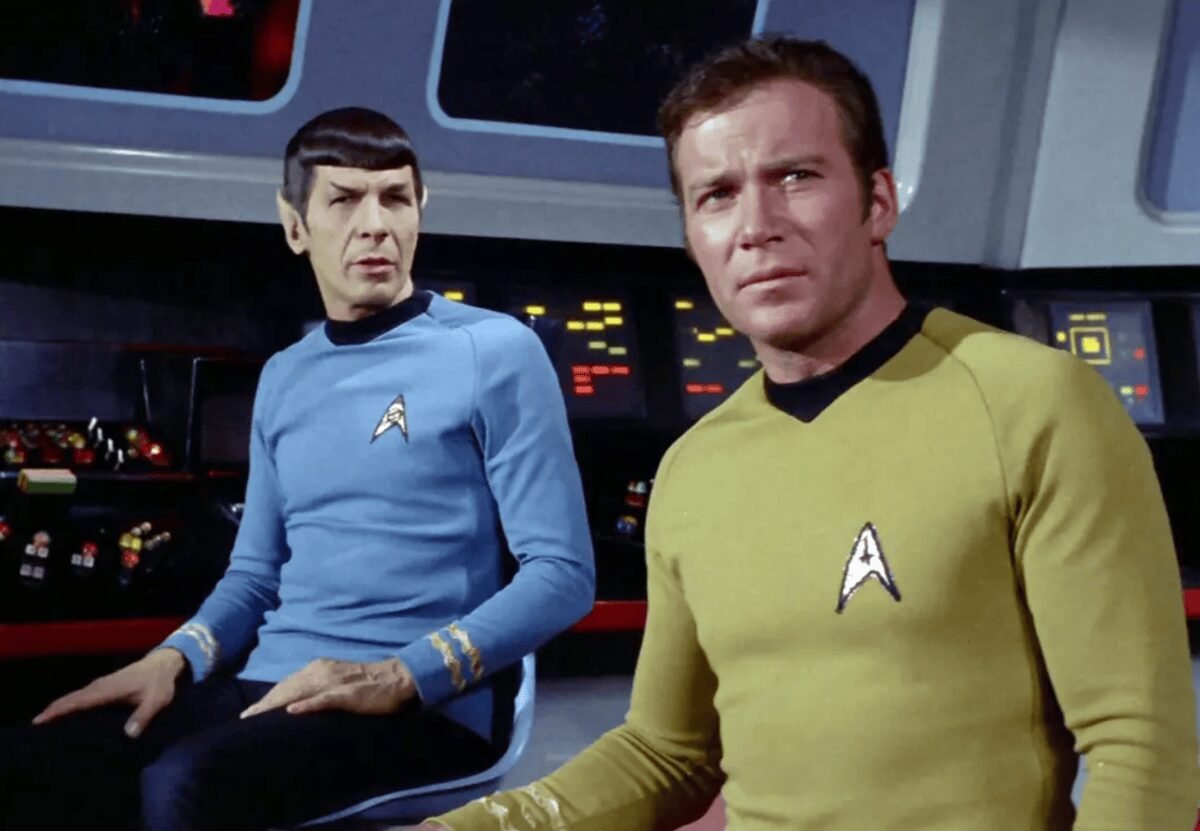
Star Trek almost lost one of the most famous looks in television history.
William Shatner has revealed that NBC executives originally wanted Leonard Nimoy’s Spock to ditch his signature pointed ears — a change that could have made the legendary sci-fi franchise look very different.
Shatner, who played Captain James T. Kirk on the original Star Trek series, opened up about the surprising demand as the franchise marks 60 years since its television debut.
“The first thing they said with Spock is, ‘Get rid of the ears,’” the 95-year-old actor told Interview Magazine.
But the people behind Star Trek refused to give in.
“And bless our management, they said, ‘No, we’re not getting rid of the ears,’” Shatner recalled.
The decision turned out to be a smart one.
Spock’s pointed Vulcan ears became one of the most recognizable features in science-fiction history, helping Leonard Nimoy’s character become a pop-culture icon.
The look was later carried on by Zachary Quinto when he played Spock in the blockbuster Star Trek reboot movies.
Shatner said the unusual makeup and strange characters were exactly what made Star Trek feel so different when it first appeared on television in the 1960s.
He recalled being fascinated by the original pilot’s bizarre imagery, including unusual creatures, oversized heads and elaborate makeup.
“It was intriguing from many points of view,” Shatner said.
According to the veteran actor, those strange details helped audiences accept the idea that almost anything could exist somewhere in outer space.
“You can have weird people coming out of a rock and saying, ‘These are the people who live on this planet,’ and accept it because you don’t know who’s living on that planet in the sky,” he explained.
Shatner believes that sense of mystery and imagination helped turn Star Trek into a worldwide phenomenon.
“That science-fiction magic was a big propellant in the popularity of Star Trek,” he said.
He certainly has a point.
What began as a television series in 1966 eventually exploded into one of the biggest entertainment franchises in the world.
Star Trek has since produced numerous television spinoffs, blockbuster movies, books, comics, video games, toys and massive fan conventions attended by generations of devoted “Trekkies.”
The franchise is still expanding today, with newer shows and reboots continuing to bring the USS Enterprise and its characters to younger audiences.
Star Trek: Strange New Worlds creator Akiva Goldsman has said part of the franchise’s lasting appeal comes from its hopeful vision of the future.
“I think Star Trek reflects the world as we wish it was,” Goldsman told The Hollywood Reporter.
He said the franchise continues to offer audiences the idea that humanity can eventually overcome its biggest problems.
And after six decades of Star Trek, it is hard to imagine Spock without those famous ears.
But if NBC executives had gotten their way, one of television’s most recognizable characters may have looked very different.