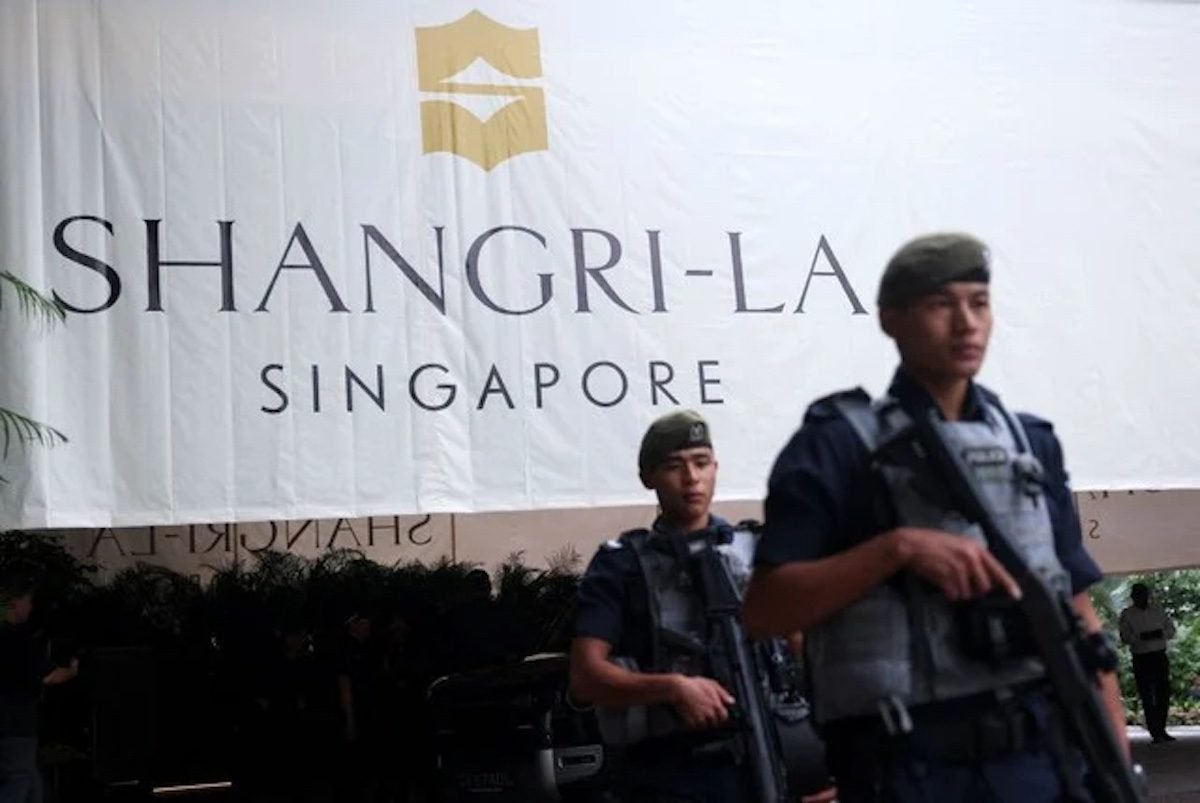
Under Singapore’s increasingly sweltering skies, the lobby of the Shangri-La Hotel in late May 2026 offered a revealing snapshot of a world edging toward deeper fragmentation.
The 23rd edition of the Shangri-La Dialogue, held from May 29 to 31, brought together representatives from 44 countries, including dozens of defense ministers and military chiefs who shared remarkably similar concerns.
In the quiet corridors between sessions, an unspoken realization hung in the air: the security architecture that has underpinned Asia’s stability for decades is showing signs of profound structural strain.
Diplomacy is no longer guided primarily by shared norms and collective aspirations, but increasingly by calculations of self-reliance and strategic resilience.
The forum unfolded against an exceptionally volatile global backdrop. In Eastern Europe, the war in Ukraine has entered its fourth year and continues to consume Western military resources on an enormous scale.
Meanwhile, escalating tensions in the Middle East, particularly the direct confrontation involving the United States, Israel and Iran, have generated economic shockwaves across Asia.
Partial disruptions in the Strait of Hormuz have affected crude oil and naphtha supplies, forcing petrochemical industries throughout the region to operate under severe pressure. The crisis has underscored a stark reality: the distinction between peacetime stability and emergency contingency planning has become increasingly blurred.
The opening address by Vietnam’s President and Communist Party General Secretary To Lam provided the intellectual framework for many of the discussions that followed. He warned of three overlapping crises: the erosion of the international order, the fragmentation of development models through disrupted supply chains, and a growing crisis of strategic trust.
According to To Lam, trust has become the “silent killer” of interstate relations. When international law is applied selectively and power increasingly dictates outcomes, middle and smaller powers become particularly vulnerable to coercion.
His concerns echoed a broader sentiment across Southeast Asia. Many governments are increasingly uncertain about the durability of American security commitments. Despite repeated assurances regarding a “free and open Indo-Pacific,” regional policymakers see a United States frequently distracted by crises elsewhere, occasionally delaying critical military support even to close partners.
The resulting question has become impossible to ignore: should Asia spend less time debating security and more time building military capabilities? Among defense officials, a new saying has begun to circulate: perhaps Asia now needs fewer dialogues and more warships and submarines.
US pragmatism, Chinese distance
This changing strategic environment was reflected clearly in the security doctrine presented by the US. Represented by US Defense Secretary Pete Hegseth, Washington no longer frames its regional role primarily in terms of idealistic commitments or universal values.
Under President Donald Trump, American policy has increasingly embraced what officials describe as “pragmatic idealism.” The message was straightforward. The era in which the US subsidized the defense of wealthy allies is over. Washington now expects burden-sharing and insists that it seeks partners rather than dependents.
Calls for Asian allies to raise defense spending toward 3.5 percent of GDP have become a central pillar of America’s effort to balance China’s growing military influence in the Indo-Pacific. Yet Washington’s strategy continues to display significant ambiguity.
Following the Trump–Xi summit in Beijing earlier in May, Hegseth adopted a noticeably softer tone toward China. Most strikingly, Taiwan — long a focal point of US strategic messaging — was absent from his keynote remarks, a sharp departure from previous years.
This transactional approach has fueled regional concerns that security commitments could eventually become bargaining chips in broader economic negotiations with Beijing. For many Asian governments, uncertainty regarding American priorities has become almost as consequential as China’s rise itself.
China, meanwhile, approached the Dialogue with calculated restraint. For a second consecutive year, Beijing chose not to send Defense Minister Dong Jun, instead dispatching a delegation from the National Defense University led by Major General Meng Xiangqing.
Though lower in political profile, the delegation remained highly active, using question-and-answer sessions to challenge Western narratives while promoting China’s Global Security Initiative, which emphasizes inclusive security arrangements over exclusive military blocs.
Former Vice Foreign Minister Cui Tiankai responded directly to Washington’s burden-sharing demands. How the United States manages its alliances, he argued, is fundamentally its own business. However, he warned that those alliances should not be structured to target third parties—particularly China.
From Beijing’s perspective, a genuinely free and open region must be open to all states rather than serving as a vehicle for any single power’s strategic dominance.
Japan’s military rise, Indonesia’s strategic tightrope
Ironically, the combination of China’s assertiveness and America’s inconsistencies has accelerated Japan’s security transformation.
Under Prime Minister Sanae Takaichi, Tokyo is increasingly positioning itself as an independent pillar of regional defense in the Western Pacific. Defense Minister Shinjiro Koizumi firmly rejected Chinese accusations that Japan is reviving militarism.
Instead, he argued that strengthening defense capabilities is a sovereign necessity, enabling nations to preserve their freedom of choice in an increasingly coercive international environment.
Japan’s revised arms-export framework, expanded in April 2026, has already enabled a more ambitious defense diplomacy.
One notable example is Tokyo’s proposal to export advanced Mogami-class frigates to New Zealand through a trilateral framework involving Australia. Such initiatives signal Japan’s evolution from a logistical supporter of American strategy into a central security connector across the region.
Indonesia, however, faces a far more delicate balancing act. China remains Indonesia’s largest trading partner and one of its most important sources of foreign investment. At the same time, maritime disputes in the South China Sea continue to push Jakarta toward deeper security cooperation with Washington.
Indonesia’s delegation at this year’s Shangri-La Dialogue was led by Deputy Defense Minister Donny Ermawan Taufanto, reflecting the importance Jakarta attached to the gathering. Indonesia’s strategy was evident in the major defense cooperation agreement signed with the US in April 2026, focused on military modernization and joint exercises.
Yet closer defense ties also carry geopolitical risks. Reports that Washington seeks broader military overflight access across Indonesian airspace have attracted significant attention in Beijing. Indonesian military officials have openly discussed scenarios in which a Chinese blockade of Taiwan could trigger a US-led counter-blockade through the Strait of Malacca.
Such a confrontation would place Indonesia under extraordinary pressure, forcing difficult choices with potentially severe economic consequences. The possibility underscores why Jakarta must continue to strengthen both its military capabilities and its diplomatic autonomy.
The rise of underwater minilateralism
Asia’s security landscape in 2026 is increasingly shaped by rapidly rising defense expenditures. According to estimates presented during the Shangri-La Dialogue, total military spending across Asia is approaching US$630 billion, with China, Japan, South Korea, and the Philippines all increasing defense budgets.
Yet these ambitions collide with domestic fiscal realities. Many Southeast Asian governments face growing pressure from energy price shocks linked to Middle Eastern instability caused by the Iran war.
Indonesia, for example, has been forced to allocate billions of additional dollars to energy subsidies, reducing resources available for conventional military procurement. As a result, investment is increasingly shifting toward more affordable asymmetric capabilities, including autonomous aerial and maritime systems.
These budgetary constraints, combined with frustrations over slow-moving multilateral institutions, have encouraged the rise of tactical minilateralism. Rather than relying exclusively on large formal alliances, countries are building flexible networks of overlapping partnerships.
Examples include the so-called “SQUAD”, comprising the United States, Japan, Australia and the Philippines, as well as expanding defense-industrial cooperation between India and Southeast Asian states through systems such as the BrahMos missile program. Such arrangements reflect a growing reluctance among middle powers to depend entirely on American security guarantees.
Perhaps the clearest manifestation of this trend emerged on May 30 with the launch of the Guiding Principles for Underwater Infrastructure Defence Exchanges (GUIDE) initiative. Spearheaded by Singapore and endorsed by 17 countries from multiple regions, GUIDE seeks to protect undersea fiber-optic cables and energy infrastructure from physical sabotage and cyber threats.
The initiative addresses a critical vulnerability. More than 95% of global data traffic travels through submarine cable networks, making them indispensable to both economic activity and national security. Notably, neither the US nor China participated in the initiative’s launch. Their absence appears deliberate.
By excluding the two superpowers, participating states sought to prevent the framework from becoming another arena for great-power rivalry. GUIDE demonstrates that middle and smaller powers are increasingly willing to cooperate independently to safeguard shared strategic interests.
Shangri-La Dialogue 2026 ultimately revealed a profound transformation in Asia’s security architecture. The forum showed it is no longer merely a venue for diplomatic rhetoric or abstract discussions about regional stability. Behind closed doors, it has become a marketplace of strategic bargaining, defense networking and quiet diplomacy aimed at preventing dangerous military miscalculations.
The future of Asian stability will not rest on a single alliance or dominant power. Instead, it is likely to depend on a dynamic balance maintained by increasingly capable middle powers determined to preserve their autonomy, strengthen their defenses and avoid becoming tools of competitive superpower blocs.
Ronny P. Sasmita (PhD) is senior international affairs analyst at the Indonesia Strategic and Economic Action Institution, a Jakarta-based think tank.