Processing traumatic experiences is an essential part of recovery. Yet some Jews are finding themselves dismissed or alienated by the very mental health professionals they turn to for help.
Three years after October 7, some Jewish psychologists in the United States say they feel alienated from the professional and social communities they once counted on for understanding and support.
In response, some are building professional communities of their own.
Lenore Walker is an 84-year-old licensed clinical and forensic psychologist. On October 8, 2023, the day after thousands of Hamas-led terrorists infiltrated Israel, murdering some 1,200 people and kidnapping more than 250 others, “there was a round of unity amongst the people I know and that I’m connected with,” Walker recalled.
But that unity did not last, and her world quickly began to split.
“The split became very clear in the mental health field, where I spent so much time … I’ve always been a feminist and a very strong women’s advocate. I don’t have a place in that community now because I don’t agree with their views about Israel. And then there’s a split for me in the Democratic Party, which I have always been part of, and they don’t agree with my views about Israel, and yet I’m not a Republican … I don’t fit anywhere.”
Walker soon discovered that many other Jewish psychologists felt the same way. In 2023, she helped establish the Association of Jewish Psychologists to give herself and her peers a professional community where they could feel accepted.
I founded a new community when my communities were not available to me, and I think that has kept my mental health pretty stable
“I founded a new community when my communities were not available to me, and I think that has kept my mental health pretty stable,” Walker told The Media Line on the sidelines of the Voice of the People conference, held last week in Budapest. “But I’m very sad at the losses. I’ve lost a lot of very close friends, including friends in the disadvantaged communities and the minority communities, who I have been very fortunate to be able to help, and yet now they’re rejecting us. So that’s been painful, and I’ve had to deal with that.”
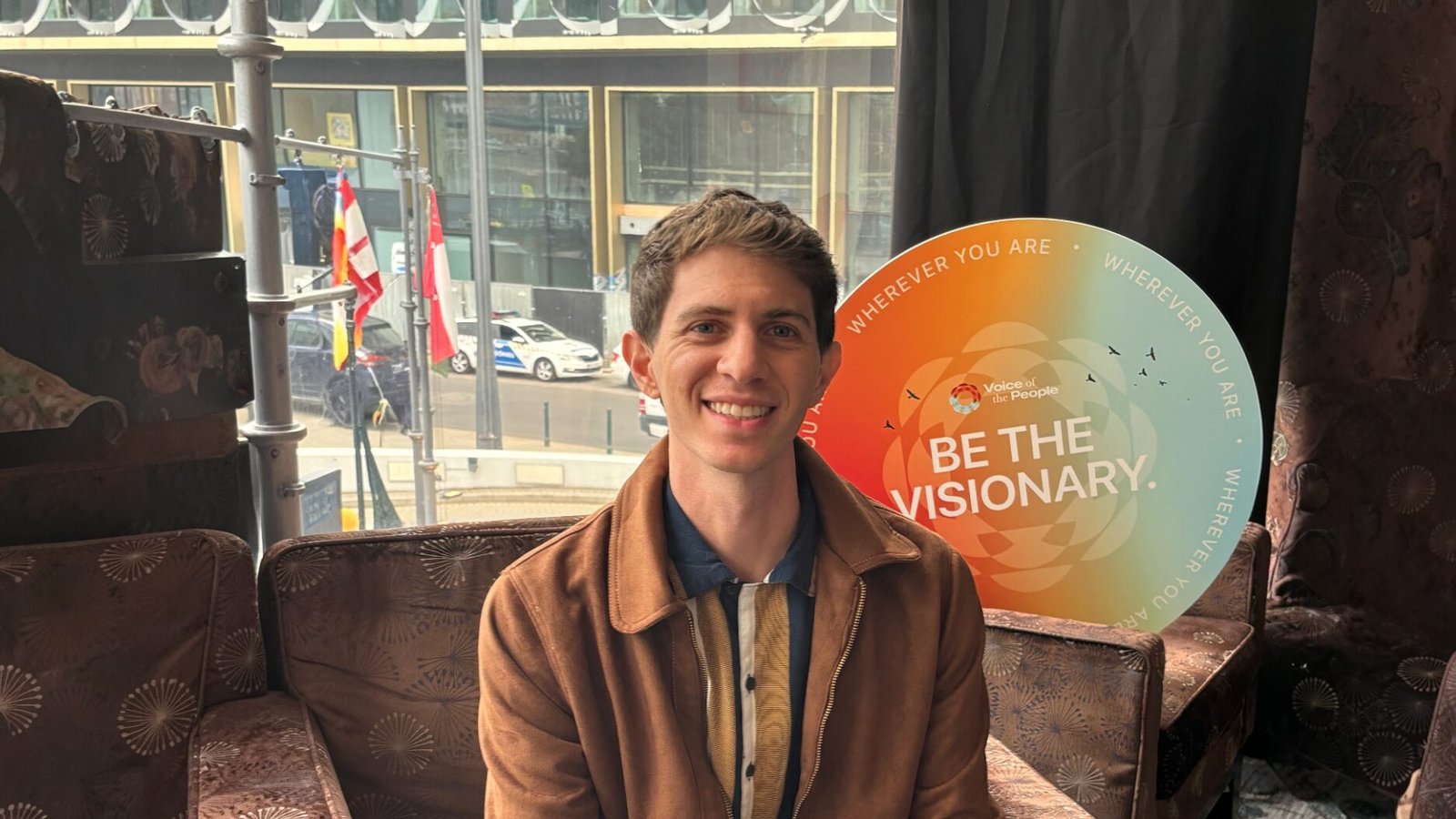
Another psychologist, Dr. Daniel Balva, said the concept of “traumatic invalidation” describes what many Jews in the Diaspora have been experiencing since October 7.
“They’re trying to speak up and share about the trauma that they’ve experienced … but so much of the rest of the world invalidates the trauma that Jews have experienced, and so that compounds the trauma that one is already facing,” he said.
So much of the rest of the world invalidates the trauma that Jews have experienced, and so that compounds the trauma that one is already facing
Research has shown that connecting to faith and community can increase resilience. But when Jews face exclusion because they embrace their Jewish identity, that connection becomes more complicated.
As Balva explained, “not every Jew is making that decision to connect with their Jewish identity at the risk of losing” their connection to professional, faith, and personal networks.
Before October 7, Balva, 34, who lives in Florida, did little work specifically with the Jewish community. Instead, he focused primarily on treating US military veterans. He believed the Jewish community had sufficient resources and that his efforts were better directed elsewhere.
After the Hamas massacre, he began to reconsider. As he witnessed Jewish patients and mental health professionals becoming increasingly marginalized, he felt compelled to get involved.
Today, Balva offers free telecounseling to new immigrants in Israel and lone soldiers. He also works with Gesher Community Care, providing therapy to Jews across the United States and Canada who have struggled to find support from other providers.
“There’s so much anti-Semitism and anti-Zionism within the mental health fields that it’s really hard to find a Zionist provider,” Balva told The Media Line at the Voice of the People conference. “There have been a lot of instances of Jews who have had really incredibly distressing experiences with their providers when talking about antisemitism that they’ve experienced …”
There’s so much anti-Semitism and anti-Zionism within the mental health fields that it’s really hard to find a Zionist provider
Balva said Gesher connects clients with Zionist therapists. He also works with Psychologists Against Antisemitism, which advocates against anti-Semitism and promotes research on anti-Semitism and anti-Zionism within the profession. Balva said he never imagined this kind of work would be necessary before October 7. But the past three years changed his perspective. “Seeing the need within the Jewish community led me to say, if we’re not supporting our own people, then who else will?”
He explained that being able to process traumatic experiences is an essential part of recovery. Yet, he said, some Jews who have access to mental health services are finding themselves dismissed or alienated by the very professionals they turn to for help.
For those individuals, the loss of support can extend far beyond the therapy room.
“They can’t turn to communities; they can’t turn to friends or peers who aren’t there for them. They can’t even turn to their mental health providers, and then there’s the sense of continuous traumatic stress as well,” Balva said.
He explained that while Israelis continue to live on the front lines of an unpredictable security situation, Jews in the Diaspora face growing anti-Semitism and anti-Zionism. Although their circumstances differ, both populations can experience a persistent sense of insecurity.
Balva added that many of his Jewish and Israeli colleagues working in private practice or university counseling centers have also faced pushback because of their identities.
Dr. Milton Wainberg, a professor of clinical psychiatry at Columbia University who also attended the Voice of the People conference, expressed similar concerns. He said that for decades, life had been relatively calm for Jews in the United States and, to some extent, Israelis. The sudden shift following October 7 was therefore particularly unsettling, leaving many feeling that their world had changed almost overnight.
“The Jewish community is actually living in trauma in the United States,” Walker said.
She argued that even some Jews who have embraced the pro-Palestinian movement may be responding to trauma and the fear of losing their social communities.
The Jewish community is actually living in trauma in the United States
According to Walker, some individuals who identify with what she called the “Free Palestine genocide bandwagon” may feel that maintaining their relationships requires distancing themselves from their Judaism or Zionism.
“They’re not thinking clearly,” she said. “They’re not using their own common sense or intellectual ability, but that keeps their anxiety down.”
For Balva, the question now is how the Jewish community responds.
He described October 7 as a wake-up call, exposing anti-Semitism and anti-Zionism that he believed had long existed but received insufficient attention.
After the massacre, he said, he came to believe that the Jewish community could no longer assume others would address its needs.
“There are genuine concerns that the Jewish community is facing, and if we don’t address them, then who will? We have to do our own work, and I think that’s why supporting the Jewish community is so important. Because if we do burn out, then no one’s going to fight for us.”
He called for greater cooperation between Israel and the Diaspora in addressing trauma, emphasizing that both communities have experiences and expertise to share.
“We do a disservice when we don’t work together,” Balva said.