<
article id=”post-952853″>
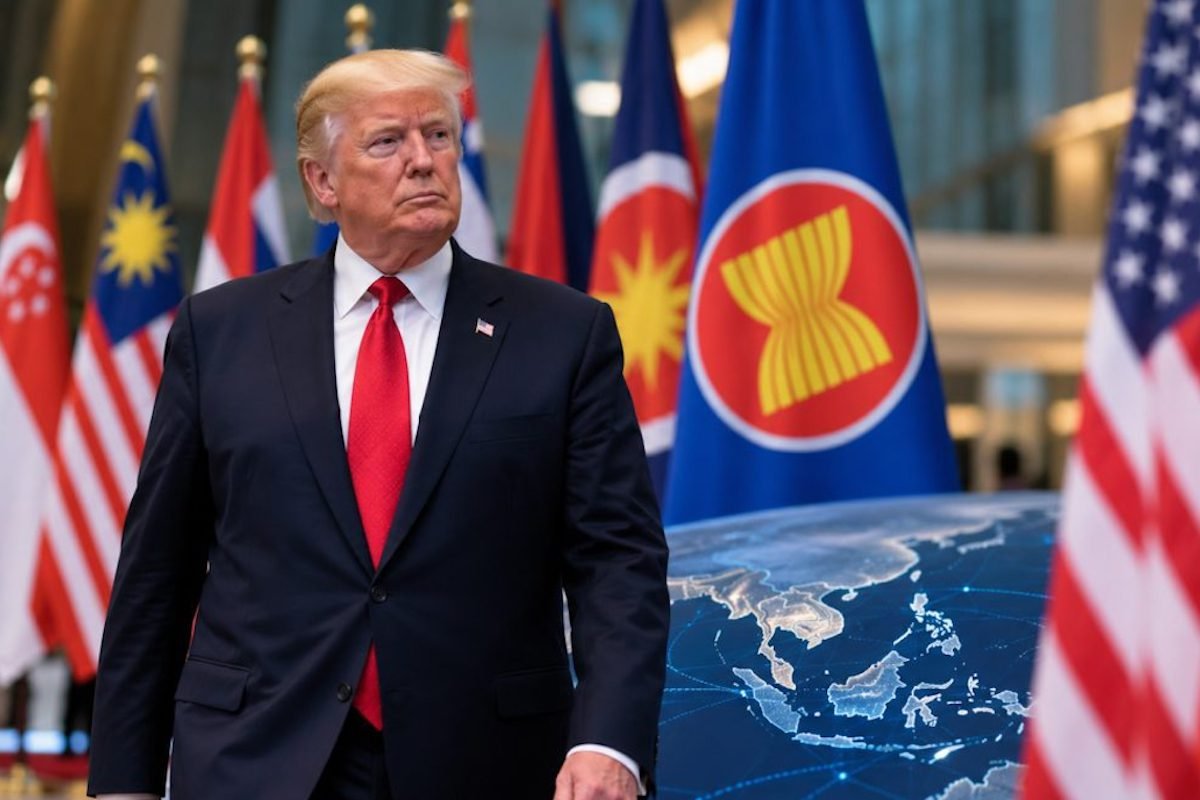
As Southeast Asia increasingly becomes a focal point of strategic competition between Washington and Beijing, the US president’s attendance offers an opportunity to reaffirm America’s regional commitments.
For ASEAN, however, the more important question is not simply whether Washington intends to remain engaged, but what kind of engagement it is offering and at what cost to the region’s security, economic independence and democratic institutions.
Trump’s visit comes at a particularly consequential moment. The recent US midterm elections, which saw Democrats regain control of Congress, have raised fresh questions about the direction of American policy, particularly on trade and tariffs.
Meanwhile, China continues to deepen its economic and political relationships across Southeast Asia, including through closer defense cooperation with Laos and Cambodia, while positioning itself as a leading voice in global artificial intelligence governance.
At the same time, ASEAN members face a range of challenges, from renewed tensions between Cambodia and Thailand and the continuing crisis in Myanmar to the proliferation of cyberscam networks sweeping through the region and persistent disputes in the South China Sea. Any engagement with the US will likely be judged by its impact on these issues.
Security cooperation is likely to feature prominently in Manila. Secretary of Defense Pete Hegseth’s recent participation in the ASEAN Defense Ministers’ Meeting-Plus in Cebu, where he proposed a new US-ASEAN Framework for Defense Cooperation, suggests Washington is looking to institutionalize its regional security presence through stronger maritime domain awareness and naval coordination.
There is clear rationale for deeper cooperation. The South China Sea is vital to international trade, energy security, and the livelihoods of millions across Southeast Asia. Improved regional military capabilities could improve deterrence measures against Chinese coercion, a central concern for several ASEAN members, including the Philippines and Vietnam.
However, ASEAN members differ considerably in how they perceive China and manage their relationships with Beijing, making any unified security alignment with Washington difficult. ASEAN has also long committed to strategic autonomy and reducing dependence on external powers.
The bloc needs partners that respect its centrality and recognize that regional security cannot be reduced to containing China. A framework that prioritizes military deterrence without sufficient attention to diplomacy, crisis management and confidence building risks making the region more polarized rather than more secure.
The economic dimension of Trump’s visit is equally important. Southeast Asian economies have spent much of the past year navigating the uncertainty created by Washington’s tariffs, first announced in 2025.
While several countries have negotiated bilateral trade agreements with the US to reduce levies – although notably some, including Indonesia’s, are yet to come into effect – this approach risks fragmenting ASEAN’s collective bargaining power.
Rather than engaging with the US as an integrated economic bloc to boost the region’s economy, this approach creates a mismatch of regulatory barriers, tariffs and overall supply chain disruption.
More concerning is what appears to be missing from this transactional approach. Previous US administrations, despite their own inconsistencies, have at times linked economic engagement to broader commitments on labor standards, human rights and democratic governance.
The Trump administration’s emphasis on reciprocal trade and national economic interests places considerably less political weight on these considerations. Although some agreements contain provisions addressing forced labor, these should not be mistaken for meaningful democratic or human rights conditionality.
This matters because economic agreements are not politically neutral. Trade arrangements can strengthen governments, shape domestic regulatory environments and influence the distribution of economic power.
If Washington is willing to overlook democratic backsliding, restrictions on civil society, or attacks on institutional independence in exchange for favorable commercial terms, it risks reinforcing the perception that governance standards are negotiable when strategic or economic interests are at stake.
The consequences of weak governance also extend beyond national borders. A United Nations report last year highlighted how corruption and weak state institutions have enabled the proliferation of a cyberfraud industry across Southeast Asia – an industry which cost the Asia-Pacific more than $88 billion in 2025 alone.
As ASEAN members look to address shared challenges at the summit, including Myanmar, transnational scam networks, and tensions between Thailand and Cambodia, the importance of effective and accountable governance should not be overlooked.
Ultimately, Trump’s attendance in Manila should be judged not by the symbolism of his presence or the number of agreements announced, but by whether it contributes to a more consistent and constructive American role in Southeast Asia.
The region needs reliable security partnerships, predictable economic relationships, and an international environment that supports rather than compromises democratic institutions.
Samady Ou is a Human Rights Foundation Freedom Fellow and ambassador for the Khmer Movement for Democracy. He is also the author of ‘The Cambodia Briefing’ Substack, a fortnightly Cambodian news digest.
Source: Iwpost.com