As I sat in the cab of the pickup truck and manually rolled down the windows, I closed my eyes and flashed back to opening the windows on a cold, winter day in my dad’s 1975 Ford Ranger to let more cigarette smoke escape. The memory faded as I opened my eyes and looked through the windshield at a wall in the Slate Customer Experience Center studded with bright color chips.
Last week, in a former Tesla store staffed by some former Tesla employees, Slate opened its first showroom. Located in the Fulton Market District just northwest of the Chicago Loop, the Slate Experience Center is a place for would-be buyers to poke around a prototype, check out customization options, buy some Slate merch, and even pre-order a new Slate Truck with a $300 deposit.
Designed for the American obsession with pickup trucks, the Slate Truck is a bare-bones electric pickup truck retailing for $24,950. It sports plastic panels, a minimalist interior design sensibility, actual window winders, and a projected range of 205 miles. Ars got to go for a ride in a Slate Truck over the summer, but we haven’t had a chance to shop for one. So I stopped by the Slate Experience Center so I could, er, experience the Slate.
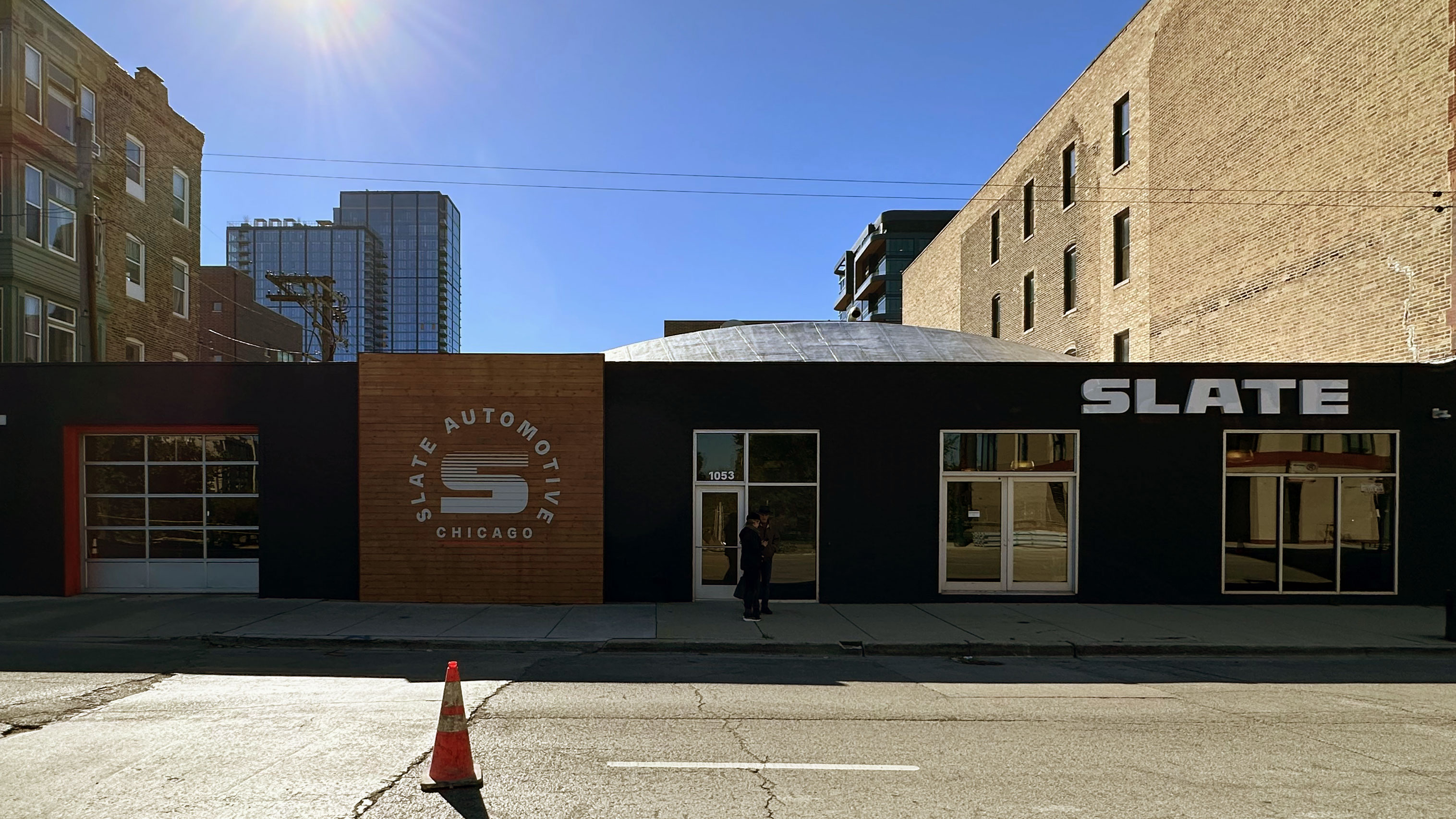
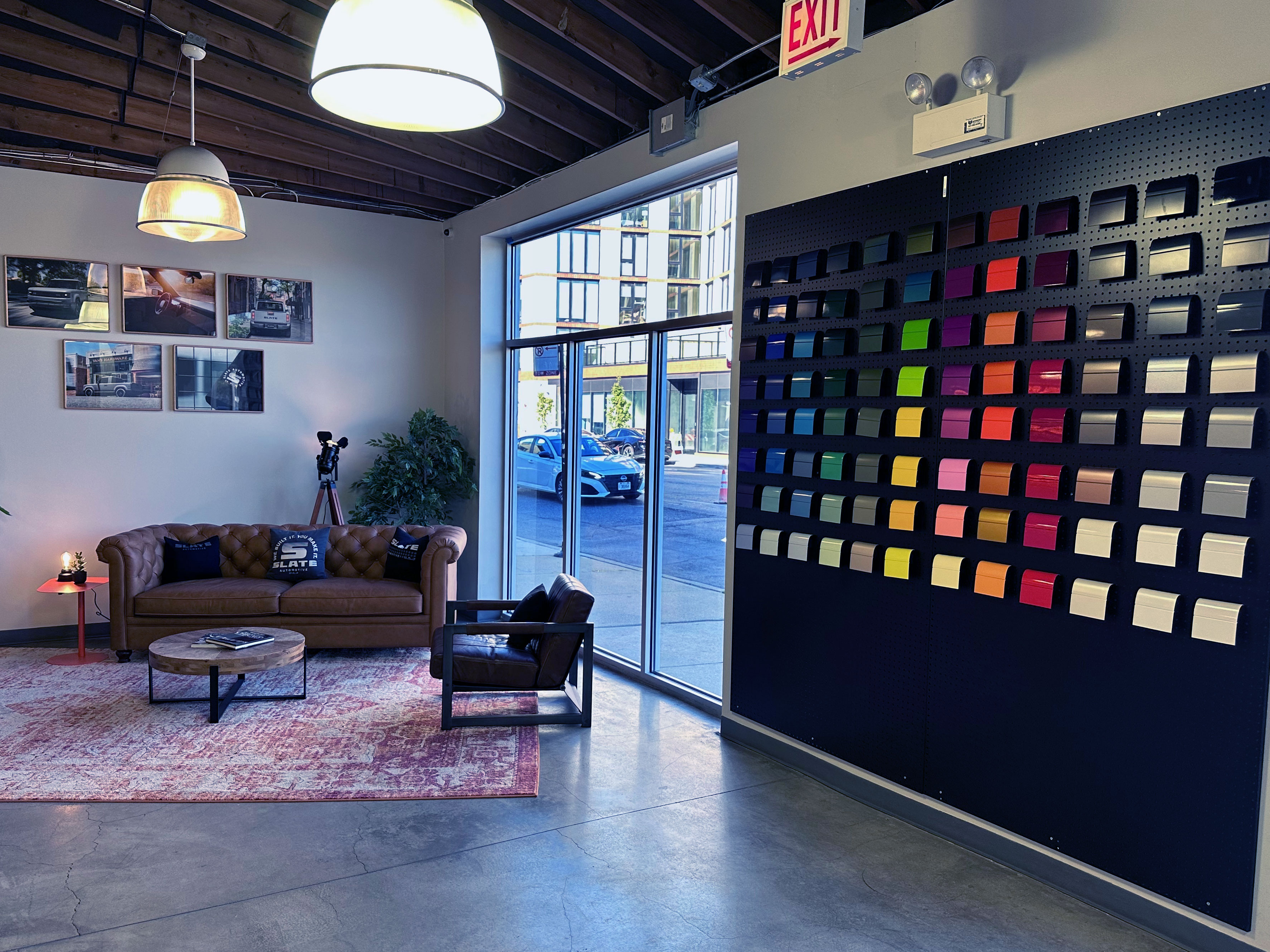
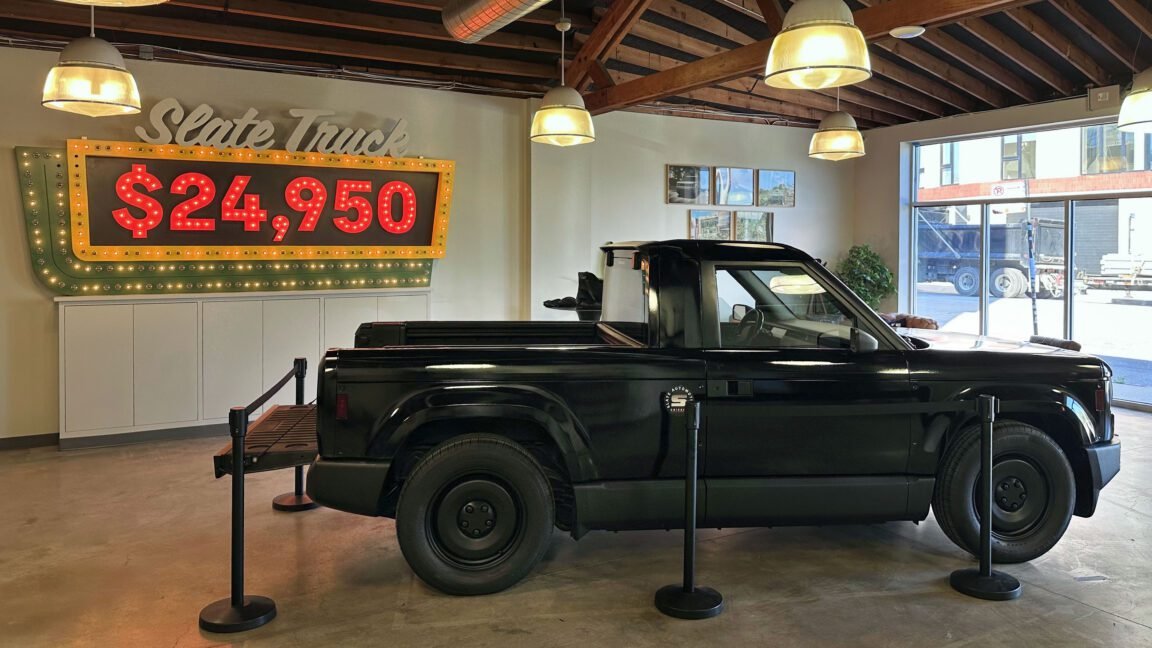
Upon walking into the showroom on a Monday morning, the first thing I noticed was a marquee-style sign on the wall boldly and brightly serving as a price tag for the black truck parked in the middle of the showroom. The vibe was industrial-barn-chic-meets-SoHo-loft. Three other people were there, and another shopper entered as I left. One man alternated between sitting in the cab, peering at the truck as he walked around it, and peppering Manager of Customer Experience Steve Purdy with questions.
The showroom has been open since October 15, launching with a three-day event that offered ridealongs. Interest has been strong, Purdy told me, and while he couldn’t provide sales numbers, he said the response has been “incredible.”
“We’re really happy with the number of [$300] deposits we’ve gotten since we opened,” Purdy said.
I was hoping there would be at least two Slate Trucks on site, so I could compare build quality between trucks and check things like panel gaps, window operation, and chassis creaks. But only one truck was on display. And it wasn’t close to a production model; rather, the black Slate Truck was a hand-built, older prototype with a black wrap (the Slate Truck base color is gray). The bed and passenger sides were cordoned off, but the driver-side door was open so shoppers could hop in and check out the interior.
It was bigger than I expected—to my eye, roughly the size of a Hyundai Santa Cruz. The tailgate was down, and it felt reassuringly sturdy when I pressed down on it. The 5-foot-long (152.4 cm) bed floor looked and felt durable, not much different from any other pickup on the market.
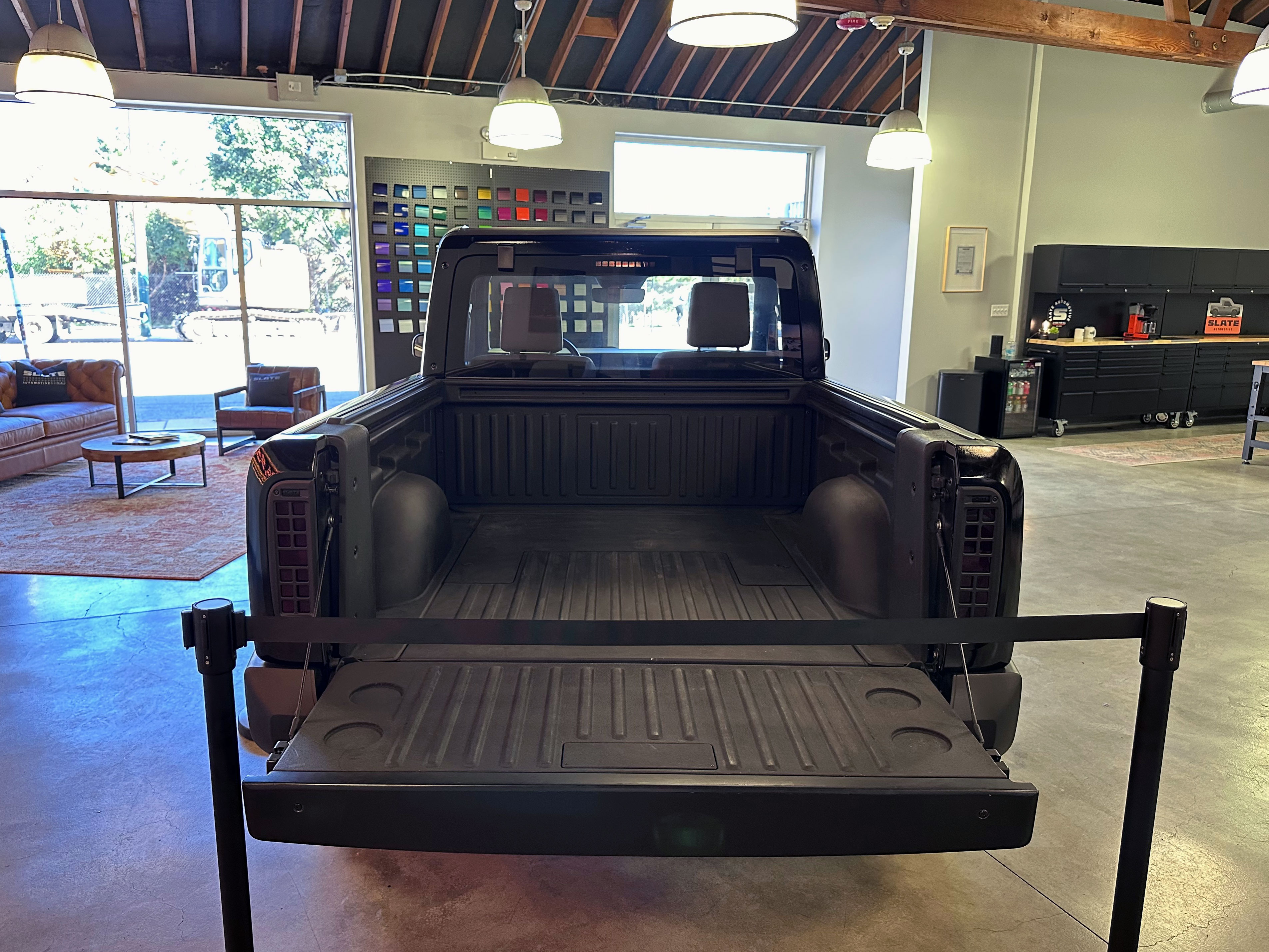
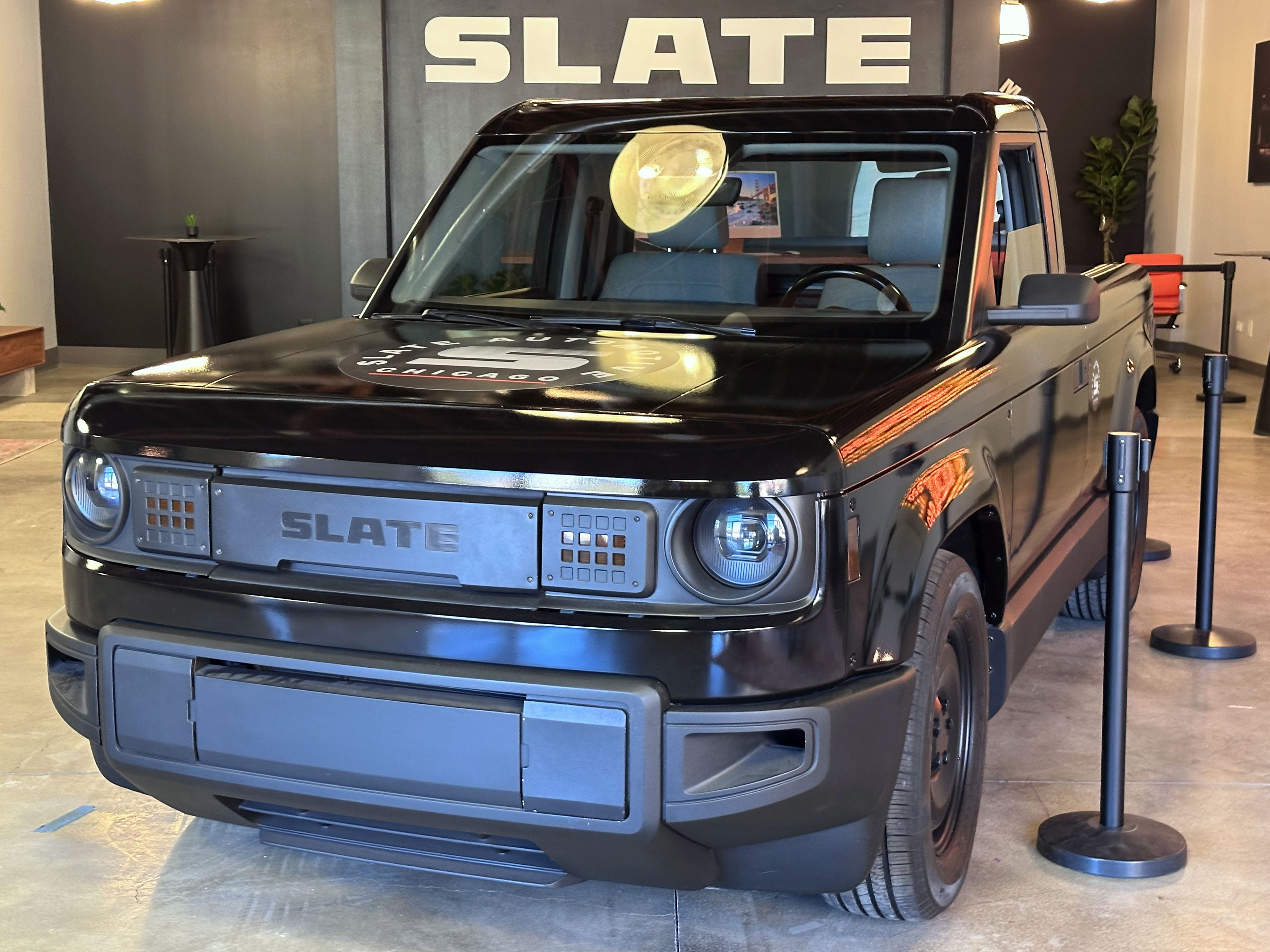
The exterior passed the eye test, with the panels appearing well-fitted. The doors sat flush with the surrounding body panels when closed. Of course, I was looking at a prototype carefully built to be poked and prodded by automotive reporters and the general public, so the level of fit and finish was no surprise. The challenge for Slate will be getting consistent build quality with minimal panel gaps, watertight seals, consistent door-to-fender transitions, and hood/frunk alignment. The Slate assembly line in Warsaw, Indiana, is still making prototyping runs at this point, Purdy told me, and the company is hoping to start on production models “soon.”
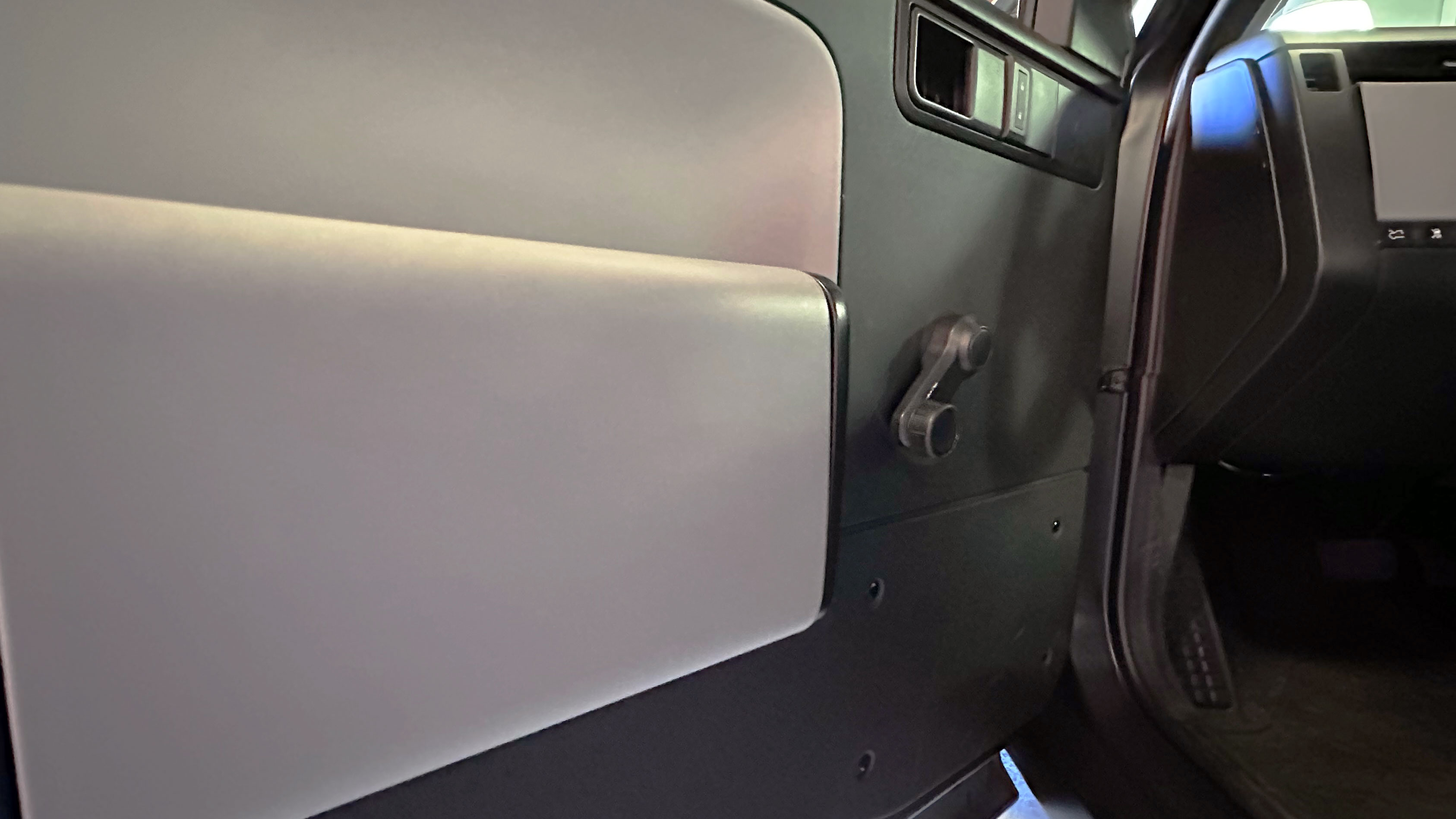
I hopped inside the cab once I got the opportunity, and the door closed with a solid-sounding “thunk.” It’s spartan inside, with a small screen for the instrument panel, a phone holder, physical climate controls, and window winders. The seats were both supportive and comfortable, and, after moving the seat, I had ample legroom. While the seat slid back and forth smoothly, the seatback recline lever on the side didn’t work.
The shopping experience
Beyond the default Blank Slate body style, Slate offers two SUV options—the Squareback SUV and Fastback SUV—and an open-air kit. I asked Purdy if they were selling any of the SUVs. “Most customers are going with the truck configuration,” he said. “And then they’re customizing their trucks in the Slate Garage.”
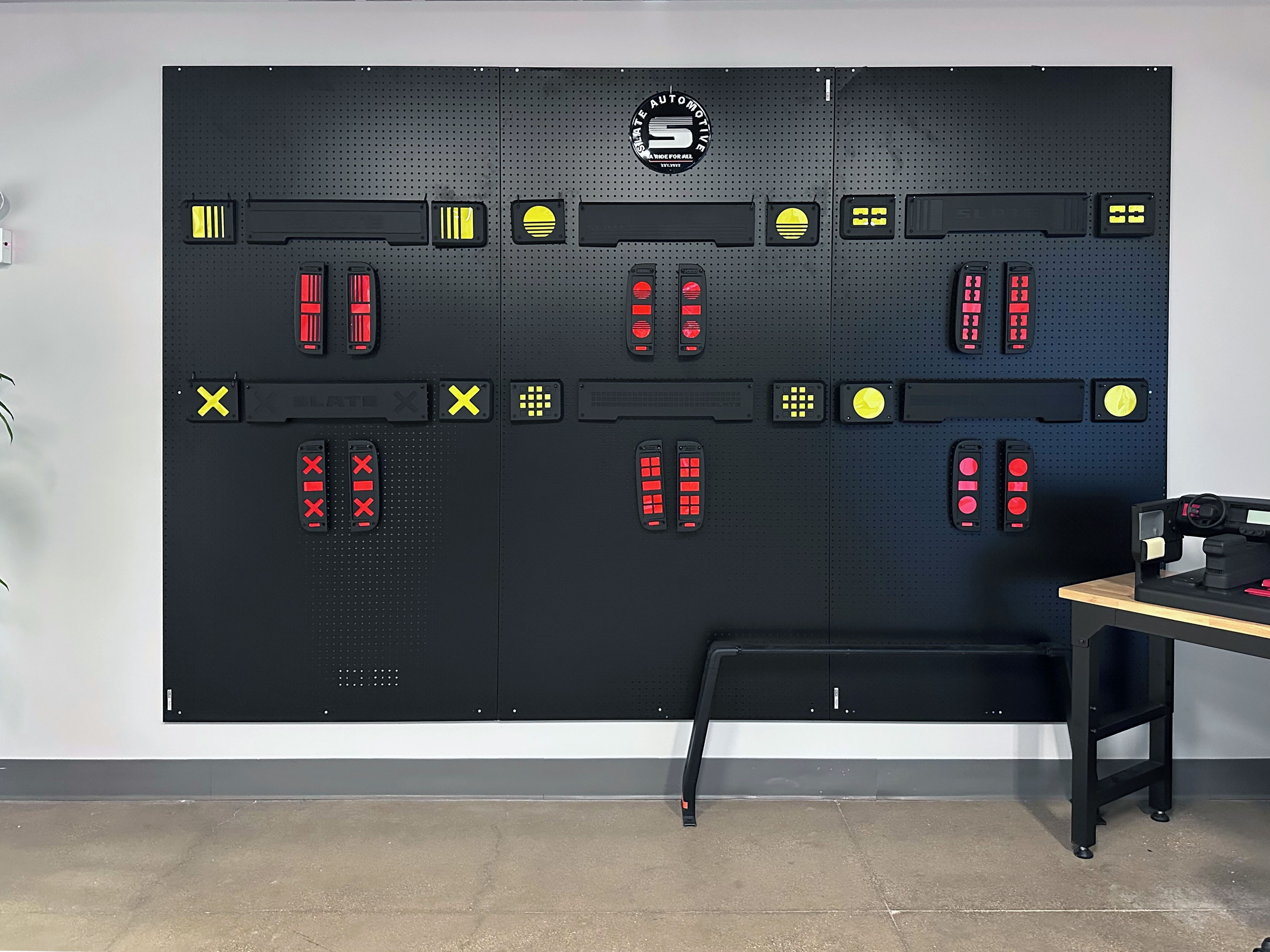
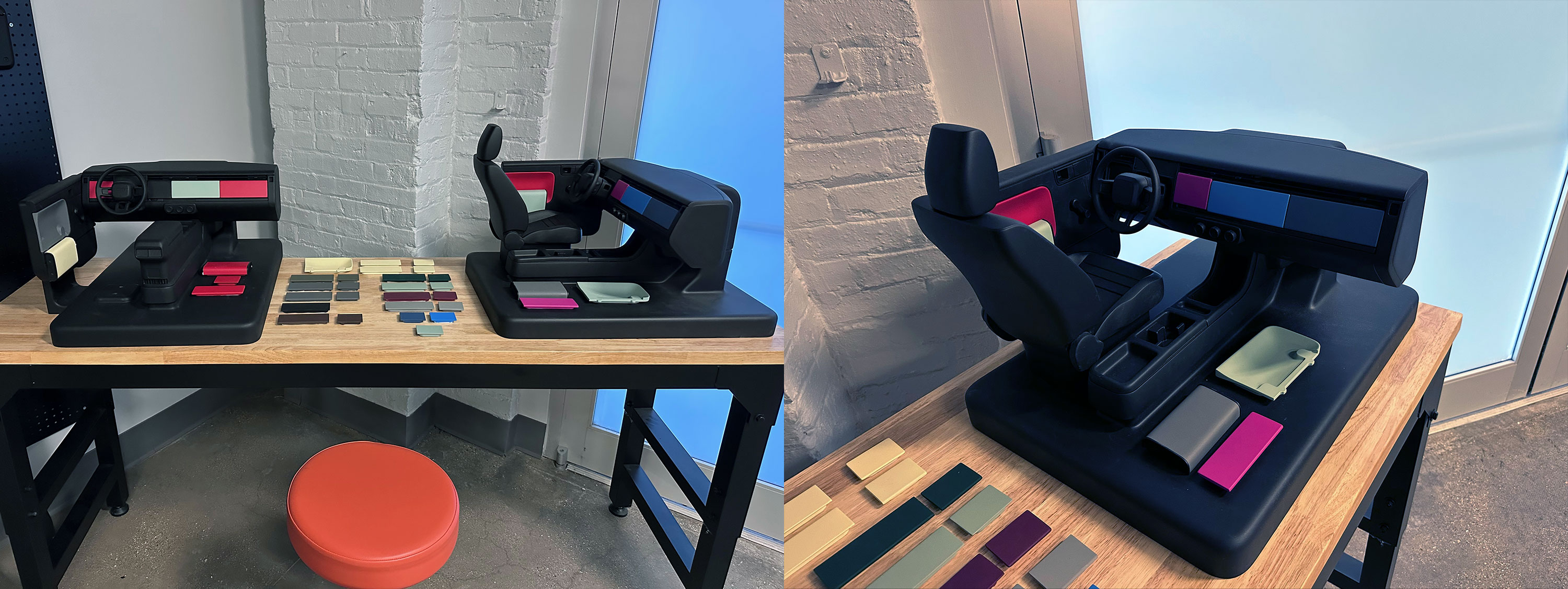
Being able to order online and have the truck delivered is a major attraction for those who can’t stand “the kabuki dance of f***ery at a dealership,” as one of my colleagues put it. But if you want to do all that at the Slate Experience Center, staffers will sit down and help you configure your customized Slate. There is a wall with removable dashboard panels across the color spectrum and a couple of miniature models of the cab with tiny, colored panels to help customers decide on the details.
Purdy told me that Slate is staying the course with the $24,950 sticker price. But will customers actually get their Slate Trucks this year as the company promised? “We will be ship some trucks by the end of the year,” Purdy said. “Those will go to investors and employees, with early-orderers receiving their Slate Trucks in early 2027.
For service, Slate will be using RepairNow. Owners will be able to choose from 4,000 shops, some of which can service the high-voltage electrical systems and others limited to body damage, Purdy said. For scratches or minor dings from fender benders, owners can replace the exterior body panels themselves. Pricing for replacement parts has yet to be finalized. And Slate is confident the plastic body panels will weather climate extremes without a hitch. “We’re a Michigan company,” Purdy reminded me.
Monday morning is not exactly prime time for dealership traffic, but a handful of prospective customers were in the showroom, which is a promising sign. While there is no shortage of electrified pickup trucks on the market, there is a shortage of affordable ones. At $25,000, the Slate Truck costs far less than a Rivian R1T, Tesla Cybertruck, Chevy Silverado EV, or any currently shipping battery-electric truck. It could be a breakout hit—especially if Slate can beat Ford’s sub-$30,000 Fathom pickup to market.
But the sleek-looking showroom and an attractive prototype still face a production reality check. Tesla had significant quality control problems with early Model Ys, with customers receiving cars with loose seats and broken seatbelts, and some Cybertrucks have shipped with misaligned panel gaps. A new player is entering the game, but production is still on the (near) horizon, and no one knows if the Slate Trucks delivered to customers will live up to the promise of the carefully hand-built prototypes. People are definitely very interested in Slate. Now it’s time to deliver.