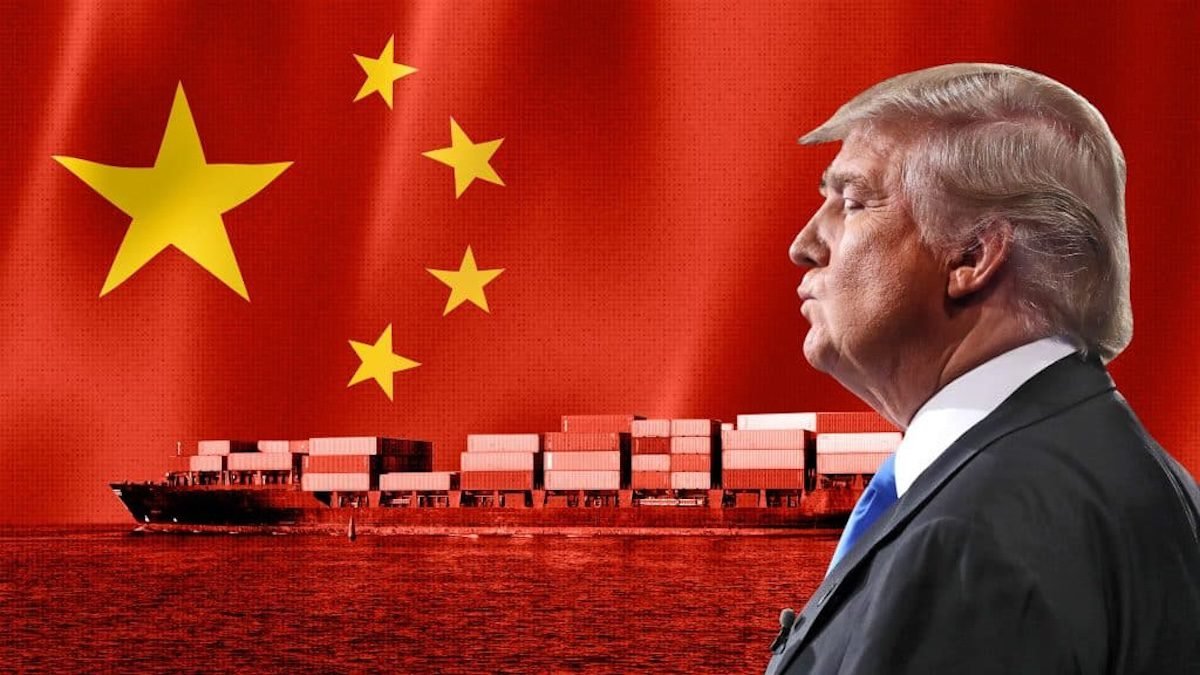

The latest US trade fight with Canada should matter far beyond North America.
After negotiations collapsed in August, President Donald Trump imposed 50% tariffs on about $20 billion of Canadian goods. Ottawa answered with tariffs on roughly the same value of US imports. Trump then threatened 50% duties on Canadian cars, trucks and parts from January. Canada is one of America’s closest allies and remains deeply tied to the US economy, which still takes nearly 70% of its exports. Yet the relationship has reached the point where Prime Minister Mark Carney describes the dispute as a trade war.
Canada is not part of the Global South, but its treatment carries a clear lesson for governments that have far less political protection in Washington. If a treaty ally and major trading partner can face sudden tariff escalation, demands touching its future trade agreements and pressure over domestic policy, other states have good reason to reduce their exposure. That does not mean abandoning the United States. It means making sure that Washington is not the only market, source of capital or political option available.
China has been preparing to benefit from that instinct. Earlier this year, Carney reached a preliminary economic and trade understanding with Beijing that allowed up to 49,000 Chinese electric vehicles into Canada at a 6.1% tariff. China later suspended 100% tariffs on Canadian canola meal and peas and 25% tariffs on lobster and crab for most of 2026. The deal was limited, but its political meaning has grown as relations with Washington have worsened.
Beijing is selling access
The same pattern is visible across Africa. From May 1, China removed tariffs on imports from all 53 African countries with which it has diplomatic relations. Beijing has also promoted economic partnership agreements and easier customs access for African exports. South Africa signed a framework agreement with China in February while trying to offset damage from a 30% US tariff imposed the previous year. China was already South Africa’s largest bilateral trading partner.
Brazil faces a similar incentive to diversify. A new 25% US tariff imposed in July affects an estimated $7 billion to $11 billion of Brazilian exports, even though the United States has consistently run a trade surplus with Brazil. India, meanwhile, is still negotiating a trade agreement with Washington after a fresh 10% US duty was applied to 55% of its exports to the American market, according to India’s commerce ministry.
None of these countries is becoming a Chinese client. Their interests differ, and many remain wary of Chinese power. What is changing is the value of having alternatives. When access to the US market can be revised quickly or tied to disputes over domestic regulation and foreign policy, another large market becomes more useful. China does not need governments to trust Beijing completely. It needs them to believe that dependence on Washington carries its own risks.
The reputational shift is already visible
Southeast Asia offers some of the clearest evidence. The 2026 State of Southeast Asia survey by Singapore’s ISEAS-Yusof Ishak Institute found that 43.4% of respondents said the Trump administration’s punitive trade measures had worsened their positive impressions of the United States, up from 21.3% a year earlier. US leadership under Trump was named the region’s leading geopolitical concern by 51.9% of respondents.
Broader public opinion points in the same direction, although it should not be read as a simple vote for China. Pew Research Center surveyed more than 42,000 adults in 36 countries this year and found that China was viewed more favourably than the United States in most of them. In South Africa, 72% called China a reliable partner, compared with 46% for the United States. India was one of only six countries where the US remained more popular than China.
The significance is not that the Global South is turning toward China. It is that Washington is making diversification more attractive. Countries can remain wary of Beijing while expanding trade with it, especially when access to the US market appears less predictable. For China, that is already a strategic gain.
China still has a credibility problem
Beijing’s advantage should not be confused with a commitment to open trade. China protects its own industries when it chooses. From January, China imposed a country-specific quota system on beef imports, with an additional 55% tariff applied to shipments exceeding those quotas, a safeguard intended to protect domestic cattle producers. European governments are also pressing for stronger responses to Chinese industrial overcapacity. China’s own trade policies can therefore be protectionist when domestic interests demand it.
This is why Beijing’s gains are best understood in relative terms. China does not have to persuade Brazil, India, South Africa or Indonesia that it is a liberal trading power. It has to make itself useful as a second market, an investor and a source of bargaining space. Every new US tariff makes that argument easier to sell. Washington has every right to defend domestic industries and challenge unfair trade practices. But tariffs used repeatedly across allies and partners carry a strategic cost that cannot be measured only in customs revenue or factory output. They encourage other governments to diversify before the next dispute arrives.
The danger for the United States is not a sudden diplomatic stampede towards Beijing. It is a slower loss of economic influence. Countries that build more trade routes, financing channels and political options outside the US system become harder to pressure later. China can gain from that shift without winning anyone’s loyalty. Trump’s trade wars are making sure it gets the chance.
Naina Sharma is a project associate at the Center of Policy Research and Governance (CPRG).