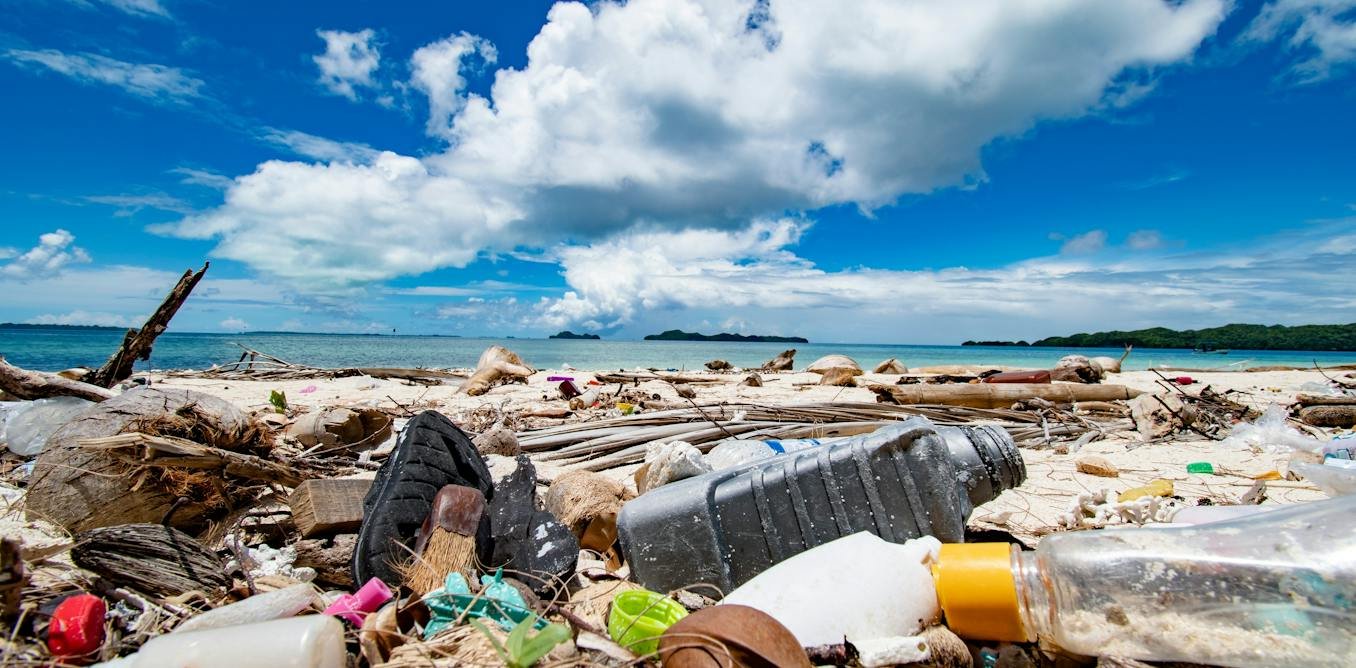
Vast quantities of plastic and fishing gear are washing up along the shores of the Seychelles, destroying fragile ecosystems and causing significant economic problems.
Aldabra Atoll, a Unesco world heritage site in this archipelago nation of 115 islands, is estimated to have accumulated more than 500 tonnes of plastic on its shores alone. Most of this plastic debris continues to pile up along its beaches today. It was estimated that removing it would cost approximately US$4.68 million (£3.46 million) and would require 18,000 hours of labour.
Small island developing states are particularly vulnerable to plastic debris on their beaches. It can damage tourism and fishing in these coastal communities, which is essential to their economies. Clean-up costs can be prohibitive.
Fish and other marine life can also be killed by getting entangled with or ingesting plastic debris.
It is impossible to tackle this growing problem without knowing where this pollution is coming from and who is responsible. We investigated this in our recent study using computer simulations and observations, focusing on pollution in the western Indian Ocean from fisheries and shipping.
We found that most pollution probably comes from vessels in or near the Seychelles’ own waters. This challenges the assumption from previous work that island plastic mainly drifts in from distant shores.

We know fishing vessels lose nets and gear, and shipping vessels illegally discard plastic and other items. But to work out which vessels are responsible and where their debris ends up, we needed to know which ships and fishing boats operate near the Seychelles.
To do this, we used satellite tracking data from fishing and shipping vessels over five years (from 2018 to 2022) to estimate activity across the region. Using this map, we simulated the drift of billions of virtual pollution fragments and followed where they ended up.

From this we built a map showing how likely a given vessel location is to pose a risk to the Seychelles’ islands. We did this separately for fishing and shipping.
Our research shows, based on previous fishing activity, that most fishing gear that is swept up on the beaches of the Seychelles comes from fishing within its own exclusive economic zone. These are the waters, extending 200 nautical miles (370km) offshore, over which a state has exclusive control over marine resources, including fisheries.
These waters are full of tuna, and the Seychelles’ economy leans heavily on industrial fishing, both as an employer and as a large source of foreign currency.
Where does the waste come from?
It is likely that some of the gear and plastic waste is coming from EU vessels. The Seychelles’ waters are heavily fished by two types of European fishing boats, purse-seiners and longliners. This falls under a longstanding agreement between the EU and the Seychelles granting them the right to fish here. Purse-seiners circle around tuna schools with a large net, and longliners trail baited hooks over many kilometres.
Indeed, a report presented to the Indian Ocean Tuna Commission found that 76% of 214 of the drifting fish aggregating devices used by tuna fisheries to attract shoals of fish in the Seychelles’ exclusive economic zone were from Spanish-owned vessels. This is an industry making significant profits, while leaving behind environmental damage.

Recently, the Seychelles–EU fishing agreement was renewed for 2026–30 at €5,750,000 per year (£4.89 million), allowing 38 EU fishing vessels to operate in these waters. The Seychelles government is believed to have pushed for a 30% rise in this annual payment from the EU but it is believed they settled on 7%, according to some reports.
Given that the cost associated with cleaning up a single island already runs into millions, the Seychelles-EU deal is small compared to the indirect damages imposed on the nation.
Other proposed solutions
International shipping creates other issues. Our study suggests that more than 90% of plastic being swept up on the Seychelles’ coast from shipping comes from just five lanes crossing the western Indian Ocean. The origin and destination ports of these lanes line up with the countries named on labels of plastic bottles washed ashore on Aldabra.
Debris from international shipping lanes requires a different solution. Unlike the tuna fleets fishing under the agreement between the Seychelles and the EU, this is international traffic passing by. A solution to the plastic waste coming from these ships would be more rigorous enforcement of existing international rules against dumping waste at sea, and bilateral cooperation between the Seychelles and the many nations whose ships use these routes.
Even simple measures could cut litter. For instance, ensuring vessels carry enough safe drinking water to reduce the use of plastic bottles should cut some debris found on Aldabra.
The true cost of cleaning up this huge level of plastic pollution tends not to fall on those who have left it there. The Seychelles needs to work out the cost of the damage being done by these mountains of waste to get a better deal in future negotiations with the EU.
That should help fund clean ups and repair the fragile ecosystems of the islands, helping to preserve them for the future.