While inter-Korean diplomacy stagnates despite Seoul’s recent initiatives, Southeast Asian nations are stepping in to bridge the gap.
Vietnam, Indonesia and Laos are leveraging their long-standing relationswith Pyongyang to emerge as practical mediators. The shift is gaining momentum as the US-centricglobal order weakens and North Korea pivots closer to China and Russia.
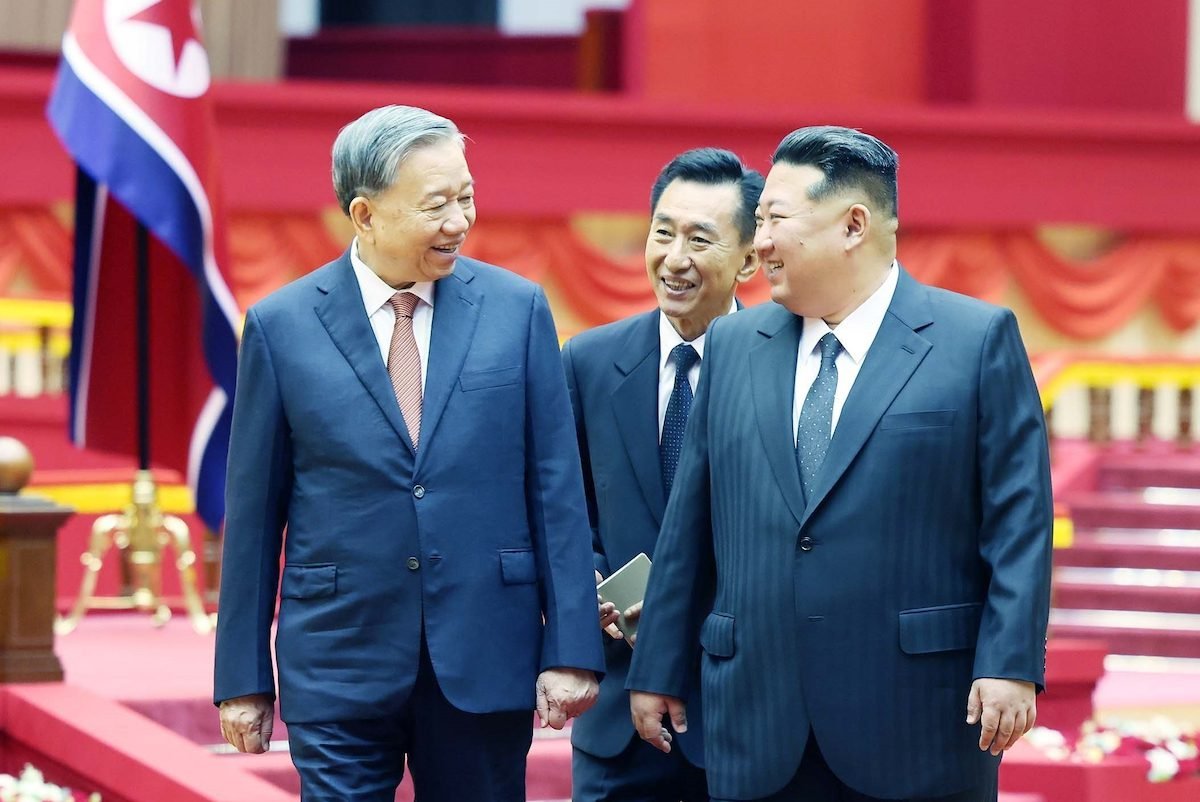
Last October, To Lam, general secretary of the Communist Party of Vietnam, made a landmark visit to Pyongyang to mark the 80th anniversary of the founding of the Workers’ Party of Korea. The first visit by a top Vietnamese leader in 18 years, it transcended mere socialist solidarity, opening a new diplomatic window amid a prolonged stalemate.
Through its “bamboo diplomacy” — firm at the roots but flexible in the branches — Vietnam has maximized its national interests amid the US-China rivalry. By visiting Seoul for economic talks just before heading to Pyongyang, To Lam has emerged as a rare mediator capable of engaging sincerely with both Koreas.
Laos and Indonesia are also working to deepen and restore ties with Pyongyang. Laos remains one of North Korea’s closest regional allies, maintaining active high-level channels.
In October 2025, President Thongloun Sisoulith attended the 80th-anniversary celebrations of the Workers’ Party in Pyongyang, followed by a foreign ministers’ meeting in November to strengthen cooperation in education, sports and tourism. As the 2024 ASEAN chair, Laos played a crucial role in ensuring North Korea was not marginalized in forums such as the ASEAN Regional Forum.
Meanwhile, Indonesia has fully restored its diplomatic presence in Pyongyang after a hiatus. Under President Prabowo Subianto, Jakarta is reviving ties as part of its pragmatic foreign policy. In July 2025, Indonesia reopened its embassy in Pyongyang, which had been closed since the Covid-19 pandemic.
Foreign Minister Sugiono’s official visit followed in October — the first in 12 years — with the signing of a memorandum of understanding for bilateral consultation. The arrival of Indonesia’s new ambassador to Pyongyang in March 2026 completed the restoration of full diplomatic activities after some five years, signaling a new chapter for regional mediation.
So what does North Korea gain from these partners while still under international sanctions?
First, Vietnam serves as living proof of a successful socialist model. Having rebuilt from wartime devastation into a global manufacturing hub through Doi Moi reforms, Vietnam’s experience offers Pyongyang a proven development roadmap.
Unlike Western actors demanding unilateral denuclearization, Hanoi can advise on engaging with the international community while preserving its existing system.
The bilateral relationship is also evolving pragmatically into a food security partnership: Following To Lam’s visit, North Korea has begun adopting Vietnamese high-yield organic farming techniques.
Second, Indonesia, upholding its “bebas-aktif” (free and active) foreign policy, serves as a vital unofficial channel. As a new BRICS member since January 2025, Jakarta draws on a diplomatic legacy dating to the Sukarno-Kim Il-sung era, making it a credible back-channel for de-escalating tensions.
Under Prabowo, Indonesia is supporting the modernization of North Korea’s civilian economy through agreements in agriculture and tourism — sectors not prohibited by sanctions — reinforcing its role as a neutral interlocutor.
Third, Laos, which shares a one-party socialist system with North Korea, introduced economic opening through its New Economic Mechanism in 1986, embracing foreign investment and trade liberalization. This offers Pyongyang a working model for pursuing regime stability and economic development simultaneously.
At the same time, all three countries are simultaneously deepening ties with South Korea. More than 10,000 South Korean companies operate in Vietnam, and South Korean President Lee Jae-myung will pay a state visit to Hanoi on April 21 to seek stronger cooperation with To Lam.
Prabowo paid a state visit to Seoul last March and maintains a special comprehensive strategic partnership with South Korea that includes defense cooperation, including the prospective introduction of Korean-made KF-21 fighter jets.
Lao President Thongloun visited Seoul to mark the 30th anniversary of diplomatic relations — two months after his Pyongyang visit last year — and is expanding cooperation in critical minerals supply chains.
Ultimately, peace on the Korean Peninsula cannot be achieved through great-power logic alone. To Lam’s dual visits to Seoul and Pyongyang exemplify the flexibility of bamboo diplomacy.
These old friends may not produce overnight breakthroughs, but they can offer Pyongyang a blueprint for gradual integration into the global economy through trust-building measures, including a possible nuclear freeze.
South Korea must elevate the Korean issue into a shared priority for ASEAN’s peace and prosperity. When these rising middle powers engage in principled diplomacy on the Korean Peninsula, their own economic and diplomatic influence will inevitably grow.
Ki-ho Han, PhD, is a research professor at the Ajou Institute of Unification Studies and a columnist on Korean Peninsula affairs. A former senior official at South Korea’s Ministry of Unification, he specializes in inter-Korean relations, peacebuilding and middle-power diplomacy amid intensifying great-power competition in Northeast Asia.