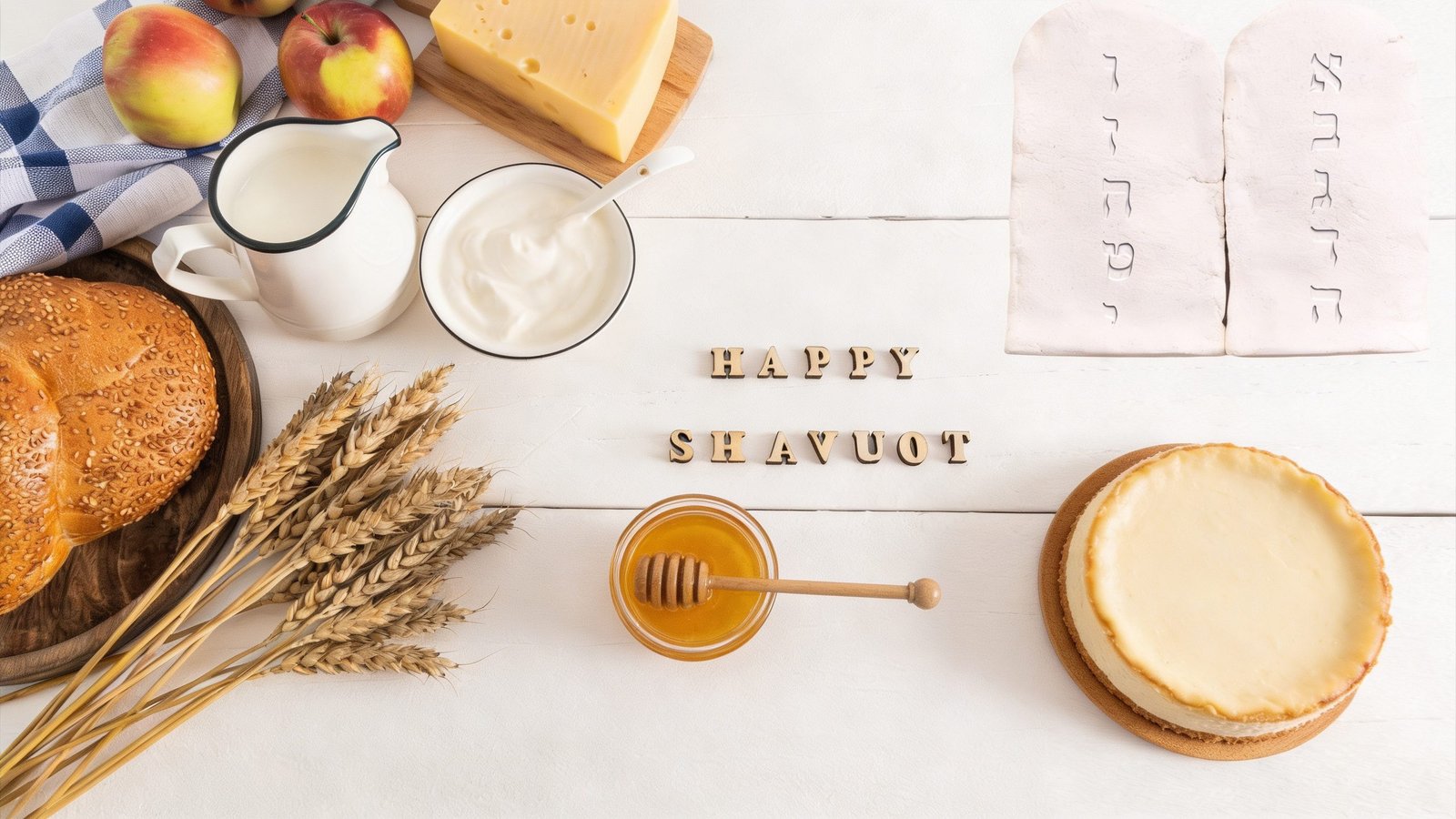
Tonight starts the festival of Shavuot, the rare Jewish holiday that manages to begin in a barley field, pass through Mount Sinai, stop in the Book of Ruth, and end at an Israeli cheesecake counter. In my explainer, I trace how one of Judaism’s three biblical pilgrimage festivals grew from an agricultural celebration into a holiday of Torah, conversion, all-night study, and dairy abundance.
The biblical Shavuot is first a harvest festival. It comes after the 49-day Counting of the Omer, beginning during Passover and ending with the holiday on the 50th day. The name means “weeks,” because the festival follows seven complete weeks—what the Torah calls a week of weeks. In its earliest form, the holiday marked the wheat harvest, the first fruits, and the sacred calendar of an ancient agricultural society.
Later Jewish tradition gave Shavuot its better-known religious identity: the giving of the Torah at Mount Sinai. The Torah does not explicitly say that Shavuot commemorates Sinai, but rabbinic chronology links the revelation to the beginning of the Hebrew month of Sivan, around the time the holiday falls. That connection transformed Shavuot from a harvest festival into the season of covenant, law, and Jewish responsibility.
The explainer also follows the holiday into its living customs. Jews stay up all night studying Torah on Shavuot, a practice that in Israel has expanded far beyond synagogues and yeshivas into community centers, universities, secular cultural institutions, and citywide learning programs. The Book of Ruth, traditionally read on the holiday, ties Shavuot to converts, loyalty, kindness, and the wheat harvest.
Then comes the dairy. Torah is linked in rabbinic tradition to milk and honey, and other explanations connect dairy meals to the kosher laws received at Sinai. In Israel, that has grown into a full-blown dairy culture, with cheeses, quiches, bourekas, blintzes, and elaborate cheesecakes taking center stage.
Read the full explainer if you want to know how Shavuot became a layered holiday of freedom, responsibility, learning, belonging, and—because Judaism rarely misses a chance to feed people—cheesecake.