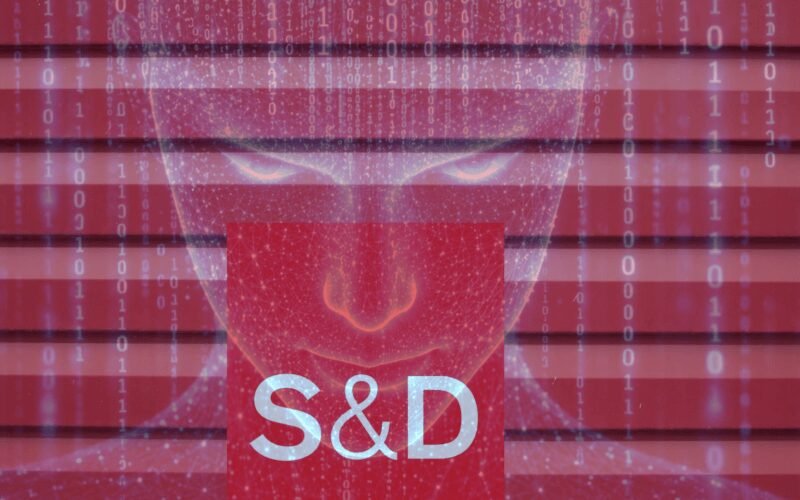
Center-left lawmakers in the European Parliament want the European Union to ban harmful, non-consensual and deceptive deepfakes and to make online platforms responsible for stopping their spread, according to a draft document seen by POLITICO.
The draft tech priorities of the Socialists and Democrats group call for the ban. It would require platforms and AI providers to act proactively rather than wait for victims to complain. The draft does not say how the ban would be put into effect.
The proposal comes as European countries debate who controls a person’s digital identity. AI tools can now easily produce material ranging from a fabricated political endorsement to a cloned voice used in a scam. Denmark has introduced a plan to amend its copyright law to bar the sharing of digital replicas without consent. Italian Prime Minister Giorgia Meloni has applied to trademark a recording of her voice to guard against unauthorized use.
Differing national laws could make enforcement harder for platforms and authorities, and could let deepfakes spread. German S&D lawmaker Tiemo Wölken, a key figure on Parliament’s copyright and AI report, said separate national approaches create legal confusion that bad actors could exploit.
A recent report found that 50 members of the European Parliament have been targeted by sexualized deepfakes. An update to the EU’s AI Act will cover so-called “nudification” apps, but the S&D push suggests growing momentum in Brussels to address deepfakes more broadly.
Some observers see Denmark’s approach of using copyright law as the most effective route. Denmark’s bill would protect people’s faces, voices and other identifying characteristics. It targets public distribution rather than private creation and allows exceptions for parody, satire and criticism. A separate provision would protect actors and musicians from AI imitations of their performances.
Legal experts warn that copyright-style protection could backfire. Intellectual property rights can be licensed or transferred, so performers could end up signing control of their AI likenesses over to record labels or film studios. Denmark’s general protection cannot be transferred, but its performers’ right could be licensed. Stina Teilmann-Lock, an associate professor at Copenhagen Business School, said such protections should not be built into copyright because that could create problems without solving the underlying issue.
Existing EU rules take other approaches. The AI Act sets transparency requirements for deepfakes, and the Digital Services Act governs how platforms handle illegal content. New restrictions on the nudification features of some AI systems are due in December. None of these creates a general EU-wide right over a person’s likeness, and a fake celebrity endorsement can touch privacy, consent, platform obligations and commercial exploitation at once. João Pedro Quintais, an associate professor at the University of Amsterdam’s Institute for Information Law, said protection exists but there is no clear framework for ownership.
Other countries are moving on their own. Cyprus amended its copyright law in March to guard against unauthorized digital imitations. Belgian lawmakers proposed in September a new neighboring right, a copyright-like protection, over people’s images and voices. The Netherlands consulted on draft legislation last year. Germany’s Cabinet has backed separate measures targeting sexualized deepfakes and harmful impersonation.
Belgian center-right lawmaker Leentje Grillaert, a co-sponsor of her country’s proposal, cited cases of doctors impersonated in misleading online videos. She said the EU is heading in the right direction but needs to move faster, as Denmark and the Netherlands have.
University of Amsterdam law professor Bernt Hugenholtz said existing privacy and personality rights already offer substantial protection. He said the number of national proposals is itself a reason for the EU to act.
In March, Parliament asked the European Commission to examine measures against unauthorized digital replicas. Danish S&D lawmaker Christel Schaldemose, who was involved in that effort, said she wants the Commission to respond and assess whether EU-wide legislation would add value alongside national initiatives such as Denmark’s.
The Commission is seeking feedback on possible changes to EU copyright rules, with a consultation open until Nov. 3. An earlier call for evidence raised the possibility of stronger protections for performers against AI-generated impersonation. Wölken said he expects digital-replica protections in the Commission’s upcoming copyright initiative and wants safeguards that go beyond performers, covering non-consensual AI deepfakes whether or not the use is criminal.
Read more via Politico