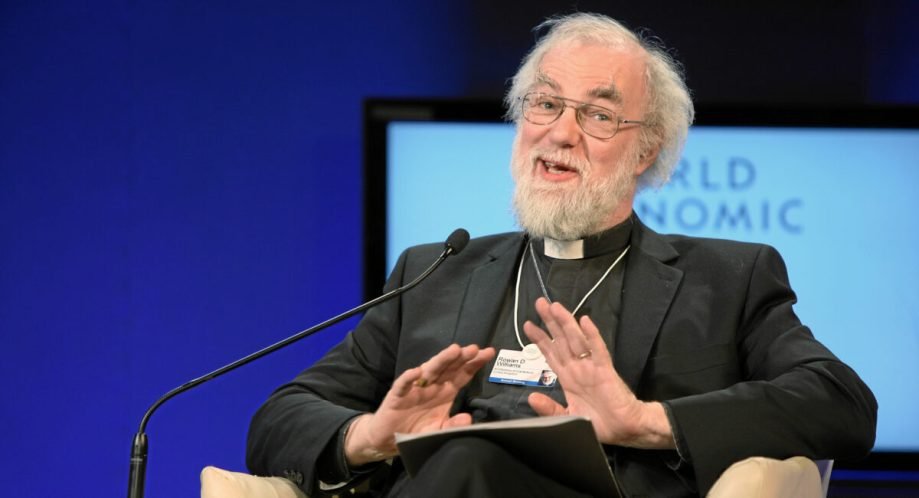
In an age when sacred beliefs are traded in the political marketplace and theology is weaponized as a cudgel to intimidate the other, Dr. Rowan Williams—former Archbishop of Canterbury and distinguished scholar—stands as an exceptional moral and human figure. He restores faith to its pure ethical essence, transforming belief into a vehicle for transcendence rather than a tool for coercion.
Williams was never merely a high-ranking cleric occupying the pinnacle of the Anglican Church for a decade; he was, and remains, an unwavering moral compass whose intellect is bound strictly to his core principles.
Few can forget his courageous opposition to then-Prime Minister Tony Blair during the rush to war in 2003, when Williams unequivocally denounced the invasion of Iraq as a profound moral and political failure.
Whenever waves of anti-Muslim hysteria surged in the West, Williams approached the crisis with the mind of a fair-minded philosopher.
He posed an incisive counter-question: if Islam is to be branded with the stigma of terrorism due to the actions of extremists operating in its name, should logic not compel us to brand Christianity with the same label following the atrocities committed by Bosnian Serbs against Muslims in the heart of Europe?
This moral nobility extends to his defense of religious liberties and cultural diversity. Writing in The Times, he warned that imagining a society stripped of its public religious expressions—whether the cross, the veil, or the turban—would produce a politically perilous environment. He firmly rejected the notion of governments acting as licensing authorities that dictate acceptable religious symbols, warning that bans on religious dress risk plunging society into an illusory, state-driven religious war when the true imperative should be fostering tolerance and freedom of conscience.
READ: Half a million in London… millions stuffed in water jugs in Baghdad
His ethical framework remains inseparable from the humanitarian crises of the Middle East, where he has consistently championed peace, reconciliation, and the abandonment of toxic, retaliatory rhetoric. In addressing the suffering in Gaza, he has repeatedly condemned humanitarian catastrophes and demanded urgent relief for those under siege. Through his reflections on the cycle of violence, Williams highlights a bitter truth: unchecked oppression offers extremists a pretext to impose harsher measures on Palestinians, ultimately choking off prospects for justice and peaceful coexistence.
This deep consistency drives his critique of far-right political figures today. In a recent interview with New Humanist, Williams unmasked figures like Nigel Farage, who exploit religious identity for political gain.
He noted that Farage does not lie awake at night wrestling with his soul or pondering deep theological questions; rather, he weaponizes the phrase “we are a Christian country” as cheap ideological cover to stoke anti-Muslim sentiment and secure political legitimacy.
The model of Rowan Williams illuminates a vital truth often obscured by radical rhetoric: the West is not a monolithic bloc of hostility or political opportunism. It is also home to a rich intellectual and spiritual tradition capable of producing leaders who defend justice with unwavering integrity. These moral figures represent the true human depth of their societies, proving that conscience can transcend the surrounding noise of ideological extremism.
For thinkers and cultural institutions worldwide, engaging with such figures is both an intellectual necessity and a civilizational imperative. Meaningful dialogue with independent voices in the West provides international moral backing for just causes while dismantling the insular logic of extremism on all sides. It builds genuine bridges for an international human alliance—one capable of confronting those who trade in religion, resisting narrow bigotry, and fostering a world rooted in fairness and human dignity.
The views expressed in this article belong to the author and do not necessarily reflect the editorial policy of Middle East Monitor.