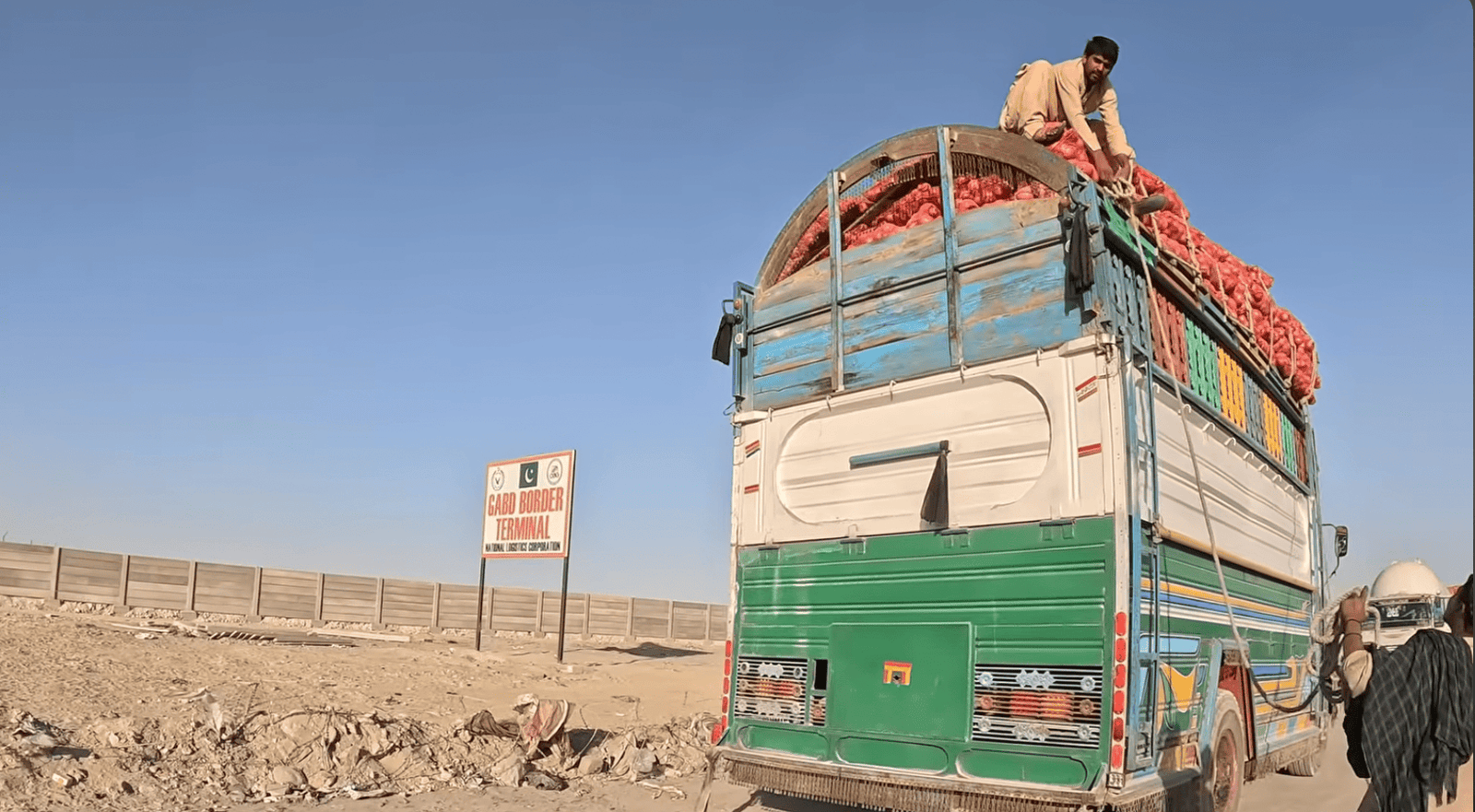
Pakistan has launched two new overland trade corridors through Iran and China, offering Central Asian countries alternative routes to Pakistani ports after Islamabad closed its main transit crossings with Afghanistan because of security concerns.
The corridors, which became operational in April 2026, run through Iran’s Gabd-Rimdan border crossing and China’s Sost Dry Port. They were introduced after Pakistan indefinitely closed the Torkham and Chaman crossings in October 2025 following persistent cross-border militancy.
More than 14,000 metric tons of cargo have already been transported through the two routes.
One corridor was formally inaugurated during a coordination ceremony in Karachi attended by senior representatives from Uzbekistan, Kyrgyzstan and Tajikistan. Pakistan presented the routes as a permanent alternative for Central Asian countries seeking access to global markets without relying on Afghan transit. The first convoy carried frozen meat and other exports to Tashkent and Bishkek through Iran.
Pakistan also dispatched its first export shipment from the Karachi Export Processing Zone to Kyrgyzstan via the Sost Dry Port under the TIR (Transports Internationaux Routiers) regime. The 3,300-kilometer Bishkek-Karachi corridor, operating under the Quadrilateral Traffic in Transit Agreement has since completed its first reciprocal commercial shipments, with Kyrgyz transport fleets delivering minerals and textiles to Pakistan.
Separately, the Hemani Group transported a 23.9-tonne consignment to Kyrgyzstan using the Pakistan Single Window (PSW) electronic customs system.
The new corridors provide Central Asian countries, including Uzbekistan and Kyrgyzstan, with overland access to the Arabian Sea through Pakistan while bypassing Afghanistan. Uzbekistan has already begun using the Gabd-Rimdan route to transport agricultural equipment and industrial raw materials.
Pakistan is also expanding the role of Gwadar Port within Phase 2 of the China-Pakistan Economic Corridor. Located about 400 kilometers east of the Strait of Hormuz, the port is expected to handle increasing cargo volumes moving through the new land corridors as regional trade routes continue to diversify.
The new network also expands the use of the TIR transit regime and the Pakistan Single Window system, which electronically processes customs documentation for cross-border shipments.