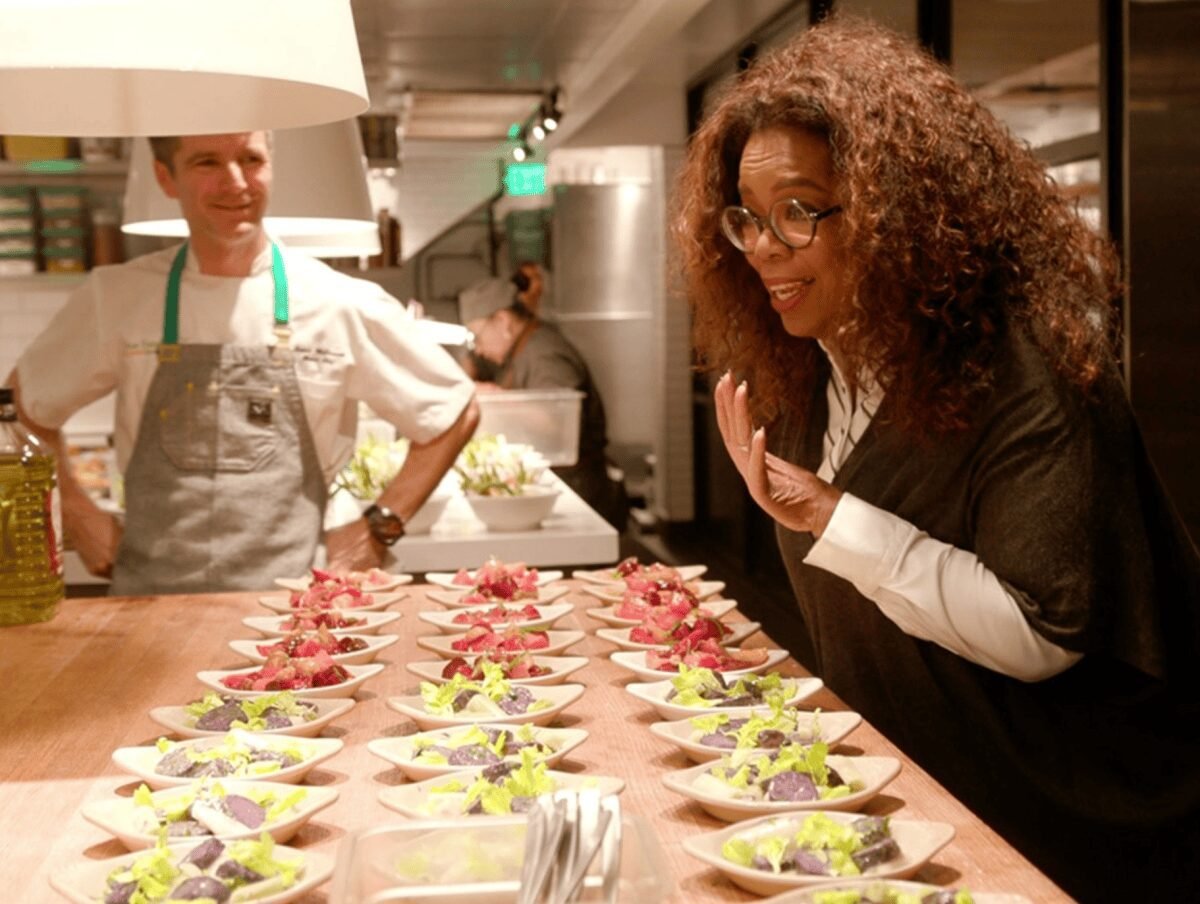
Oprah Winfrey-backed restaurant chain True Food Kitchen has filed for Chapter 11 bankruptcy protection and abruptly closed 12 restaurants across the country as the health-focused company fights to stabilize its finances.
The Scottsdale, Arizona-based chain announced the bankruptcy filing Monday, October 5, after the affected restaurants served customers for the final time Sunday.
The closures stretch across nine states, including major locations in California, Florida, Illinois and New York.
True Food Kitchen says the bankruptcy does not mean the entire chain is disappearing. Its remaining 34 restaurants across 14 states are staying open and continuing to serve customers while the company moves through the restructuring process.
The restaurants that closed are:
• Century City, California
• El Segundo, California
• San Diego UTC, California
• Miami, Florida
• Chicago, Illinois
• New Orleans, Louisiana
• Bethesda, Maryland
• Edison, New Jersey
• Hackensack, New Jersey
• Garden City, New York
• Columbus, Ohio
• Reston, Virginia
True Food Kitchen was founded in Phoenix in 2008 by restaurateur Sam Fox and physician and wellness advocate Dr. Andrew Weil.
The chain carved out a niche in the increasingly competitive casual-dining industry by emphasizing health-conscious meals, serving everything from salads and grain bowls to burgers, pizzas and sandwiches made with what the company describes as nutrient-dense ingredients.
Its celebrity connection came in 2018, when Winfrey made what was described at the time as a significant investment in the company and joined its board of directors.
Winfrey is no longer on the board but remains a minority investor, according to the company. She is not involved in True Food Kitchen’s day-to-day operations.
The bankruptcy filing reveals that the problems facing the restaurant company went far beyond a handful of underperforming stores.
True Food Kitchen entered Chapter 11 with approximately $42.1 million in funded debt obligations, according to court filings.
The company also reportedly had only about $1.6 million in unrestricted cash when it sought bankruptcy protection. A financial adviser said that amount would have been enough to cover operations and bankruptcy-related expenses for only about two weeks without additional financing and cash sources.
True Food Kitchen has now secured a commitment for approximately $20 million in bankruptcy financing from HumanCo TFK IV. The financing still requires court approval and is intended to keep the surviving restaurants operating while the company restructures.
CEO Jeff Chandler, who took over the top job in July, said Chapter 11 gives the company an opportunity to simplify its business and concentrate on the restaurants that are working.
“This process is the best path forward to simplify the business and focus on what we do best: delivering craveable, health-forward food and genuine hospitality,” Chandler said.
The company said the bankruptcy will allow it to strengthen its finances, reduce costs and improve operations.
But court documents paint a picture of a restaurant chain that struggled after years of rapid expansion and shifting strategies.
True Food Kitchen had grown from roughly 20 locations in 2017 to 46 before the latest round of closures.
Company officials cited repeated management turnover that resulted in changes to expansion plans, brand strategy and menu offerings. True Food Kitchen also invested money in new products and restaurant concepts that ultimately failed to deliver the expected results.
The pandemic created another setback.
As customers stayed away from dining rooms, the company experimented with using some restaurants as ghost kitchens and launched a separate delivery-only operation.
Those efforts were later abandoned. According to bankruptcy filings, the experiments created additional staffing and operational difficulties and distracted the company from its core restaurant business.
Not every True Food Kitchen location has struggled.
Court filings indicate that many restaurants remain profitable, while others have been hurt by insufficient customer traffic or changing conditions in their local markets.
Before seeking bankruptcy protection, the company had already attempted to cut expenses by reducing corporate staff, renegotiating agreements with vendors and seeking changes to restaurant leases.
Now it is taking a more dramatic step.
True Food Kitchen plans to use Chapter 11 to pursue a court-supervised sale of the business. The company said it hopes to find a long-term partner with enough financial resources to support the brand going forward.
Chapter 11 generally allows a company to continue operating while reorganizing its debts and finances under bankruptcy court supervision, meaning the filing itself does not necessarily signal that True Food Kitchen is going out of business.
The company has also asked the bankruptcy court for authority to continue paying employee wages and benefits, maintain certain customer programs and continue working with vendors during the proceedings.
It has not disclosed how many employees lost their jobs because of the 12 restaurant closures.
Chandler acknowledged the impact on workers, saying the decisions were “especially hard” on employees at the shuttered locations.
For customers, the most immediate impact will be felt in communities where restaurants suddenly disappeared.
But at the other 34 True Food Kitchen locations, the company says business will continue as usual for now.
Whether the health-focused chain can ultimately emerge from bankruptcy in its current form may depend on the restructuring process — and whether True Food Kitchen can find a buyer willing to bet on its remaining restaurants.