From Shaftesbury and Balfour to today’s Labour government, Britain’s changing relationship with Israel raises a larger question about the country’s sense of history, national purpose, and moral inheritance
While Prime Minister Andy Burnham and Foreign Secretary David Miliband busy themselves sanctioning and passing judgment on Israel, Scottish First Minister John Swinney has made a remarkable prediction: Burnham, he suggested, may go down in history as the final prime minister of the United Kingdom.
Is Burnham blind to the irony? Miliband delivered his ill-conceived judgments on Israel with visible unease, and some observers suggest the government’s posture is less about principle than about courting Britain’s Muslim vote away from the Greens and back toward Labour.
Even as they push a two-state solution for Israel in pursuit of that questionable political gain, they face a coordinated push from their own regional leaders demanding the right to hold independence referendums.
Two states instead of Israel, and how many states will it take to solve the United Kingdom? There is something painfully symbolic in that question.
Empires and kingdoms have risen and fallen throughout history according to how they treated the Jewish people and Jerusalem. It is a pattern strange enough to notice and persistent enough to take seriously.
A Different Britain
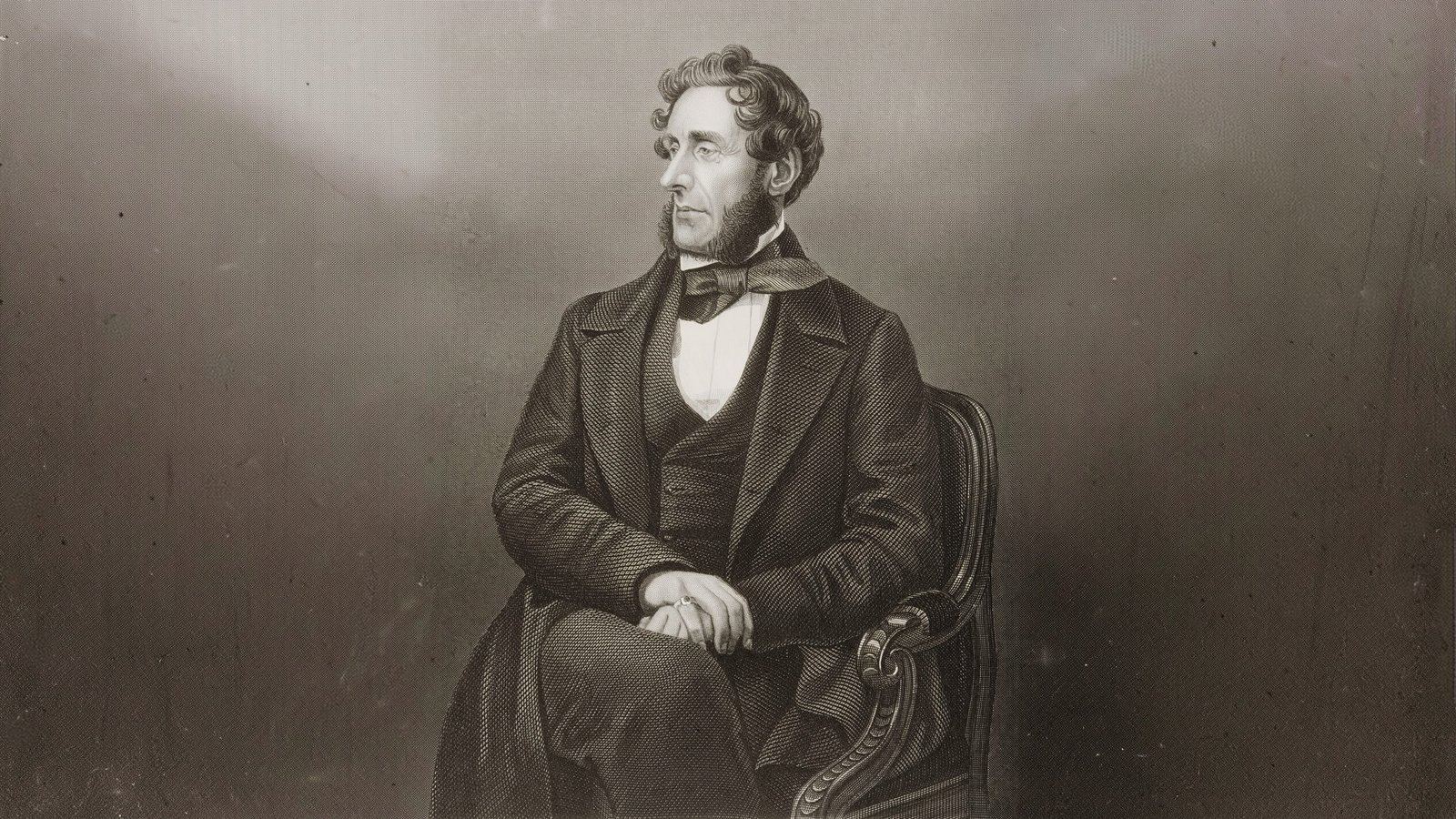
The United Kingdom of today would be almost unrecognizable to Anthony Ashley-Cooper, 7th Earl of Shaftesbury, the great Victorian reformer and early advocate of Jewish restoration to the Land of Israel. In 1840, Lord Shaftesbury wrote to Queen Victoria:
“May it be during your reign that, according to the hopes of this unique people now laid before Your Majesty, ‘Judah shall be saved and Israel shall dwell in peace.’ Such is the prayer of the loyal and devoted servant of Your Majesty.”
Shaftesbury was not a lone eccentric. He represented a remarkable current of British Christian concern for Jewish restoration that ran through influential levels of government, church, and society throughout the 19th and early 20th centuries.
That movement found one of its most consequential, and today most forgotten, representatives in William Hechler, who declared, “It is the duty of every Christian to love the Jews.”
In 1896, Hechler encountered a remarkable new publication: Der Judenstaat (The Jewish State). On March 10 of that year, he met its author, Theodor Herzl, and immediately recognized in him the man he believed could become the political instrument of Jewish restoration.
Herzl and Hechler appealed in turn to the great powers—Germany, Russia, the Ottoman Empire, and Britain—seeking international backing for a Jewish homeland. Germany had its opportunity first.
Kaiser Wilhelm II considered the matter but ultimately declined to make the Jewish national project a German cause. Fifteen years later, Germany lost the First World War and stood accused of having started it.
The vast Ottoman Empire collapsed. Russia descended into revolution and decades of communist tyranny.
Britain made a different choice and met a different fate. On November 2, 1917, Foreign Secretary Arthur James Balfour issued the declaration that His Majesty’s Government viewed “with favour the establishment in Palestine of a national home for the Jewish people.”
A month later, British forces under Gen. Edmund Allenby entered Jerusalem. Prime Minister David Lloyd George famously described the capture of the city as “a Christmas present for the British people.” It is almost impossible to imagine a British prime minister speaking that way today.
Britain was subsequently entrusted with the Mandate for Palestine by the League of Nations, a mandate that incorporated the Balfour Declaration and formally charged Britain with facilitating the establishment of the Jewish National Home. Britain had been given an extraordinary place in history.
Britain at Another Crossroads
There was once a Britain whose leading statesmen could speak openly about the restoration of Israel: a Britain of Shaftesbury, who prayed that Judah would be saved and Israel would dwell securely; a Britain that lent Balfour’s name to one of the decisive declarations of modern Jewish history; a Britain whose prime minister could celebrate the liberation of Jerusalem as a Christmas present.
That Britain was far from perfect. British policy later betrayed many of the hopes raised by the Balfour Declaration, closing the doors of Palestine to desperate European Jews as the Holocaust approached.
Today, Britain stands at another crossroads: What kind of Britain will survive? A nation does not hold together merely because its politicians negotiate another constitutional settlement. Nations are held together by shared conviction, by a sense of history, purpose, and moral inheritance.
I do not know whether Burnham will be remembered as the final prime minister of the United Kingdom. But if Britain’s leaders wish to understand what is happening to their country, perhaps they should look beyond Westminster, beyond the opinion polls and constitutional commissions, and even beyond Brussels and Washington.
Let them read Shaftesbury’s letters again and the Balfour Declaration—the foundations that helped make Britain great. And perhaps someone might remind them to read their Bible, too.