The Italian government is set to approve a framework for the resumption of nuclear power this summer, Prime Minister Giorgia Meloni told parliament.
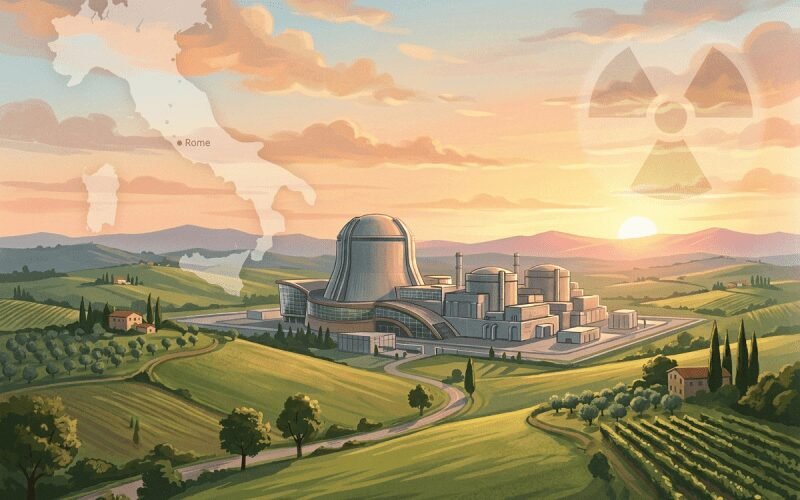
Italy abandoned nuclear energy following a referendum held after the Chernobyl disaster nearly 40 years ago, but the government is now pursuing a return to the technology using next-generation small modular reactors operated by the private sector.
Meloni said an enabling law for the nuclear restart would be approved in the coming months, with the government arguing the policy would strengthen energy autonomy and reduce costs, particularly in the context of heightened geopolitical tensions linked to the Iran war.
During her address at “Prime Minister’s Time” in the Senate, Meloni also said her government remained open to cooperation with the opposition on national priorities including employment, healthcare, demographic decline and electoral reform, although opposition parties have already dismissed the overture.
She reiterated that wages, business incentives and birth rates remain central policy priorities, adding that under her administration the number of precarious workers has fallen while stable employment has increased. She also said young people should see staying in Italy as a viable choice rather than a “forced sacrifice,” amid continued concerns over brain drain.
On wages, Meloni said stronger collective bargaining was needed to raise pay levels. She also stated that by the end of March, 76% of funds allocated under the EU’s National Recovery and Resilience Plan (NRRP) had been spent, describing implementation as effective.
The prime minister also clashed with centrist Italia Viva leader and former premier Matteo Renzi over the government’s housing programme. She defended the initiative, arguing that housing is a fundamental need rather than a luxury, and highlighted plans to deliver around 100,000 new homes over the next decade, including social housing and subsidised options.
Meloni also criticised elements of the opposition, accusing critics of failing to recognise the utility of government housing policies. In broader comments, she suggested that EU-level decision-making structures can obstruct national policy due to veto constraints, and warned that geopolitical tensions could weigh on Italian growth.
She added that she had recently visited a supermarket and observed continued public support for the government. Meloni also said her administration had only raised taxes on banks, insurers and energy companies, and pledged further tax cuts next year, while the opposition, citing Istat data, argues Italy is facing record taxation levels.
Separately, opposition leader Matteo Renzi said the government resembled “the Addams Family,” underscoring the increasingly adversarial tone of parliamentary exchanges.