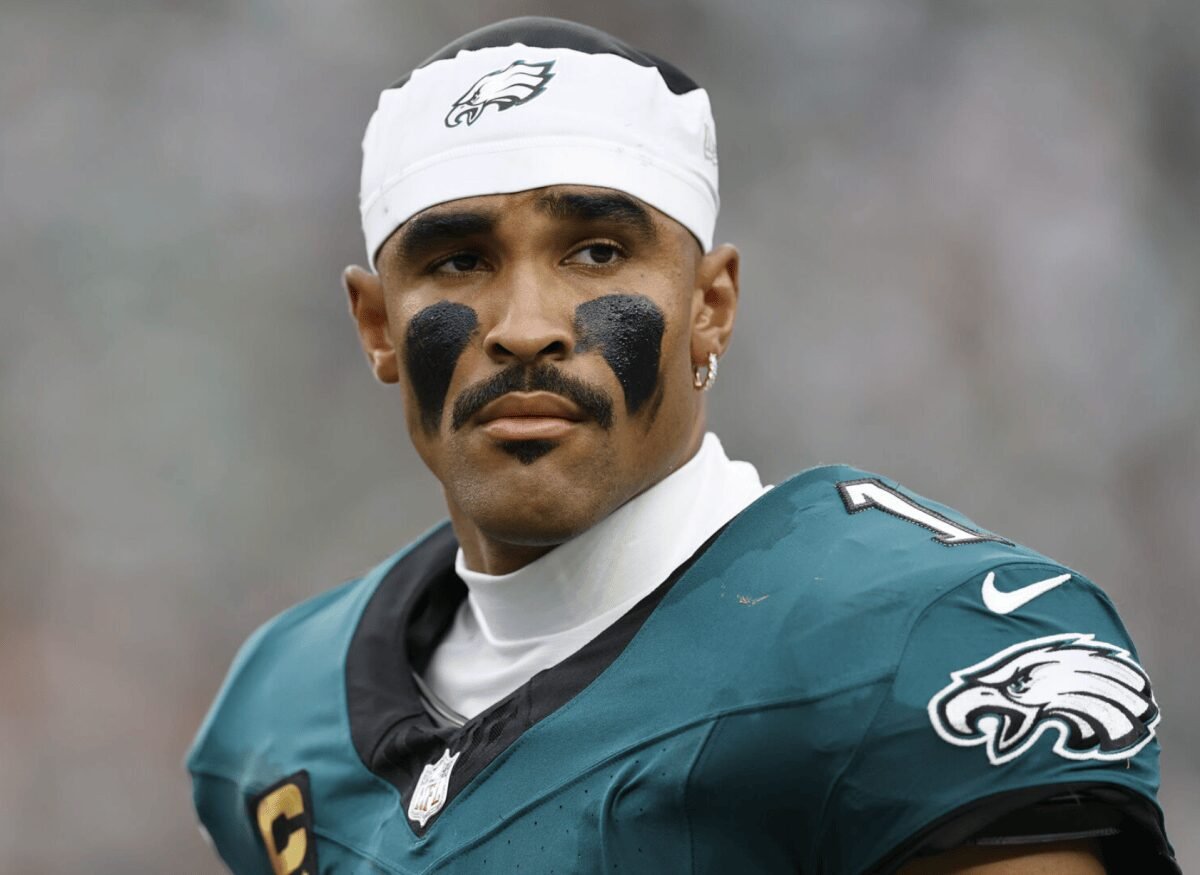
The frightening health crisis surrounding Philadelphia Eagles quarterback Jalen Hurts has taken another dramatic turn, with the NFL and its players’ union reviewing the medical decisions that allowed the Super Bowl MVP to play despite a blood clot in his leg.
The development comes after doctors discovered that Hurts, 28, had developed a more serious clotting condition involving both lungs, forcing him off the field and likely ending his season.
On Sunday, October 25, the NFL and NFL Players Association confirmed they were working together to review the handling of his medical care. The announcement followed the union’s demand for a full investigation into how the situation unfolded.
At the center of the controversy is a troubling timeline that began with what initially appeared to be a routine football injury.
Hurts was struck in his left calf by another player’s cleat during Philadelphia’s October 4 game against the Los Angeles Rams. He continued practicing and did not seek treatment from the team’s medical staff until October 8.
Two days later, after the Eagles arrived in London for their game against the Jacksonville Jaguars, an ultrasound revealed a superficial blood clot in his calf.
According to the Eagles, doctors reviewed the results and determined that Hurts could safely participate in the October 11 game. He played without restrictions, even though the clot had already been identified.
But the situation soon became far more serious.
A follow-up ultrasound revealed changes in the clot, prompting additional medical evaluations. By October 19, the Eagles and Hurts’ agent, Nicole Lynn, confirmed that he had developed deep vein thrombosis and bilateral pulmonary emboli, meaning blood clots were present in both lungs.
Pulmonary embolisms can be life-threatening because they obstruct blood flow in the lungs, making prompt medical treatment essential.
Hurts was placed on injured reserve and is now receiving blood-thinning medication. He is expected to miss the remainder of the season and cannot return to contact football activities while undergoing that treatment.
Despite the alarming diagnosis, his medical team has offered encouraging news. The Eagles and Lynn said Hurts is clinically stable, has no significant functional limitations and is expected to make a full recovery without lasting complications.
Still, questions surrounding his earlier medical clearance have intensified.
NFL Commissioner Roger Goodell defended the league’s medical procedures Wednesday, saying the established protocols had been followed. The league’s chief medical officer, Dr. Allen Sills, also expressed confidence in the care Hurts received from the Eagles’ medical staff.
The players’ union, however, has insisted that a thorough examination of the circumstances is necessary before conclusions can be reached.
Sunday’s joint announcement represents a significant development, although discussions about the review process were still underway and no formal findings had been released.
The central question is whether the medical decisions made before and after Hurts’ London appearance were appropriate, particularly given how dramatically his condition changed in the days that followed.
For Philadelphia, the situation has created uncertainty about its season without its star quarterback. For the NFL, it has raised broader questions about medical oversight and player safety.
For now, Hurts’ recovery remains the priority, with the Eagles hoping their franchise quarterback can eventually return to the field healthy.
But as the league and players’ union examine what happened, the circumstances surrounding his frightening diagnosis remain under scrutiny.