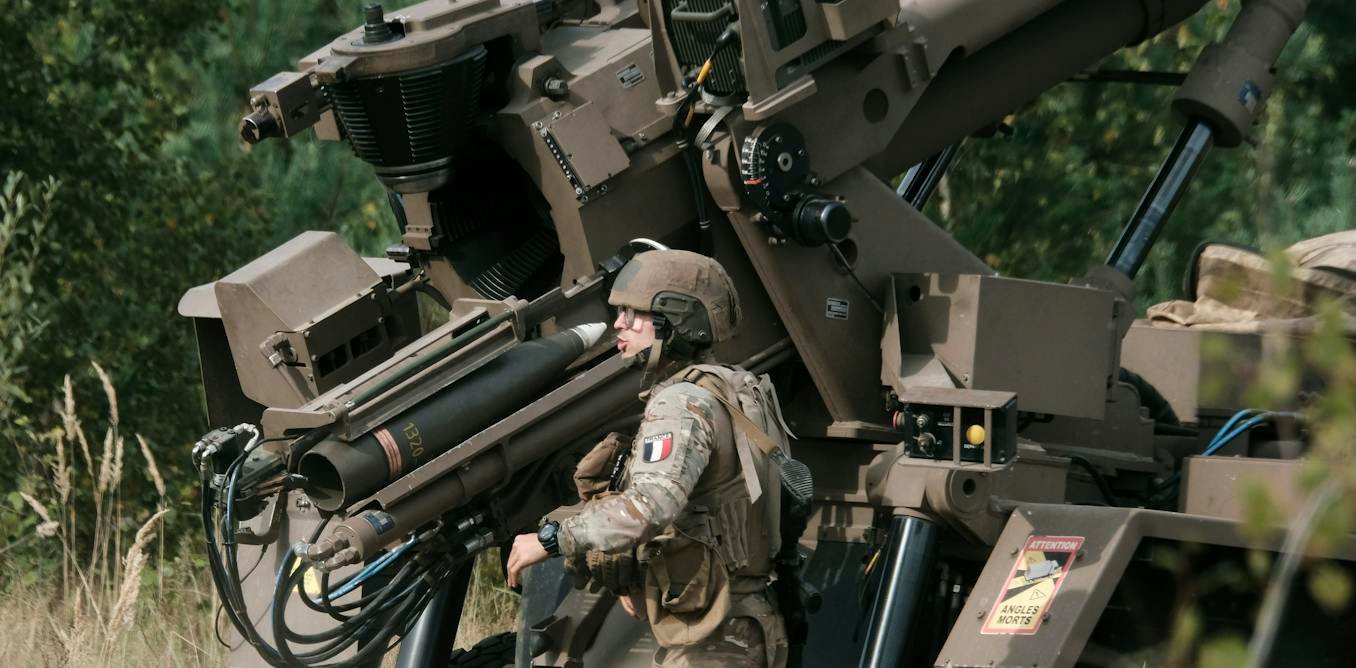
Over the past few weeks, a striking theme has emerged in discussions surrounding Nato. Senior political figures and former Nato officials have raised the possibility of invoking article 5 in response to severe cyber-attacks.
Military leaders have warned that Russia may seek opportunities to test the alliance’s resolve. These developments have prompted an obvious question: is Nato worried about being drawn into a wider European conflict?
The short answer is no. Nato isn’t panicking. But it is certainly having to confront a set of challenges more complicated than the prospect of a conventional war alone.
The real concern inside the alliance is not simply what Russia might do. It is whether Nato can maintain the unity and credibility needed to deter Russia while dealing with the growing political and strategic uncertainty among its members.
Much of the current discussion actually revolves around what are called “hybrid” activities. These tend to involve things such as cyber-attacks, sabotage, disinformation campaigns, airspace violations, GPS disruption and drone incursions. On September 15, jets deployed to the Nato air defence mission shot down what is alleged to have been a Russian drone violating Lithuanian airspace. Meanwhile, Denmark accused the Russian navy of firing flares at one of its helicopters operating in the Baltic Sea.
Such actions fall into the grey area between peace and war. They create uncertainty, impose costs and test political resolve, but without triggering an immediate military response. This presents Nato with a dilemma. The alliance was designed to deter major military aggression. It is less clear how it should respond to actions that are provocative but ambiguous.
Some western officials argue that Russia’s objective may not be to start a war with Nato at all. It may instead be to probe for weaknesses and identify areas where allies disagree over what constitutes an appropriate response, allowing for Moscow to play a longer game than some in eastern Europe would suspect.
In that sense, deterrence is no longer merely about tanks and missiles. It is about maintaining political unity in the face of continuous low-level pressure.
The article 5 problem
At the heart of Nato’s mission lies article 5, the commitment that an attack on one member will be treated as an attack on all. The difficulty is that article 5 derives its power not from legal wording but from credibility. Adversaries must believe that alliance members would actually follow through on their commitments if tested.
Analysts examining Nato’s eastern flank increasingly emphasise that deterrence rests on perceptions of allied willingness and political resolve as much as military capability.
If a hostile state caused widespread disruption to electrical grids, banking systems or communications infrastructure, would that justify collective military action? The answer is not always clear. For Nato planners, uncertainty itself can become a vulnerability.
Much of today’s anxiety is linked to the US. For 75 years, the alliance’s credibility has rested heavily on the assumption that Washington would lead any major response to aggression in Europe. That assumption has not disappeared. But it has become less straightforward than many European leaders would like.
Recent policy debates have increasingly focused on shifting responsibility for conventional defence towards European allies. Discussions about reducing US military commitments in Europe, reviewing troop deployments and encouraging greater European self-reliance have become central features of transatlantic security debates.
This does not mean the US is abandoning Nato. But it does mean alliance planners must consider scenarios in which American resources are stretched across multiple theatres and political attention is divided among competing priorities.
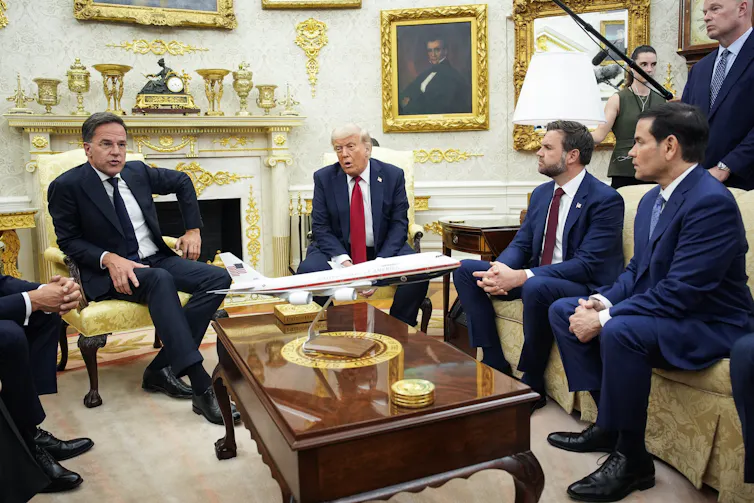
The challenge for Europe is therefore not replacing the US, but adapting to a future in which Washington expects allies to carry a greater share of the burden. The latest Nato concept to help achieve this is termed “multi-domain operations”, whereby Nato aspires to orchestrate military activities across all operating domains and environments and to be synchronised with non-military activities and organisations.
Politics matter as much as military power
A second challenge lies within Nato itself. The alliance often appears unified when confronted by major crises. Yet beneath that unity remain substantial differences in strategic outlook. Poland and the Baltic states naturally view Russia as the central threat. Southern European members frequently devote more attention to instability in North Africa and the Mediterranean. Larger powers bring global interests that smaller allies do not necessarily share.
At the same time, political shifts across Europe are creating additional complexity. The rise of nationalist and populist parties in Europe, such as the recent election of the AfD in regional elections in Germany, does not automatically weaken Nato. In some countries, these movements support higher defence spending and tougher policies towards Russia. In others, they are more sceptical of international commitments and multilateral institutions.
The consequence is not necessarily division, but increased diversity in how security threats are perceived and prioritised. Research on alliance cohesion consistently identifies differing threat perceptions and domestic political interests as potential sources of tension within Nato decision-making.
Concern, not panic
The temptation is to interpret recent statements and proposals as evidence that Nato fears war. A better interpretation is that Nato fears uncertainty.
The alliance faces an adversary willing to employ hybrid tactics below the threshold of open conflict and must adapt to a transatlantic relationship in which European allies are expected to take greater responsibility for their own defence. And it must preserve political cohesion among 32 states with increasingly diverse domestic politics and strategic priorities.
That is a serious challenge. But it is not panic.