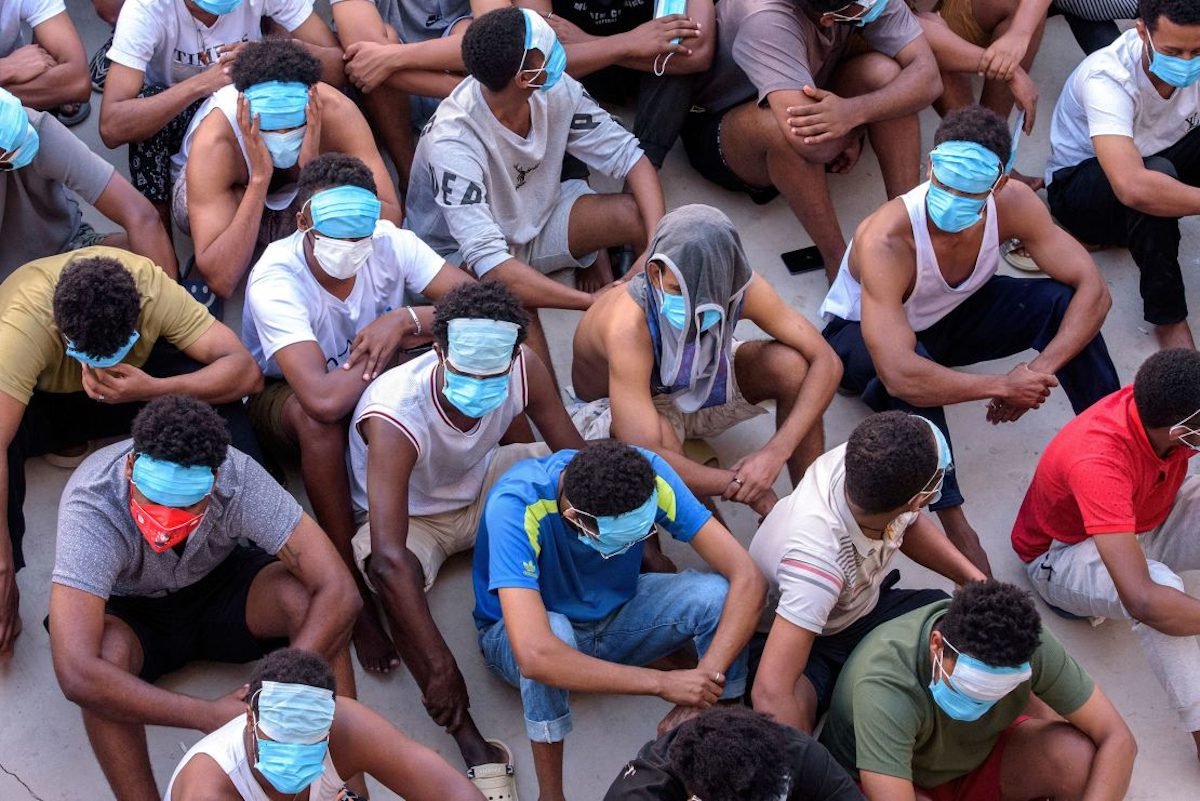
The rise of scam centers across Southeast Asia, particularly in Myanmar and Cambodia, has put a spotlight on existing economic inequalities and how these vulnerabilities are preyed upon to exploit the most vulnerable.
With American losses funding the system, US consumer fraud and Southeast Asian human trafficking are directly connected. The rapid emergence of new scam centers inside Myanmar and junta-controlled areas has presented a geographic shift that demands attention and an urgent response.
With US$16.6 billion in internet crime losses and $12.5 billion in consumer fraud, in addition to at least $10 billion stolen from Americans, especially by Southeast Asia-based networks, transnational criminal organizations are directly profiting from scamming American consumers.
The primary drivers are investment scams, impersonation, emergency scams, and AI-based voice cloning. The weaponization of technology is used to derive emotional shock and compliance.
The consumer protection crisis that has emerged is compounded by a labor exploitation crisis that has allowed an organized transnational crime system to flourish. US dollars have sustained the trafficking quotas, financed armed group protections and directly fed into funding regional criminal economies.
Victims of the scam centers are recruited from low-income countries and migrant communities through the advertising of recruitment for tech roles or call centers. High salaries and benefits are promised. For those who are recruited, once ferried across borders, passports are confiscated, and they remain against their will in debt bondage.
The prison-like factories have been described by residents who live in the surrounding areas of the scam compounds, particularly on the Thai side of the border, as having reported alarming images and sounds from those trapped within the confines, including shouting and escape attempts in the Moei River, with bodies discovered downstream in local fishing communities.
Inside the compounds, survivors detail 18-hour work shifts, daily financial quotes, and digital dashboards tracking performance, as well as physical punishments for failure, including solitary confinement, beatings, and electric shocks.
Those on the ground in local communities are not spared the hardships that come with the scam centers. Among the many issues women face in Burma today, the surge of transnational crime is especially urgent.
Traffickers deceive women from the region with fake job offers, only to imprison them in harsh conditions where sleep, food, and water are denied, and torture is used as a punishment for resistance.
These incidents are not isolated. Women from Asia and beyond are being caught in the same violent networks in Burma’s scam hubs, where abuse, extortion, and coercion happen regularly. Sadly, many never escape alive.
Reports of human trafficking, early marriage for young women, and forced marriage within the community have surfaced. Parents sometimes force their children to marry Chinese individuals in hopes of providing them with better opportunities and support.
In some cases, women may initiate marriages themselves, believing it to be a means of escaping poverty, as they may not fully understand the implications.
Justice for victims often depends on those who manage to escape and their willingness to pursue justice. The level of support and understanding they receive varies based on their knowledge, capacity, and the discrimination they experience. In some cases, survivors may be in a better position than others and may not experience physical violations of human rights.
To escape these situations, individuals typically have to pay a significant amount of money, as the systems in place are corrupt. While reports indicate that rape may not be a common practice in these scam centers, it is difficult to ascertain for certain. Victims often face psychological manipulation, and once they are inside, escaping can be extremely challenging due to strict security measures.
While US sanctions have targeted the Karen Border Guard Force (BGF) and the Democratic Karen Benevolent Army (DKBA), greater visibility of the challenges on the ground along Myanmar’s various borders is essential to combat the illicit situation. Crackdowns have been relatively unsuccessful, despite large raids and rescue-worker bus convoys.
Compounds reopen quickly, relocate to conflict zones, and continue operations via satellite internet. It is critical to note that operations have access to resources beyond satellite internet, which has been cited as one of the primary concerns, but the problem extends beyond viable Internet connections, as many of those fueling the trafficking operations are individuals who do not rely on telecommunications.
Armed groups complicit in the suffering and trafficking of those held in the confines must be held accountable through aggressive asset freezes and extraditions. Myanmar’s military junta must be met with long-overdue and immediate consequences, including targeted sanctions. Survivor testimonies must be protected, and legal and translation support must be provided to those who are seeking justice for their suffering.
Further, global awareness campaigns combating the targeting of seniors, migrants, and social media users must focus on AI-driven voice cloning and on recognizing the signs of urgent payment schemes.
In response to the increased targeting of US civilians, US members of Congress have introduced two bills to combat this growing transnational issue: H.R. 5490, the Dismantle Foreign Scam Syndicates Act, and S. 2950, the Scam Compound Accountability and Mobilization (SCAM) Act.
These competing bills have similar targets – transnational “scam compounds” and cyber-fraud in Southeast Asia; however, when viewed individually, there are significant differences between the two bills.
Several representatives have supported the legislation to combat the rise of scam centers. House Representative Shreve (IN-6) introduced H.R. 5490 – Dismantle Foreign Scam Syndicates Act, which established an interagency Task Force to develop and carry out a whole-of-government strategy, as well as authorize sanctions against foreign individuals and entities involved in online scams.
H.R. 5490 is more operational and enduring, built around a robust task force, detailed reporting, and formal engagement with state and local law enforcement, NGOs, and the private sector, and it also explicitly authorizes programs to support trafficking victims from scam compounds.
In contrast, Senator Kaine introduced S. 2950, the Scam Compoud Accountability and Mobilization (SCAM) Act, which focuses on a framework centered on State Department-led strategy, sanctions, and international diplomacy.
S. 2950 is more high‑level and time‑limited, emphasizing a federal‑level strategy that references survivors but does not separately authorize victim‑support programs or require the same depth of reporting and non‑federal collaboration.
Together, the two bills would push the US to treat scam compounds in Burma and along the Thai border as both security and human‑rights threats, with H.R. 5490 driving more hands‑on pressure and on-the-ground victim support, and S. 2950 embedding a sanctions‑ and diplomacy‑focused framework for those hotspots.
For Americans, that means Washington would devote more resources and coordination to disrupting the foreign networks that defraud U.S. residents, aiming over time to reduce scam losses and better protect trafficked victims who are forced to target people in the United States.
Additionally, the BRAVE Burma Act’s recent introduction to the Senate would complement these two bills by giving the US greater leverage and tools specifically focused on Burma’s political and human‑rights environment.
While H.R. 5490 and S. 2950 target scam compounds and the transnational criminal networks that run them, the BRAVE Burma Act is aimed at supporting democratic movements and sanctioning the Burmese military regime or junta-backed militia in Burma.
In combination, the scam‑focused bills could be used to go after the financial and logistical infrastructure of scam compounds. At the same time, the BRAVE Burma Act pressures the military junta and allied militias that tolerate or profit from those compounds.
The Act aligns US democracy, human rights and anti‑fraud policy so that crackdowns on scams do not strengthen abusive security forces and instead support a safer environment for both Burmese civilians and trafficked workers who are forced to target Americans.
Furthermore, long-overdue action is needed to protect those falling victim to a system that is not adequately challenged. Comprehensive action is necessary to strengthen the systems that have allowed innocent people to become victims of scam centers, as well as those outside who have been lured into losing money.
Without meaningful intervention, scam centers will continue to strip away people’s humanity through gaps in safety nets that fail to protect civilians. The complicity of the military junta must also be addressed with strong sanctions to ensure the regime is held accountable for its decades-long crimes.
Any delay will only allow the situation to worsen and spread, putting more lives at risk and in immediate danger.
Karen Ames is a human rights activist and the managing director of the US Campaign for Burma with more than 10 years of experience working on Burma.
Maggi Quadrini is a women’s rights advocate who provides technical assistance to community-based organizations along the Thailand-Myanmar border. She focuses on gender equality and localized humanitarian solutions.