Researchers published late-stage clinical trial data today for the latest obesity drug, retatrutide—expected to be the most powerful formula yet—and the results appear in line with high expectations. Patients with obesity on the highest retatrutide dose lost an average of 25 percent of their body weight after 80 weeks, and an average of 30 percent after an extension period to 104 weeks. Overall, more than a third of participants taking retatrutide lost 30 percent or more of their weight.
The drug also proved effective at reducing knee pain (by up to 62 percent) in a subset of participants with obesity-linked knee osteoarthritis. It reduced the number of sleep apnea events per hour (by up to 57 percent) in a subset of participants with obesity-linked obstructive sleep apnea. The drug improved cardiometabolic measurements across the board, including blood pressure, triglycerides, and low-density lipoprotein cholesterol (bad cholesterol). At the start, more than a third of trial participants had prediabetes and, by the end, the condition had resolved in more than 90 percent of those participants.
The trial began in 2023 and included 2,339 participants from 131 clinical trial sites in 11 countries. Participants were broken into four nearly equal groups, given either: 4 mg of retatrutide, 9 mg, 12 mg, or a placebo. Across all groups, the average starting weight was around 113 kg (250 pounds), and the average body mass index (BMI) was 40. For the subset analyses, 574 participants had knee osteoarthritis, and 243 had obstructive sleep apnea. The results appeared today in the New England Journal of Medicine.
The data is likely to only ratchet up the anticipation for the drug among the millions of Americans with obesity. Retatrutide has been so sought after that, in June, news broke that top health officials in the Trump administration were involved in granting special access to the experimental medicine to a mystery 79-year-old in April—widely speculated to be Trump, who was 79 at the time.
Next-generation obesity drug
Retatrutide is being developed by pharmaceutical giant Eli Lilly, which also makes tirzepatide, a potent dual-acting treatment for obesity (Zepbound) and type 2 diabetes (Mounjaro). Both medications build on GLP-1-based obesity drug semaglutide (Ozempic/Wegovy) from pharmaceutical company Novo Nordisk. Tirzepatide targets not just GLP-1 (aka Glucagon-like peptide-1), but also GIP (aka glucose-dependent insulinotropic polypeptide).
Retatrutide builds on these drugs by adding glucagon to the combination of GLP-1 and GIP. All three are hormones that have overlapping roles in responses to food, helping the body regulate blood sugar levels, the feeling of fullness, how much we eat, and downstream metabolic factors.
The interplay among the three hormones is complex, and they have different activities in different places in the body and at different times. GIP is secreted by cells (K cells) in the first sections of the small intestine, right after the stomach. This hormone is best known for stimulating insulin release in response to glucose (sugar). But GIP has other activities, including triggering the degradation of triglycerides (a type of fat in the blood) and working in the brain to trigger the feeling of being full. It also has a role when blood glucose levels get too low. In that case, GIP stimulates an increase in glucagon.
Glucagon is a hormone released from alpha cells in the pancreas, and it acts counter to some of the main roles of GIP and GLP-1. Glucagon is best known for triggering the release of glucose and fatty acids into the blood, which it does when blood sugar levels get too low (hypoglycemia). But after meals, glucagon also seems to play a role in increasing insulin production, delaying stomach emptying, and regulating lipid levels.
GLP-1, the most famous of the hormones, is produced by cells (L cells) further down the gastrointestinal tract, namely at the end of the small intestine (the ileum) and the colon. GLP-1 works in response to sugar to increase the release of insulin. It delays stomach emptying and works in the brain to trigger the feeling of being full. It can also send signals to spur the degradation of lipids in fat tissue. Additionally, both GLP-1 and GIP can stimulate the release of another hormone, called adiponectin, which can help with insulin sensitivity and reduce inflammation.
Trial limitations
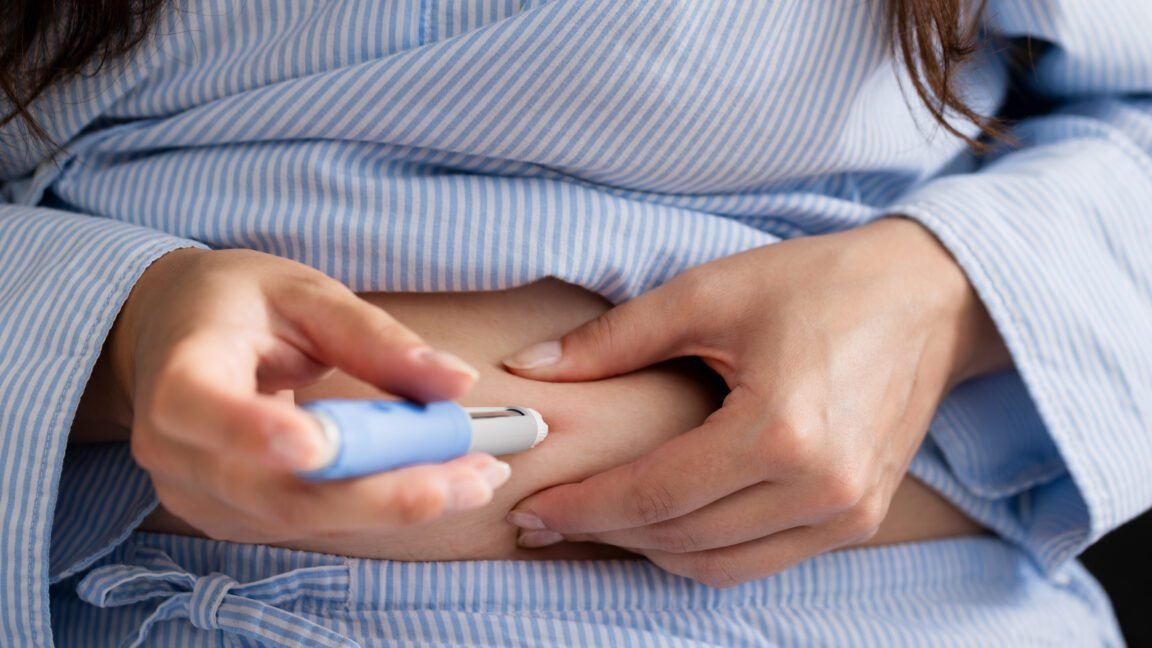
Retatrutide can stand in for all three hormones (GLP-1, GIP, and glucagon), but its active ingredient is a single synthetic peptide. Different sections of the molecule interact with the specific receptors for each of the three hormones, playing the role of the hormones. However, it doesn’t bind to these receptors with the same strength as the natural hormones; compared to GLP-1 and glucagon, retatrutide is less potent, but compared to GIP, the drug is nearly nine times more potent. The peptide is also stabilized, so it stays active in the blood for six days, allowing for weekly injections.
The effects of the triple-acting drug seem more potent than in the previous obesity drugs. But a notable limitation of the trial is that it didn’t compare retatrutide to an existing treatment, such as tirzepatide. How it compares in weight loss and other health benefits will need to be explored in future trials.
So far, retatrutide’s safety looks similar to what’s seen with existing GLP-1 and GLP-1/GIP drugs: The most common complaints were transient, mild-to-moderate gastrointestinal symptoms, such as nausea, diarrhea, and constipation. Some participants reported feeling dizzy and having low blood pressure on retatrutide, which was more common among people taking medication for high blood pressure. Ten people in the trial had cardiovascular events (including one in the placebo group), and there were also 10 reports of pancreatitis (two in the placebo group), but the study wasn’t big enough to assess the risk of these conditions. Additional larger, longer trials are needed to evaluate these rarer potential safety risks.