As protesters marched against the embassy upgrade, the king’s Jerusalem agency met Palestinian leaders in the city and in Ramallah
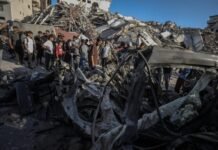
Moroccan opponents of normalization with Israel were wrapping up three days of protests Sunday against the kingdom’s decision to upgrade relations to full embassies, even as Rabat moved forward with plans to exchange ambassadors and deepen economic ties with Israel.
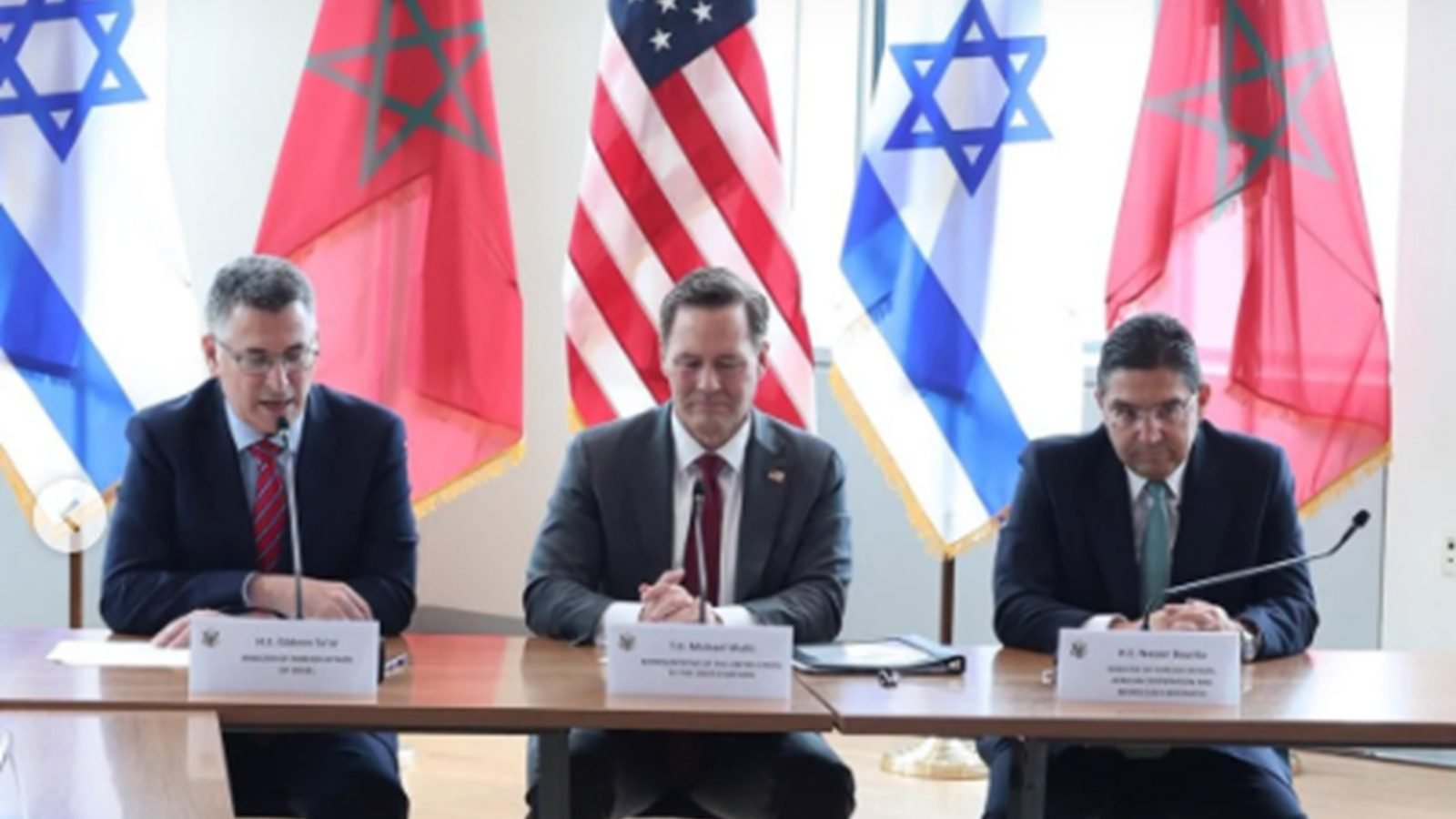
The demonstrations followed a Sept. 16 announcement in New York by Moroccan Foreign Minister Nasser Bourita, Israeli Foreign Minister Gideon Sa’ar and US Ambassador to the United Nations Mike Waltz that the two countries would elevate their liaison offices to embassies and appoint ambassadors. They also agreed to conclude investment-protection and double-taxation agreements by the end of the year.
“There are always demonstrations against normalization,” Yasmine Hasnaoui, a political scientist at Hassan First University in Settat, told The Media Line. “Morocco does not stop those things. Has Morocco changed its course? Morocco did not stop its relations with Israel, because Morocco sees itself as a mediator in the Palestinian and Israeli cause.”
The upgrade builds on the 2020 agreement under which Morocco restored formal relations with Israel and President Donald Trump, during his first term, recognized Moroccan sovereignty over Western Sahara. Morocco also hosts African Lion, the largest US military exercise in Africa.
The Moroccan Front for Supporting Palestine and Opposing Normalization announced the protest campaign on Sept. 17, calling the embassy upgrade a further deepening of relations with Israel. Another coalition, the Moroccan Commission for Supporting the Nation’s Causes, said it organized 76 events in 45 cities on Friday.
In Rabat, demonstrators gathered outside Parliament chanting, “The people want the fall of normalization,” according to Moroccan media. Protesters in Marrakech shouted, “No ambassador, no embassy.” No serious disturbances were reported.
Moaz al-Hajri, national coordinator of the Front, also criticized the Israeli liaison office’s move to Mehdi Ben Barka Avenue in Rabat, calling the location “a provocation to the Moroccan people and to the memory of the martyr Mehdi Ben Barka.”
Ben Barka, a prominent independence-era opposition leader, advocated constitutional limits on royal power, land reform and state-led development before disappearing in Paris in 1965. Israeli journalists have reported that Mossad assisted Moroccan agents in tracking him.
Those long-running questions about political power and the distribution of economic gains also surfaced during Morocco’s parliamentary election Wednesday.
Final results issued Friday gave the palace-aligned Authenticity and Modernity Party 97 of the 395 seats in parliament. The National Rally of Independents won 66, Istiqlal 65 and the Islamist Justice and Development Party, known as the PJD, 54, up sharply from 13 in 2021. Turnout fell to about 38% from about 50% five years ago.
At a party council Saturday, PJD leader Abdelilah Benkirane credited the result to “great success from God” and said the public once again viewed the party as “a truly serious party.” He did not attribute its gains to the anti-normalization campaign.
The PJD itself headed Morocco’s government when relations with Israel were restored in 2020.
“They are against normalization, and they have demonstrated that on several occasions, except when they were in government,” Hasnaoui said. “They will take to the streets against what Morocco has done recently in upgrading the status of relations and establishing embassies. But I do not think it will touch the sovereignty of the country when it comes to the Western Sahara.”
Einat Levi, an expert on Morocco and Israeli-Moroccan relations who previously headed economic and academic affairs at Israel’s mission in Morocco, said ties between the two countries have deeper foundations than electoral politics.
Morocco-Israel relations are anchored in something broader than party politics
“Morocco-Israel relations are anchored in something broader than party politics,” she told The Media Line. “They reflect a strategic direction led by the king and the highest levels of the Moroccan state, built on long-standing ties, shared interests and a common heritage.”
Western Sahara remains central to that strategy.
Morocco claims sovereignty over the former Spanish colony, while the Algeria-backed Polisario Front seeks independence. UN Security Council Resolution 2797, adopted in October 2025, called for negotiations using Morocco’s 2007 autonomy proposal as a basis while reaffirming the goal of a mutually acceptable settlement consistent with the principle of self-determination. The mandate of the UN peacekeeping mission in Western Sahara expires Oct. 31.
Morocco has simultaneously maintained a public commitment to the Palestinian cause.
Speaking at the United Nations last week, Bourita defended the UN Relief and Works Agency for Palestine Refugees in the Near East (UNRWA), criticized Israeli annexation proposals in the West Bank and condemned settler violence.
UNRWA has become a major point of contention between Israel and many of its regional partners. Israel accuses the agency of allowing Hamas infiltration and says its treatment of Palestinian refugee status perpetuates the conflict. A UN investigation found that nine UNRWA employees may have participated in the Oct. 7, 2023, Hamas attack, and Israel subsequently barred the agency from operating on its territory. UNRWA rejects claims that recognizing descendants of Palestinian refugees is unique to the agency, noting that multigenerational refugee status also exists in other prolonged refugee situations.
Morocco has also pledged to deploy a military field hospital to Gaza. King Mohammed VI chairs the Organization of Islamic Cooperation’s Al-Quds Committee, which focuses on Jerusalem and Palestinian issues.
Morocco is there to mediate
“The king is head of the Al-Quds Committee,” Hasnaoui said. “That does not mean they are with Israel. Morocco is there to mediate.”
The committee’s operational arm, the Bayt Mal Al-Quds Acharif Agency, spent part of the protest week holding consultations in Ramallah and Jerusalem. Mohamed Salem Echarkaoui, the agency’s acting director, met Palestinian officials, Muslim and Christian religious figures, universities, hospitals and business representatives as the organization develops its 2027-2030 plan.
The agency says it wants to move gradually from direct assistance toward employment, entrepreneurship and longer-term economic support in Jerusalem.
Israel’s diplomatic presence in Morocco has had its own complications. Israel recalled its first envoy in Rabat, David Govrin, in 2022 during a misconduct investigation. He was later cleared and returned. Israeli personnel were withdrawn for about 10 months after the Oct. 7 attacks.
The current head of mission, Yossi Ben-David, a Likud member and former mayor of Tiberias, was appointed in 2024. Israel has not yet named the ambassador who would head the newly upgraded embassy, and with Israeli elections scheduled for Oct. 27, the appointment could fall to the next government.
Eli Bar-On, a former senior Israeli official who heads the regional development organization MENA2050, said the United States has been integral to the relationship from the beginning.
“In many ways, it has been a trilateral relationship: Israel, Morocco and the United States,” he told The Media Line. “Both Israel and Morocco have very strong alliances with the US, and that was a key pillar of this relationship.”
Since the Gaza war began, Bar-On said, visits by Israeli ministers and officials “have not stopped, but they have been kept quiet, and that was for the benefit of the relationship.”
He also pointed to security cooperation. Israel accepted Moroccan participation in the US-backed stabilization force in Gaza, he said, and Israeli-owned BlueBird Aero Systems has been linked in Israeli and Moroccan media to drone production in Morocco.
Levi said the diplomatic upgrade could create new economic opportunities, but only if the two governments translate agreements into practical arrangements.
Diplomatic momentum does not last forever
“Diplomatic momentum does not last forever,” she said. “The task now is to build on what has already been achieved and, above all, to give real substance to the many agreements signed since relations were renewed. The burden of proof is now on us.”
The embassy upgrade means “for the first time, an Israeli ambassador will be formally accredited to Morocco,” she said. Yet without agreements covering double taxation, customs and other trade issues, “doing business between Israel and Morocco remains less competitive compared with other markets.”
People-to-people ties have endured even through the political tension. Pilgrimages by Israelis of Moroccan descent to Jewish holy sites “never really stopped,” Levi said, and restored direct flights are heavily booked.
Nearly 1 million Israeli Jews trace their family roots to Morocco, making them one of Israel’s largest communities with origins in Arab and Muslim countries.
“Finally,” Levi said of the diplomatic upgrade. “The hope is that Morocco can become not only a place of nostalgia and heritage, but an integral part of their future as well.”
The next Moroccan government will face pressures extending far beyond foreign policy.
Under the constitution, King Mohammed VI appoints the head of government from the party that wins the most parliamentary seats, while retaining control over foreign policy, defense and religious affairs. He has not yet named a new head of government from the Authenticity and Modernity Party.
Hasnaoui said the election result comes against a backdrop of youth frustration, social protest and sharp disparities between Morocco’s infrastructure ambitions and everyday living conditions.
“We do not want to have another Ceuta or another Gen Z movement,” she said, referring to this summer’s attempted mass crossings into the Spanish enclave of Ceuta and last year’s youth protests.
Those protests began in Agadir after eight women died following cesarean sections at a public hospital. Weeks later, the king opened a new university hospital there, while the 2026 budget increased spending on health and education and provided tens of thousands of new public-sector positions.
It does not make sense that Morocco is going at two speeds
“It does not make sense that Morocco is going at two speeds,” Hasnaoui said, “one where you have the infrastructure, the high-speed train, the biggest projects, and another where human development is way behind.”
The contrast is visible in the automobile industry. Morocco has become a major vehicle manufacturing and export center, with annual production capacity above 500,000 vehicles, yet a 2025 survey found that about 70% of Moroccan households did not own a car.
“The success of the next phase of Morocco’s development should be measured not only in kilometers of railway, or the size of the ports, or the beautiful buildings in Rabat,” Hasnaoui said, “but in whether a young Moroccan in Dakhla, in Errachidia, in Fez or in the Atlas region can say that this economic transformation has created an opportunity for me.”
That tension between modernization, identity and political continuity will also be on display next month in Fez.
The Museum of Moroccan Jewish Culture is scheduled to open Oct. 12 in the city’s historic Jewish quarter on land donated by the local Jewish community. The state-funded museum, launched by King Mohammed VI in 2019, will trace more than 2,500 years of Jewish life in Morocco. Moroccan media describe it as the first publicly funded museum devoted entirely to Jewish culture in an Arab or Muslim country.
At Casablanca’s Beth El synagogue on Yom Kippur last week, Serge Berdugo, secretary-general of the Council of Jewish Communities of Morocco, prayed that the new year would bring “a peaceful and just resolution to the fratricidal conflicts that are bringing grief to the Middle East.”
Bar-On said Rabat is also watching Israel’s Oct. 27 election.
“In Morocco they will also want to see what kind of government Israel has after the elections,” he said.