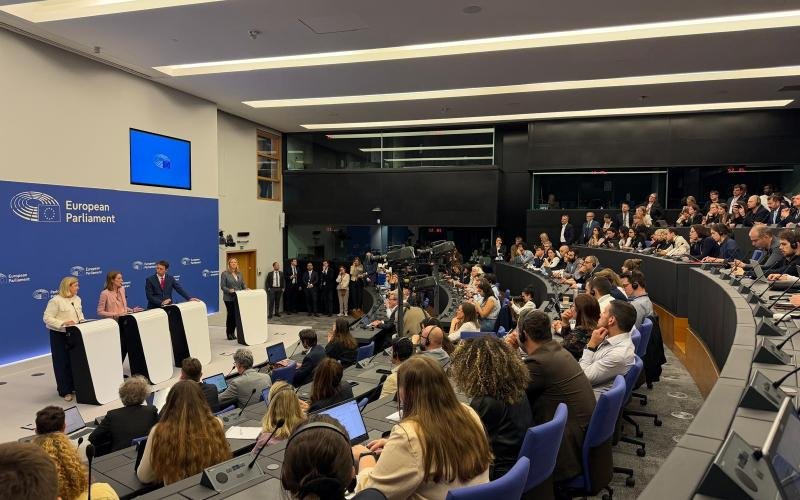
The European Parliament has declared itself ready to enter negotiations on the European Union’s next long-term budget, with President Roberta Metsola warning that Europe cannot meet today’s challenges with an outdated financial framework.
Following the Parliament’s vote on its position for the next Multiannual Financial Framework (MFF), Metsola said the result sends a clear signal that MEPs are prepared to move swiftly and engage on substance.
“Today’s vote means the European Parliament is ready,” Metsola said. “We are the first institution to define our priorities and our position. We now hope that the Council will follow suit quickly so negotiations can begin.”
She described the upcoming budget talks as the most difficult MFF negotiations to date, given the scale of geopolitical, economic and security pressures facing the bloc.
“Europe cannot face a new era with an old budget,” Metsola said, arguing that the next financial plan must reflect new realities including defence, competitiveness, security and resilience.
“If we must stand on our own two feet, our budget must match our ambition,” she added.
A major concern raised by Metsola was the repayment of borrowing linked to the EU’s post-pandemic recovery programme. She insisted future generations should not be forced to shoulder old debts by cutting back on current priorities.
“The next generation cannot foot the bill for old debt while we slash investment in the priorities Europe needs today,” she said.
The EP President also stressed the need for a more flexible budget capable of reacting rapidly to emergencies, citing war, migration pressures and climate-related disasters such as floods and wildfires.
“Europe needs the ability to act fast. Our budget must be crisis-proof, agile and ready to respond,” she said, adding that Parliament’s final consent to any deal would depend on these principles being respected.
Addressing the press briefing, co-rapporteur Siegfried Mureșan said the Parliament’s position had united pro-European political groups behind a common vision for a stronger EU budget.
“This is a strong position, with all pro-European groups united behind it,” the EPP MEP said.
Mureșan said Parliament is pushing for a budget that is sufficient, predictable and transparent, while ensuring that new priorities are properly financed rather than funded through cuts elsewhere.
“If we say something is important, we need to fund it,” he said, pointing to increased spending needs in security and competitiveness.
At the same time, he said Parliament wants to reverse what it sees as unjustified cuts proposed by the European Commission in traditional policy areas such as agriculture and regional funding.
“We are restoring unjustified cuts, especially in agriculture, where food security is essential, and in regional policy,” he said.
Mureșan also called for decisions and funding delivery to happen closer to citizens, arguing for a stronger role for regions in managing cohesion funds.
“The EU budget should be a predictable tool,” he said.
On revenue, he backed new own resources for the EU, including a digital levy on global technology giants.
Co-rapporteur Carla Tavares said the debate ultimately comes down to honesty about resources.
“We cannot do more with less,” she said. “We cannot sacrifice existing policies while also trying to invest more in competitiveness, security and defence.”
The Socialist MEP argued there are only three options: increase direct national contributions, cut programmes, or create new own resources for the EU. Of these, she said new revenue streams were the only realistic path forward.
“This is an opportunity for the Council to act,” she said, warning that without fresh resources future discussions would centre on which programmes to close rather than how to strengthen Europe.







, Metsola said the result sends a clear signal…)