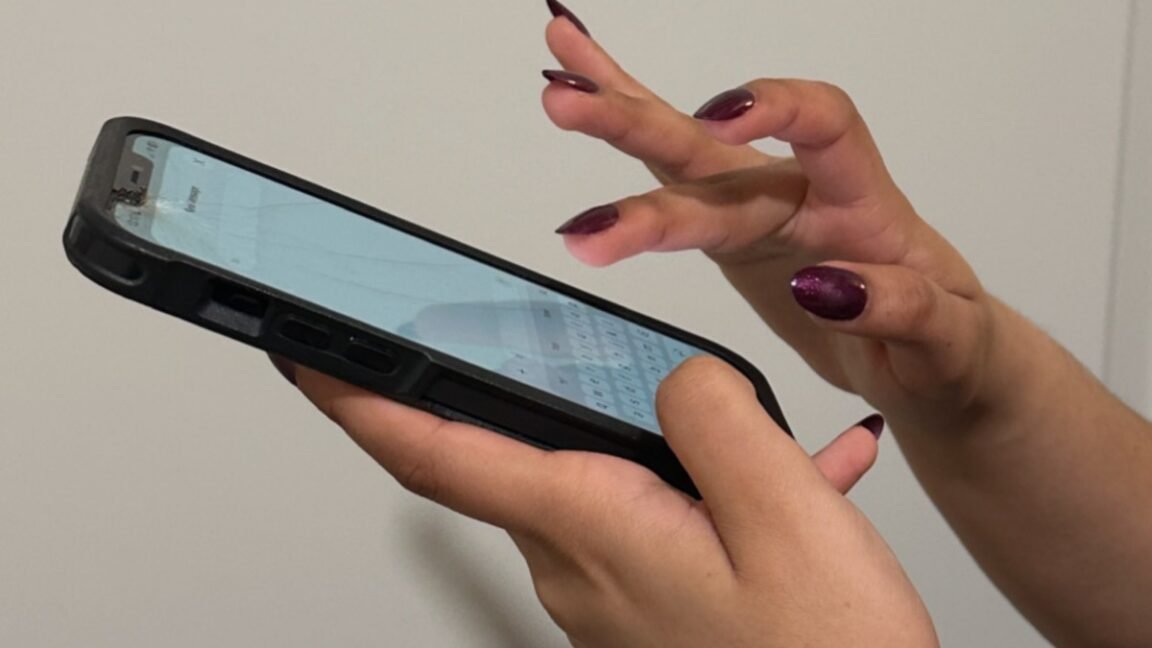
The rise of touchscreen technology has been a boon in many respects, but for people with long fingernails, there can be issues with the capacitive variety since fingernails are non-conductive and thus don’t register on the screen as a touch. One can use a stylus, of course, or simply use the finger pad under the nail, but ideally it would be nice to be able to use one’s fingernail. A conductive nail polish might do the trick, according to research presented at a meeting of the American Chemical Society in Atlanta, Georgia.
The work began as a special project for Manasi Desai, an undergraduate at Centenary College of Louisiana who has an interest in cosmetic chemistry and decided to investigate ways to make fingernails compatible with touchscreen technology. There are a few existing conductive nail polishes that rely on spiking a clear polish with carbon nanotubes, conductive polymers, or metallic particles. And in 2013 and 2014, a proposed press-on false fingernail with a capacitive tip was showcased at CES in Las Vegas, although the technology doesn’t seem to be commercially available.
Desai reasoned that existing polishes rely on additives that could be dangerous if inhaled, as well as having a limited shade range given that they impart a black or metallic shimmer. Working with her supervisor, organometallic chemist Joshua Lawrence, Desai decided to try to create a clear, colorless nail polish that didn’t use any toxic materials and could be applied over any manicure.
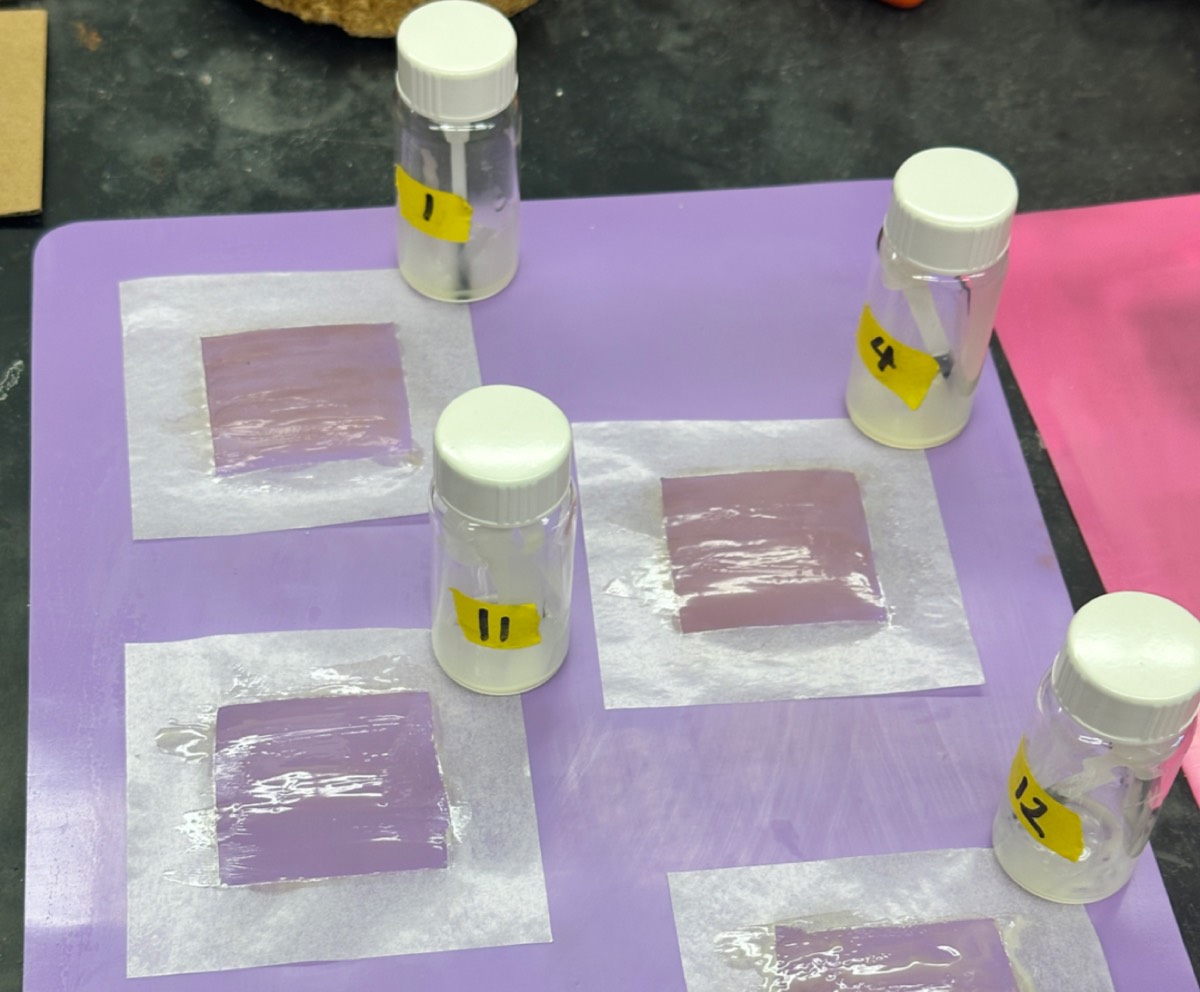
Desai started out with 13 commercial clear-coat polishes and began methodically adding different additives, assessing their conductive performance to determine just the right combination. Out of more than 50 candidates, she identified two viable options: ethanolamine and taurine. Neither was the perfect solution on its own: Ethanolamine had the necessary conductivity and compatibility with the polish but has some toxicity, while taurine—a common dietary supplement—is non-toxic but is not perfectly clear. But by combining the two, Desai was able to achieve the results she wanted.
Desai’s nail polish touchscreen solution is not ready for commercialization. While the experiments involving a blob of doped polish held with tweezers successfully registered on a touchscreen, a thin layer of the prototype polish doesn’t leave enough additive behind to activate the screen consistently. And the ethanolamine evaporates quickly, so the polish only works for a few hours.
But it’s a promising first step, and Desai and Lawrence aren’t giving up. Further research will continue to screen other compounds and combine them into new formulas. “We’re doing the hard work of finding things that don’t work, and eventually, if you do that long enough, you find something that does,” said Lawrence.