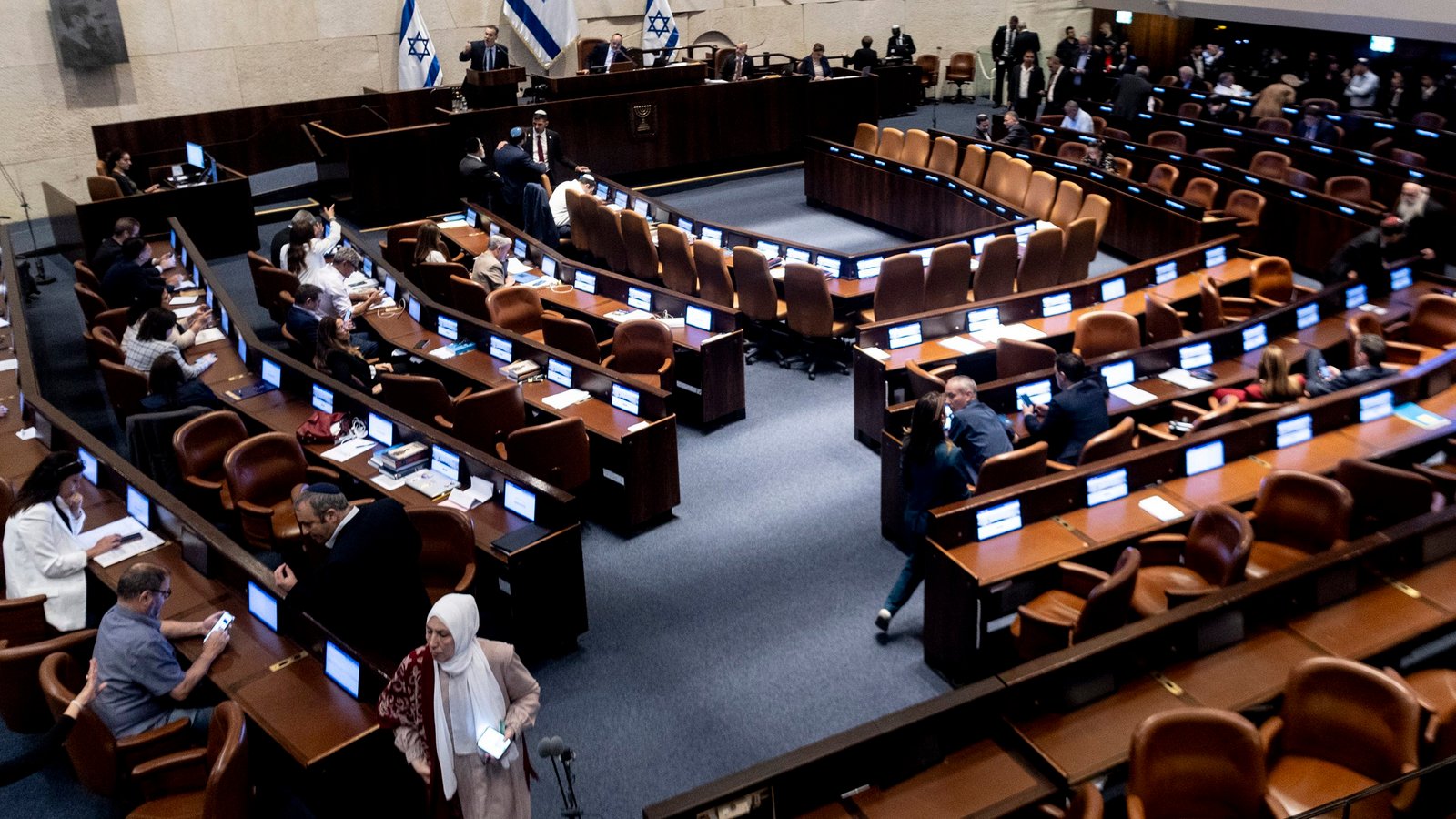
Israel may be heading toward another election, but the Knesset has not yet shut itself down. In my explainer for The Media Line, I lay out what it actually means when Israel’s parliament begins the process of dissolving itself—and why a preliminary vote is only the start of the road, not the end of it.
The immediate drama is political, but the mechanics matter. Lawmakers have advanced two dissolution bills in preliminary readings: one coalition-backed bill and one opposition bill sponsored by Blue and White MK Pnina Tameno, party chair Benny Gantz, and others. The opposition measure passed 53-0, hours after lawmakers also backed the coalition version. Neither vote formally dissolved the Knesset. Each bill still must move through committee and pass three more readings in the Knesset plenum, with at least 61 of the 120 lawmakers needed for final approval.
That gives both sides leverage. If the coalition slows or abandons its own dissolution bill, the opposition’s version keeps another path to early elections alive. The opposition bill would set elections exactly 90 days after the law passes, while the coalition bill leaves the date to the Knesset House Committee, so long as it is no less than three months after final approval.
The explainer walks American readers through the Israeli parliamentary system without assuming they speak fluent Knesset. Israelis vote for parties, not directly for prime minister. Governments are formed through coalitions. Dissolution sends the country to elections; it does not install a replacement government. A constructive no-confidence vote is different because it requires lawmakers to back an alternative government with a proposed prime minister, ministers, and basic policy guidelines.
The political trigger is the ultra-Orthodox draft dispute. Israel requires most Jewish citizens to serve in the military, while ultra-Orthodox yeshiva students have long received exemptions. After October 7, 2023, with reservists serving repeated tours, that arrangement has become explosive.
Read the full explainer for a plain-English breakdown of the votes, the legislative process, and the coalition crisis driving Israel toward a possible early election.