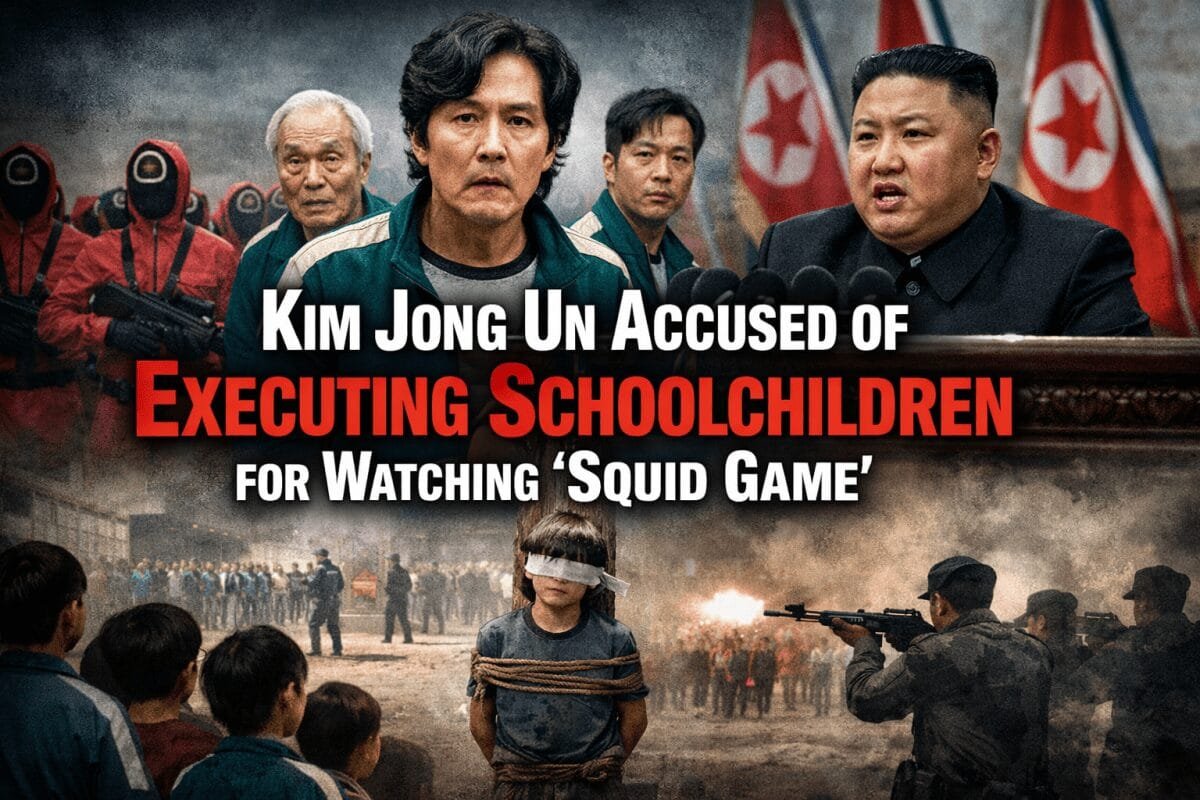
North Korea is reportedly executing people — including schoolchildren — for watching the hit South Korean Netflix series Squid Game, according to new findings from Amnesty International.
The human rights group says access to South Korean television, movies, or music is treated as a capital crime under the regime of Kim Jong Un, with punishments designed to terrify the population into silence.
Testimonies from North Koreans who escaped the country describe a system where fear is enforced publicly. Children, they say, are forced to watch executions of people their own age as a warning against consuming foreign media.
“This is repression layered with corruption,” said Sarah Brooks, Amnesty International’s deputy regional director. “Watching a South Korean TV show can cost you your life — unless you can afford to pay.”
According to Amnesty, punishment often depends on class. Poorer citizens face firing squads or life in prison camps. Wealthier families, or those with connections, are sometimes able to bribe officials to avoid execution.
North Korea’s crackdown is rooted in the 2020 “Law on the Elimination of Reactionary Thought and Culture,” a sweeping measure aimed at erasing foreign influence. While the law targets Western media broadly, it is especially focused on content from South Korea.
Despite the risk, South Korean shows and music continue to seep across the border through smuggling routes from China. Popular dramas like Crash Landing on You — ironically set partly inside North Korea — are widely sought after. K-pop music from bands like BTS is also banned.
Interviewees told Amnesty that people caught watching Squid Game or listening to K-pop have been executed in recent years.
One case from 2021 still echoes through the country. A student who smuggled copies of Squid Game into North Korea was sentenced to death by firing squad, according to sources cited by Radio Free Asia. A buyer received a life sentence. Others who merely watched the show were sent to hard labor camps for five years.
Sources say the show’s storyline — desperate people forced to compete in deadly games under an all-powerful system — struck a nerve with North Korean viewers living under dictatorship.
“The government’s fear of information has turned the country into an ideological cage,” Brooks said. “Authorities criminalize knowledge itself, then allow officials to profit from terror.”
Amnesty warns that the executions are part of a broader campaign to isolate North Koreans from the outside world, even as foreign media continues to leak in — quietly, illegally, and at enormous human cost.
As of 2026, independent verification inside North Korea remains nearly impossible. But Amnesty says the consistency of survivor accounts points to a grim reality: in Kim Jong Un’s North Korea, watching a TV show can still be a death sentence.
function pinIt() { var e = document.createElement(‘script’); e.setAttribute(‘type’,’text/javascript’); e.setAttribute(‘charset’,’UTF-8′); e.setAttribute(‘src’,’https://assets.pinterest.com/js/pinmarklet.js?r=’+Math.random()*99999999); document.body.appendChild(e); }