Japan’s rush to field interceptor drones marks a sharp break with its traditionally slow-moving defense procurement system as it prepares for a battlefield increasingly dominated by cheap, expendable unmanned weapons.
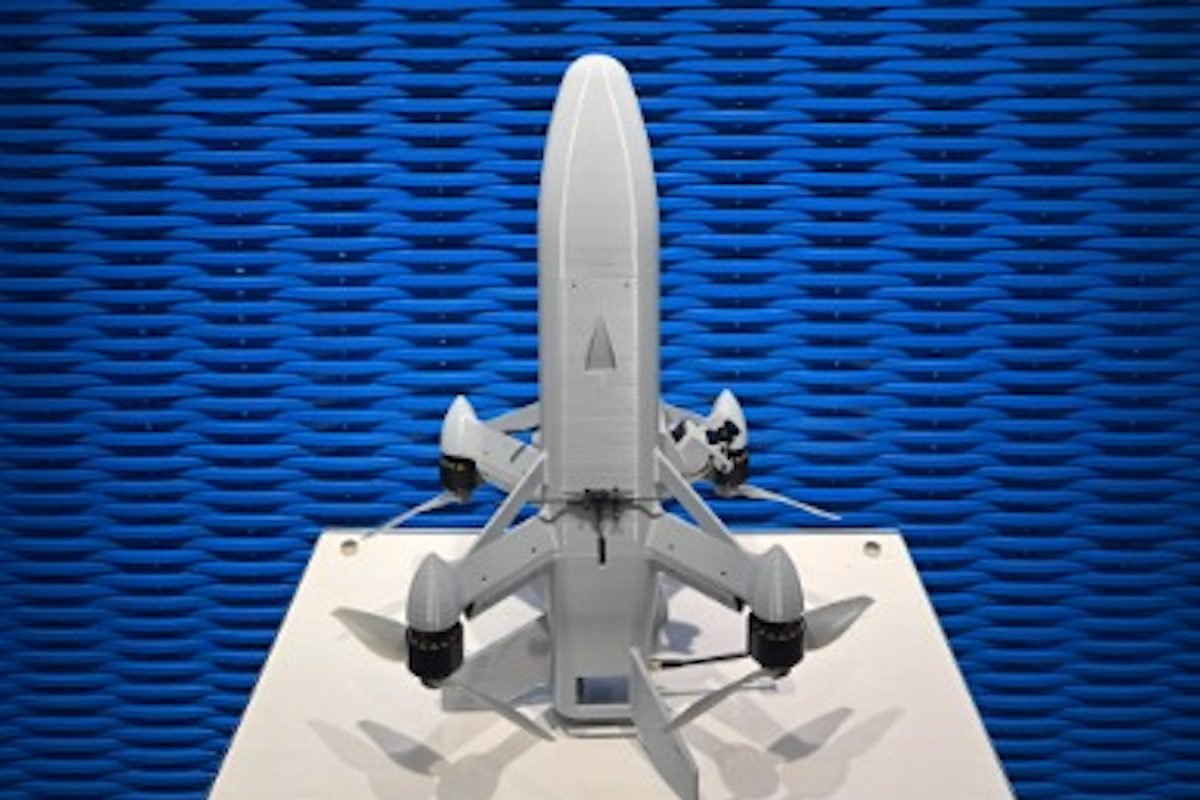
Japan’s Acquisition, Technology and Logistics Agency (ATLA) has awarded a contract to Tokyo-based Terra Drone Corp. to mass-produce its Terra B1 interceptor drone, completing an unprecedented three-month fast-track procurement to counter rising regional security threats and China’s military build-up, multiple media outlets reported.
Aiming to safeguard military bases, camps and naval vessels starting in September, the Japan Maritime Self-Defense Force (JMSDF) will be the first to field the vertically launching interceptor, designed to shoot down hostile unmanned aerial vehicles (UAVs) at 250 kilometers per hour.
Japan accelerated the process by evaluating 38 domestic and international proposals, narrowing them to four trial finalists in July, seeking a cost-effective shield against potential Chinese saturation attacks rather than expending costly, limited stockpiles of surface-to-air missiles.
Drawing direct operational lessons from the war in Ukraine — where low-cost attack drones have reshaped modern warfare — the initiative establishes a rapid innovation cycle for Japan’s armed forces, though defense analysts caution that this compressed timeline may prove difficult to replicate for more technologically complex weapon platforms.
The larger question is whether Japan can turn that procurement breakthrough into a repeatable wartime production model. Japan’s rush to field low-cost counter-drone systems addresses an increasingly urgent vulnerability to Chinese saturation attacks.
But whether it can build a sustainable drone defense at scale will depend on overcoming deep industrial, testing, procurement, alliance coordination and supply chain constraints that could prove far harder to solve than accelerating a single interceptor program.
The stakes are highest in a Taiwan contingency. Stacie Pettyjohn and Molly Campbell mention in a September 2025 report for the Center for a New American Security (CNAS) that China’s drone arsenal poses an acute threat to Japan’s southwestern territory, particularly forward positions across the Southern Ryukyu Islands like Yonaguni.
Pettyjohn and Campbell say wargame simulations show China deploying low-cost, multi-vector strikes—including mainland-launched long-range kamikaze drones, vessel-launched loitering munitions, and autonomous first-person-view (FPV) swarms exceeding 200 drones—to target fuel depots, radars and mobile missile launchers.
They note that these drones, deployed from the Chinese mainland and offshore uncrewed vessels, threaten to deplete island air defense interceptors, suppress allied forces and disrupt joint operations inside the First Island Chain.
Masashi Murano and William Chou note in a June 2026 Hudson Institute report that Japan faces severe sustainability limits in defending against follow-on threats such as one-way attack drones, tactical fighters and bombers that penetrate after the initial missile salvos. Murano and Chou say that intercepting incoming weapons mid-flight rapidly exhausts interceptor stockpiles within days.
Yet cheap interceptors solve the magazine-depth problem only if Japan can manufacture and replenish them at wartime scale.
A July 2026 Asia Military Review article notes that, despite the country’s commitment to producing 80,000 units annually by 2030, it lacks large-scale manufacturing infrastructure and live electronic warfare testing environments while relying heavily on Chinese guidance components.
The article also mentions domestic institutional friction from a scientific community skeptical about defense-related projects, regulatory certification hurdles with international partners and sluggish, multi-year procurement cycles that severely hinder Japan’s ability to reconcile its traditional quality-control culture with the rapid iteration required in modern drone warfare.
In what could be a major boost to Japan’s drone production infrastructure, Reuters reported in June 2026 that US defense firm Anduril Industries is in talks to acquire Nissan Motor’s landmark Oppama car plant to manufacture military drones in Japan, aiming to establish an arms-making hub as Japan accelerates defense production amid rising Taiwan tensions.
According to the report, retooling the 1.7 million-square-meter automotive site, scheduled to close in 2028, would allow Anduril to leverage expansive research, testing and coastal port infrastructure near Yokosuka naval base while offering to retrain auto workers.
But Mitsubishi Heavy Industries CEO Eisaku Ito warned in a July 2026 Financial Times article that converting struggling car plants into drone factories would fail because they are engineered for mass-producing millions of identical products, making them ill-suited for combat drones, which require constant specification modifications to avoid producing large volumes of obsolete, unusable weaponry.
That tension points to a deeper challenge: drone production requires not merely manufacturing scale but also factories and workforces capable of absorbing constant battlefield-driven design changes.
Japan’s testing bottleneck may also push part of its drone development cycle offshore. Alex Bristow and Rintaro Inoue note in a June 2026 article for The Strategist that Japan’s modest physical size and dense population constrain the testing of military systems such as drones and missiles, suggesting that Australia’s vast territories and facilities can address the problem.
Furthermore, Guy Boekenstein notes in a March 2023 article for The Strategist that Australia’s Northern Territory already has four areas used by the Australian and US militaries.
He points out that the sparsely populated ranges are relatively close to likely Asian operating areas and have little electromagnetic interference, making them well suited to testing sensors, electronic warfare systems and next-generation platforms.
But using Australia as Japan’s offshore testing ground would require political and bureaucratic cooperation to move nearly as fast as the technologies being tested. As Tom Corben noted in a July 2023 Nikkei article, the bilateral Reciprocal Access Agreement (RAA) enables practical military cooperation, but near-decade-long negotiations highlighted persistent hurdles, particularly lethargic bureaucratic processes.
Corben notes that a firm political ceiling still limits sensitive cooperation in joint strategic and operational planning, cautioning policymakers against allowing past delays to foster pessimism while recognizing that pragmatic, imperfect compromises remain necessary to bolster regional deterrence.
Even if Japan solves its factory and testing problems, its drone buildup remains exposed to a more fundamental vulnerability: many of the materials needed for mass production run through China-linked supply chains.
As Macdonald Amoah and other writers noted in a December 2025 report for the Center for Strategic and International Studies (CSIS), aerospace-grade carbon fiber production cannot surge quickly, while motor propulsion remains heavily exposed to China’s dominance in sintered rare-earth magnet production.
Amoah and others add that Chinese control over two-thirds of lithium refining capacity and 70% of graphite anode production creates acute battery bottlenecks. They add that specialized sensors and gallium-nitride semiconductors depend on a narrow base of Western fabrication plants.
They also mention that opaque sub-tier logistics prevent defense agencies from tracing precursor materials, leaving mass production susceptible to single-point foreign disruptions.
Japan’s counter-drone push could ultimately force a broader transformation of its defense model — from buying small numbers of exquisite weapons to sustaining a distributed, rapidly adaptable wartime production ecosystem in which industrial resilience and allied access to testing, components and flexible manufacturing capacity become as important to deterrence as the weapons themselves.