Italy expanded its highest-level heat alerts on Thursday as a prolonged heatwave tightened its grip across much of the country, with Sicily expected to endure some of the most extreme temperatures in Europe over the coming days.
The Health Ministry increased the number of major cities under its highest “red” heat warning from seven to 15, with the total expected to rise further on Friday. A Level 3 alert signals conditions that pose a serious health risk to the entire population, including healthy adults.
Southern Italy, particularly Sicily, is forecast to experience the most severe heat. Temperatures are expected to reach 41 degrees Celsius in the central Sicilian city of Caltanissetta on Thursday before climbing to between 43C and 45C across parts of Sicily and neighboring Sardinia by Friday, according to Italian forecasters.
Palermo is among the cities placed under the maximum heat warning, while much of the island is expected to endure exceptionally hot and dry conditions through the weekend.
Meteorologists said the heatwave, the third to affect Italy this summer, is expected to peak by the weekend before a cooler air mass brings some relief beginning Sunday. Even then, temperatures across southern Italy are forecast to remain well above seasonal averages.
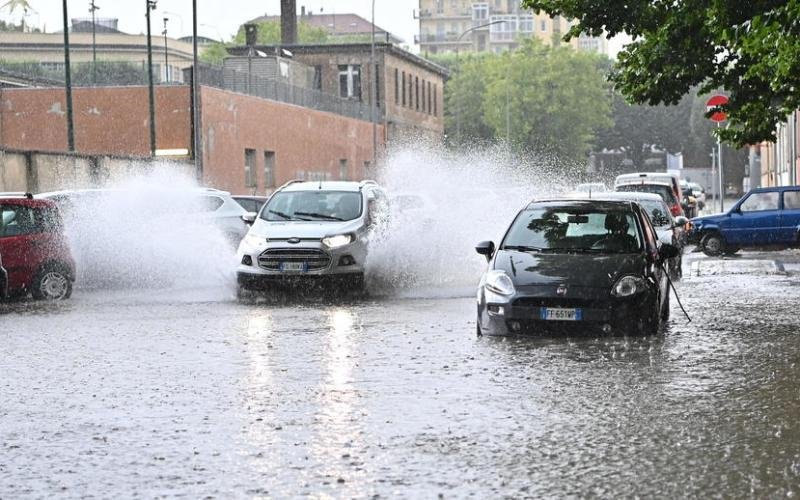
While southern regions bake under extreme heat, northern Italy has been dealing with a separate bout of severe weather. Thunderstorms, heavy rain, hail and strong winds caused flooding and fallen trees across parts of Emilia-Romagna, the Triveneto region and northern Lombardy.
Authorities said one person was killed near Modena after a vehicle crashed during torrential rain.
Forecasters said the storms were triggered by cooler air moving across the Alps colliding with hot, humid air trapped over the Po Valley, creating conditions for intense thunderstorms and large hail.
Italy’s Health Ministry has scheduled a coordination meeting on Friday to assess the impact of the heatwave, while Health Minister Orazio Schillaci urged residents to avoid outdoor activity during the hottest hours of the day.
Regional authorities have also introduced measures to protect outdoor workers. The Lazio region has banned prolonged work in direct sunlight between 12:30 p.m. and 4 p.m., while Milan has restricted food deliveries during peak afternoon heat. Delivery riders have staged demonstrations in Milan and Florence, calling for stronger labor protections and better pay during extreme weather.
Scientists say human-caused climate change is increasing the frequency and intensity of extreme weather events, including heatwaves, droughts, heavy rainfall and severe storms. They attribute the long-term warming trend primarily to greenhouse gas emissions produced by burning fossil fuels.