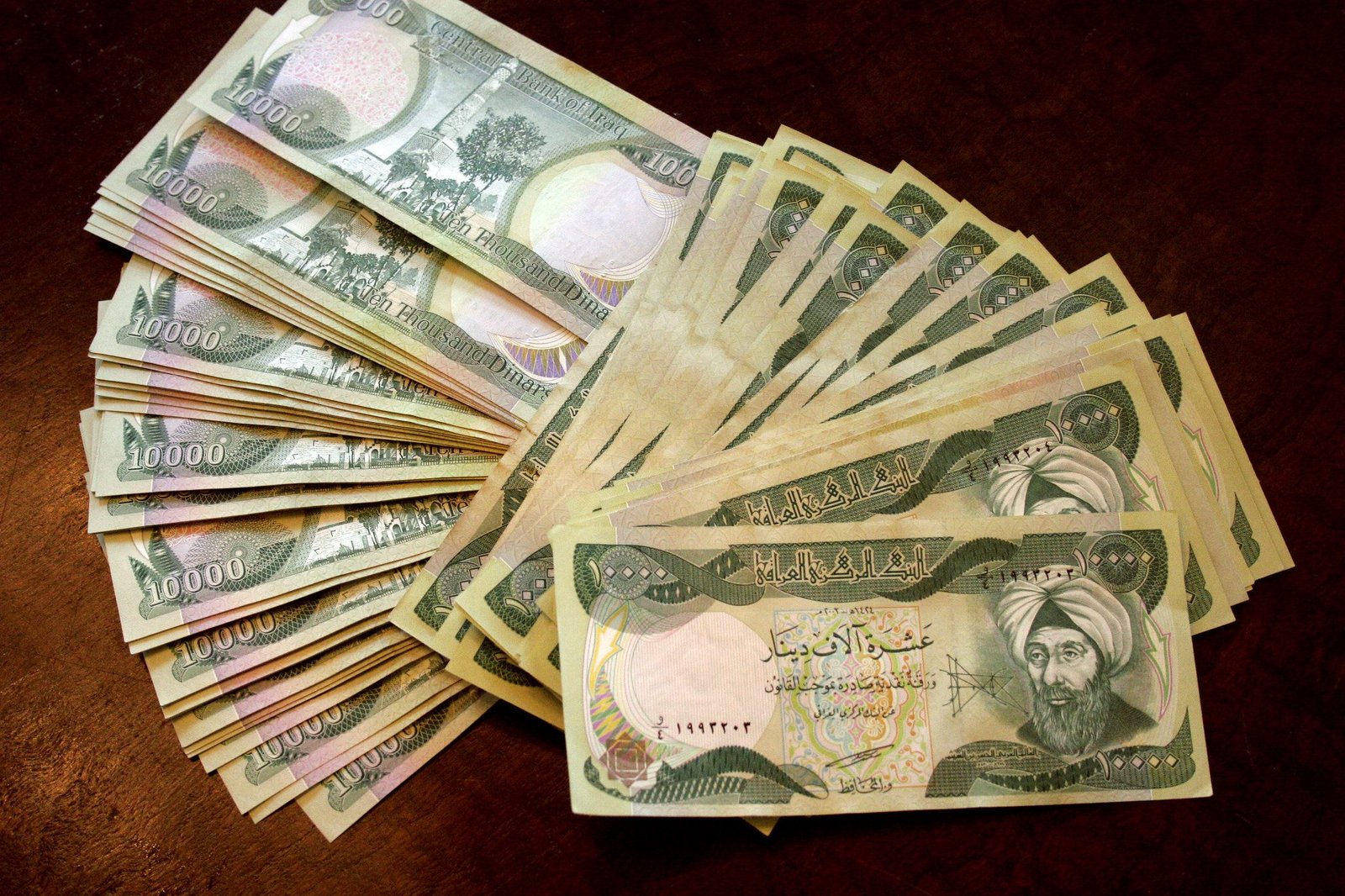
The Central Bank of Iraq announced on Wednesday a new exchange rate for the US dollar against the Iraqi dinar, raising the official selling price to the public to 1,520 dinars from 1,320 dinars. This marks the first official adjustment to the exchange rate in over three years.
Under the new decision, the Ministry of Finance will purchase dollars at 1,500 dinars per dollar, while the selling price to banks will be 1,510 dinars. The selling price to the end user through banks and non-bank financial institutions will reach 1,520 dinars. The new rates took effect immediately on Wednesday.
This decision represents a devaluation of the Iraqi dinar against the dollar by approximately 14.5 percent, a move that comes amidst increasing economic and financial pressures facing the country, particularly regarding oil revenues, which account for the largest share of the Iraqi budget.
The Iraqi government stated that the decision was made “as a result of decreased revenues due to the cessation of exports through the Strait of Hormuz for more than eight months, and its frequent disruptions, which led to significant economic pressure on the Iraqi budget.”
The Central Bank of Iraq indicated in a statement that “the exchange rate adjustment comes within the framework of exceptional and precautionary measures to address the current economic and financial conditions and meet the state’s financial and monetary requirements.”
According to figures from the Central Bank of Iraq, “Iraq’s foreign currency reserves have declined by approximately $20 billion.”
The US dollar was trading at around 1,600 Iraqi dinars per dollar on the Iraqi parallel market, and its price rose immediately after the Central Bank’s decision, reaching 1,800 Iraqi dinars per dollar.
The devaluation of the dinar provides the government with a higher return in Iraqi dinars for every dollar it receives from oil exports, which helps finance public expenditures amidst declining dollar revenues. However, this move will have direct repercussions for citizens, as Iraq relies heavily on imports. Therefore, the rise in the dollar’s value will increase the cost of imported goods and materials, impacting prices and purchasing power.
There are also concerns that the decision will exacerbate inflationary pressures, especially if the increased import costs affect the prices of food, medicine, consumer goods, cars, and other products linked to the dollar.
Economic experts, speaking on social media and in Iraqi media outlets, believe that prices will increase by more than 20% in the coming period following the exchange rate rise.
The Iraqi parliament signed a document on Wednesday demanding that the decision be reversed, citing the significant economic burden it would place on a country that imports most of its products.
A number of parliamentarians, including Shiite MP Miqdad al-Khafaji, threatened to “interrogate the Minister of Finance and government officials” about the reasons for the decision and its potential consequences.