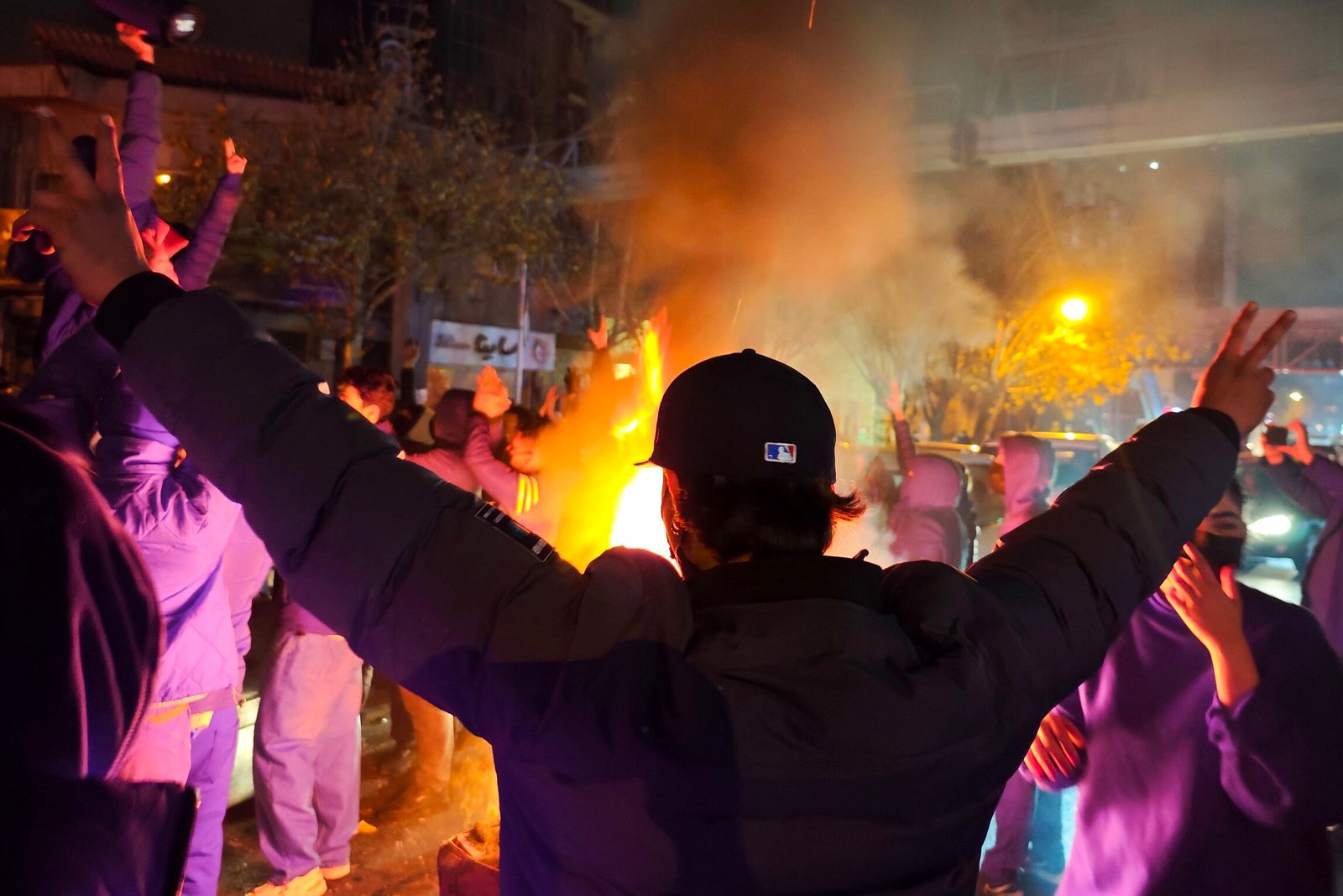
The torch is about to pass to the Iranian people
The war between Israel and the Islamic Republic of Iran has entered a new phase, and for millions of Iranians, it may mark the beginning of something even larger.
On March 10, the Israel Defense Forces announced that the conflict had entered Phase Two.
Minutes later, Israeli Prime Minister Benjamin Netanyahu issued a direct message to the Iranian people: “In the coming days, we will create the conditions for you to grasp your destiny. … When the time is right—and that time is fast approaching—we will pass the torch to you. Be ready to seize the moment.”
The implication is clear. The ground is being prepared for the Iranian people to resume the protest movement that began on December 28 and complete the transition of power. Many now hope this moment could help lay the foundation for a new Middle East.
Only when the military campaign ends will the contours of a political solution become clear. Still, several facts already stand out.
On December 28, protests erupted in Tehran’s bazaar district, the commercial heart of Iran, after the collapse of the rial triggered panic in the markets. The demonstrations quickly spread across the country, reaching 80 to 100 cities in all 31 provinces and bringing millions into the streets.
Iran has experienced waves of protest before. In earlier uprisings, the slogans were familiar: “Where is my vote?” and “Death to the dictator.”
Now, something new emerged.
For the first time in 47 years, crowds openly called for an alternative political order.
The Persian-language outlet Iran International reviewed 465 protest videos to analyze the chants echoing across the country.
The most prominent slogans were unmistakable: “This is our last battle—Pahlavi will return” and “Javid Shah.”
Those chants referred to Reza Pahlavi.
For decades, Pahlavi had only a modest monarchist following in the diaspora. Suddenly, a much broader base appeared inside Iran, many of them not monarchists but willing to rally behind him as a transitional figure.
Pahlavi himself appeared surprised by the chants. He responded by inviting Iranians to come out nationwide on January 8 and January 9 at 8:30 p.m.
The regime mocked the call. State television dismissed it, and authorities did not shut down the internet beforehand, suggesting they did not see him as a serious threat.
That calculation proved mistaken.
On January 8 at 8:30 p.m., millions of people poured into the streets across Iran.
After decades of sporadic, leaderless protests, in which citizens vented anger only to face arrests, killings, and silence, the dynamic suddenly shifted. For the first time, the people had called for a leader, and that leader had answered.
The following morning, Ali Khamenei delivered a sermon that amounted to a warning. He reminded the country that 400,000 people had died in the revolution that brought the clerics to power, implying that if hundreds of thousands more had to die to preserve it, so be it.
Protesters were labeled rioters. State media warned parents not to allow their children into the streets at night.
Yet on January 9, even more people came out. Families filled the streets, parents pushing strollers, grandparents walking beside children. In acts of defiance against the theocracy, protesters burned 35 mosques.
Across the country, the same chant echoed: “We are no longer afraid.”
For many demonstrators, the call for the crown was not about restoring the monarchy. Rather, it had become a symbol of legitimacy and national continuity, a rallying point around which a secular democratic future might be built.
Soon enough, the regime reverted to its familiar playbook. The internet was shut down, electricity was cut in protest zones, and security forces surrounded demonstration areas.
In the darkness came the killings and mass arrests.
The US State Department has acknowledged 32,000 deaths, though many believe the true number is higher. Videos smuggled out through satellite connections have shown rooms filled with body bags and families burying loved ones.
Rather than breaking the movement, the brutality hardened it.
Across the country, a new cry emerged: “Death or freedom.”
Meanwhile, the Iranian diaspora stepped forward to amplify the voices of those inside the country. Activists agreed that demonstrations abroad would simply echo the slogans heard inside Iran, ensuring that the regime could not silence the message.
On February 14, Pahlavi issued a second call, this time to Iranians living abroad, to organize a global day of protest.
He asked that demonstrations focus on three cities: Los Angeles, Toronto, and Munich, where the Munich Security Conference was taking place.
The response was remarkable.
Police estimates reported 350,000 demonstrators each in Toronto and Los Angeles, and 250,000 in Munich, where Pahlavi addressed the crowd alongside his wife. Across the world, more than one million Iranians rallied on the same day.
For the first time in nearly half a century, the Iranian diaspora appeared united behind a single transitional figure.
Today, three forces appear to be converging: Israel’s war of self-defense, America’s strategic interests, and the determination of the Iranian people to end the theocracy.
Each emerged independently. Yet together they now coincide at a moment when the regime appears weaker than it has in decades.
Many Iranians were prepared to confront the regime’s security apparatus. At the same time, they have welcomed the possibility that external pressure could weaken its grip and open the door to change.
As the military operation approaches its conclusion, the timing is striking. The weakening of a tyranny in Iran is unfolding in the days surrounding Purim, the Jewish holiday commemorating the defeat of Haman’s plot against the Jewish people in ancient Persia.
History rarely offers such symmetry. Whether the story continues toward the liberation symbolized by Passover will depend on what happens next, when the torch passes to the Iranian people.