The Republic of Yemen’s Information Minister Moammar Al-Eryani argues that the recent Middle East war exposed something larger than another round of regional violence: Iran, in his view, has shown the world that maritime chokepoints are not merely shipping routes, but weapons waiting to be used.
The warning starts in the Strait of Hormuz, long one of Tehran’s favorite pressure points. Al-Eryani writes that Iran moved during the war from threat to action, disrupting navigation and energy flows and showing how quickly global markets can be shaken when a hostile power turns geography into leverage. He describes that move not as improvisation, but as the product of years of preparation by the Islamic Revolutionary Guard Corps, including mines, drones, missiles, explosive boats, surveillance networks, and the ability to create enough chaos to raise the costs of insurance, transport, and energy.
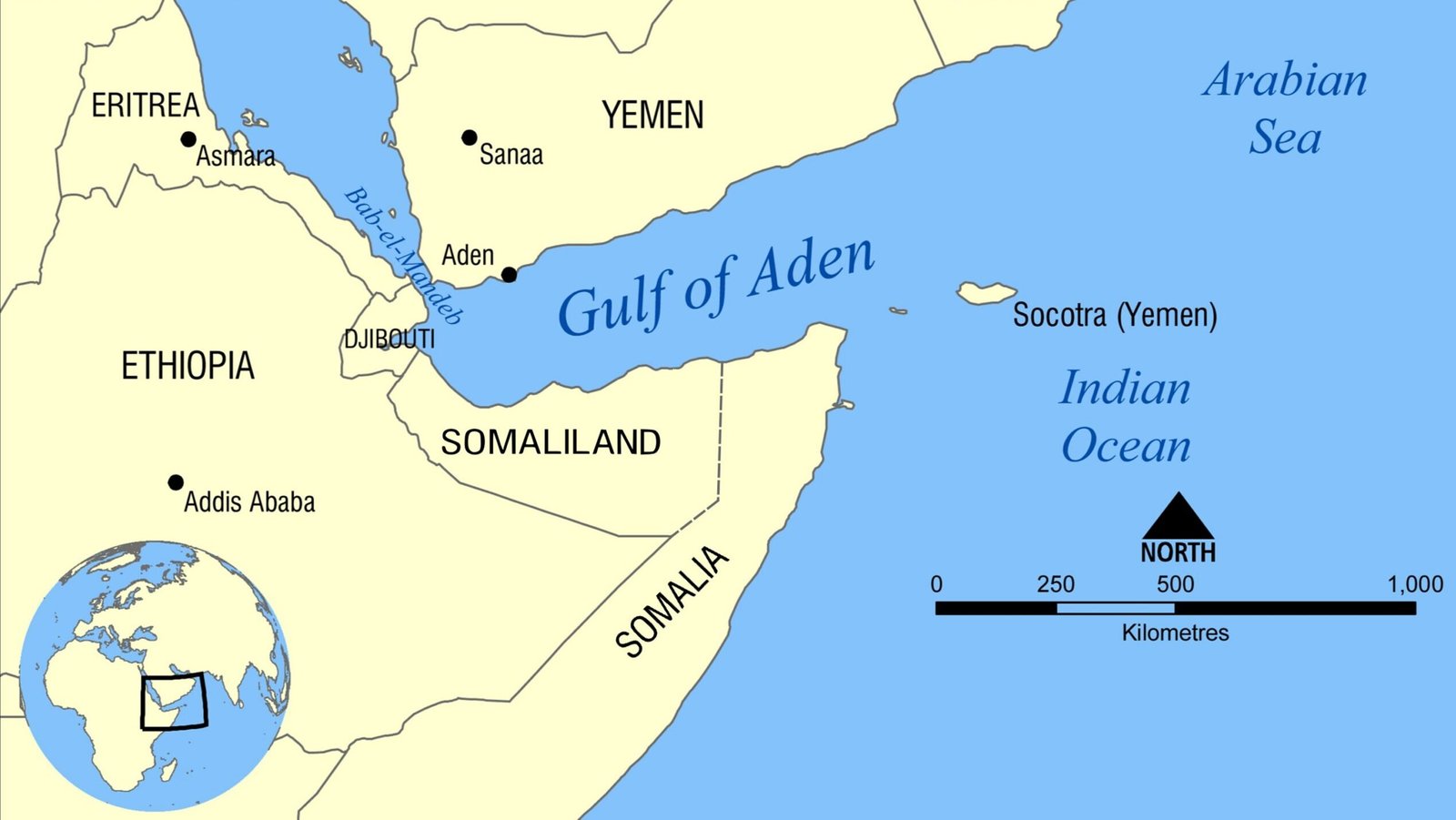
But Hormuz is only half the story. The sharper warning, Al-Eryani says, lies to the west, at Bab el Mandeb, the narrow gateway between Yemen, the Red Sea, and the route toward the Suez Canal. If Iran can threaten Gulf energy through Hormuz and global trade between Asia and Europe through Bab el Mandeb, the result would not be a local crisis. It would be an economic chokehold with worldwide consequences.
That is why Yemen sits at the center of the argument. Al-Eryani says the legitimate Yemeni government’s control over Bab el Mandeb, much of the Red Sea coastline, and the Gulf of Aden has helped prevent the Houthis from turning Iran’s Red Sea threats into a second Hormuz-style crisis. Temporary naval coalitions may reduce the danger, he writes, but they cannot solve the core problem: an armed Houthi movement outside state control, supplied and guided by Tehran.
The full opinion piece turns a maritime-security issue into a blunt strategic warning. For Al-Eryani, protecting global trade does not begin with reopening straits after they are closed. It begins with restoring the Yemeni state before Bab el Mandeb becomes the next test.