This article first appeared on Pacific Forum and is republished with kind permission. Read the original here.
The effects of the Iran war on regional nonproliferation efforts are likely to lie along three axes.
First, Indo-Pacific states are likely to draw direct strategic and tactical military lessons from the US-Israeli campaign to uproot Iran’s alleged nuclear weapons program. Secondly, the war is likely to further increase interest in nuclear energy in the Indo-Pacific, spurred by its interruption of natural gas and oil supplies from the Persian Gulf and the subsequent rise in fossil fuel prices.
Third, the shift of US military resources to the Middle East instead of fulfilling longstanding US promises to “pivot” to the Indo-Pacific is likely to further exacerbate allies’ concerns that the Trump administration is willing to abandon them for unilateral foreign policy goals, even as China’s military shadow over the region continues to grow.
US President Donald Trump and top administration officials have repeatedly claimed in recent weeks that they needed to attack Iran to prevent Tehran from developing nuclear weapons. They have insisted that no peace deal is possible without the removal of Iran’s highly enriched uranium (HEU) that Iran has manufactured and stored at several sites, including buried inside several mountains.
This includes 440 kilograms of near-weapons-grade HEU that could be enriched further and in short order — a matter of weeks to produce the fissile material for nearly a dozen nuclear weapons.
Moreover, despite two rounds of war — currently and in last summer’s Twelve-Day War — Iran is believed to retain sufficient enrichment capability at other sites to further enrich this material to weapons grade and with sufficient missiles to deliver them.
Moreover, while the recent round of thousands of attacks has done substantial damage to the scale and size of Iran’s missile forces and production capacity, there have been far fewer and less sizeable changes in Iran’s nuclear program than since the US heavily damaged some of Iran’s key enrichment and processing facilities in the Twelve-Day War.
What lessons might Indo-Pacific countries draw for their own security after witnessing the massive US and Israeli bombing campaign against Iran?
First, it should be clear that efforts to develop latent nuclear capabilities or nuclear “hedges” may well encourage stronger military powers to attack lesser countries before they can turn those latent capabilities into weapons. Amid consistent talk and public opinion support for developing nuclear weapons in South Korea, this example might introduce some sobriety into the discussion.
On the flip side, Iran has shown that careful planning and siting of nuclear materials and facilities, distributing them widely, along with on-again off-again cooperation with the International Atomic Energy Agency, can make nuclear facilities difficult to uncover and nuclear materials difficult (if not impossible) to track, displace or retrieve.
As a result, adversaries such as the US may decide that it is necessary to turn to more politically and military risky ventures, such as invasions or blockades (rather than distant missile or air attacks or cyber sabotage) to upend such facilities and gather such materials.
In this way, rather than serving as a direct military deterrent, such accumulations could serve as a political deterrent by narrowing adversaries’ potential options or raising their cost.
Looking to the future, as Stephen Herzog and David M. Allison have written, developments in artificial intelligence threaten to allow proliferators to acquire capabilities without detection until much closer to the point of having a workable nuclear weapon.
As a result, Iran’s version of the boxer Muhammad Ali’s “rope-a-dope” strategy — accepting blows from more powerful US and Israeli opponents until they are so worn down that they concede — may be a model for any future proliferator.
Still, despite the avowed centrality of nuclear capabilities to the war, Iran enjoyed great success using far simpler and cheaper tools — from the use of mines and missiles to close the Strait of Hormuz to employing drones to cripple US Gulf allies’ energy production sites.
While it is not clear if Iran had any other option, given that it might not be able to dash successfully for the bomb, Iran has been smart to hold its nuclear card in reserve while it used more flexible and tailored means to wage asymmetric warfare against the US and Israel.
North Korea is one nuclear-armed state that could use this experience to further the use of its nuclear arsenal as a shield for asymmetric attacks.
Aside from the direct lessons for military strategists, the current war may have an indirect effect on many Indo-Pacific countries that depend on fossil fuels to meet many of their energy needs.
For the second time in four years (the first being Russia’s further invasion of Ukraine in 2022), it has been demonstrated that natural gas is neither as reliable nor as inexpensive a fuel source for electricity production as rising global trade in liquified natural gas, from countries such as Qatar, had encouraged many allies to believe.
This is likely to, at a minimum, encourage many countries to seek to produce more electricity from alternative energy sources, including nuclear energy, as a means of reducing dependence on natural gas imports.
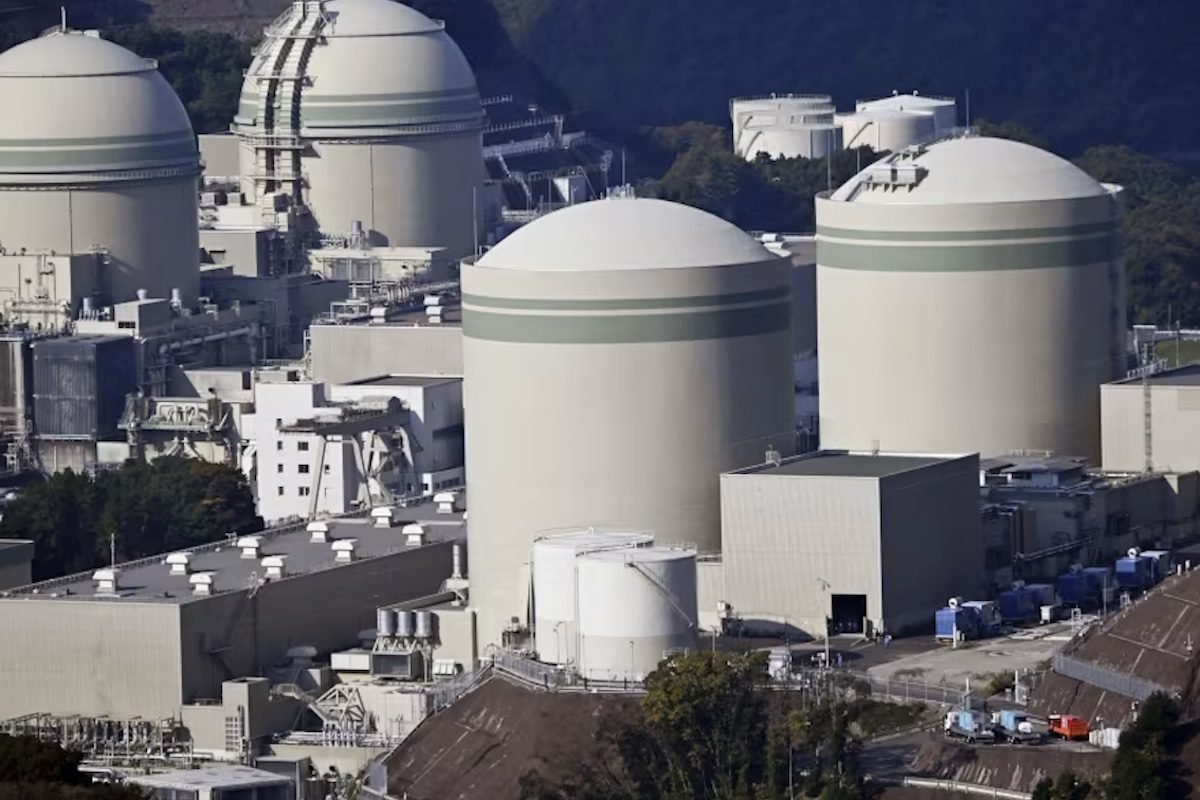
Japan previously stepped up efforts to reopen more reactors after the 2022 Russian invasion, and the current Japanese government, already supportive of further restarts, will likely face additional pressure to accelerate them after the price and supply pressures caused by the war.
Similarly, some ASEAN countries that have mulled acquiring their first nuclear reactors, such as newfangled small and modular reactors (SMRs), may be pushed to move forward to enhance supply diversity and energy security.
Moreover, the war is likely to step up demand for electricity to power vehicles, instead of increasingly expensive petrol, or to power or supply heat or materials for industry, instead of natural gas or oil. Indo-Pacific electricity demand has already been growing briskly to improve living standards and power data centers. Nuclear energy may be tapped to meet this additional demand.
The degree to which such purchases then feed nuclear proliferation may depend on a third factor — the degree to which the latest war further undermines a largely failed decade-old effort by Washington to pivot US military resources and attention from the Middle East and Europe to the Indo-Pacific to combat a fast-rising China.
Even before the war, the Trump administration’s rifts with Indo-Pacific allies over trade, its cutoff in support for Ukraine, and its Make America Great Again tendency to dismiss allies’ concerns and interests and carry out unilateral measures had spurred increased proliferation pressure in the region.
For example, South Korea last fall won President Trump’s support to have the US government facilitate its longstanding desires to acquire dual-use capabilities such as plutonium separation and uranium enrichment facilities.
While Seoul claims that the facilities would just be used to produce nuclear fuel or make it easier to dispose of spent nuclear fuel, these technologies can also produce the fissile material for nuclear weapons.
South Korea may use the need to replace imports from the Persian Gulf with nuclear power as a reason for stepping up its nuclear program and attempting to win the support of the US government bureaucracy and Congress to acquire these technologies, something which both have long resisted.
The fact that the Trump administration unleashed the war without tangible support or serious consultation with US allies may further exacerbate their fears that the Trump administration will either abandon them or entangle them in conflicts not of their own choosing.
Therefore, the war is likely to heighten concerns among America’s Asian allies that they may no longer be able to rely on the US nuclear umbrella for their security, further increasing proliferation pressures on South Korea, especially.
The diversion of US resources to the Middle East — both forces and equipment such as ships, missiles and missile defenses—may also give China a freer hand, which could spur allies to take additional means for their defense.
While most, if not all, regional states will stop short of acquiring nuclear weapons at this point, the temptation to enhance options or at least consider hedging strategies like Japan (with its tons of separated plutonium and relevant missile delivery systems) is likely to grow.
Miles Pomper (mpomper@middlebury.edu) is a senior fellow at the James Martin Center for Nonproliferation Studies in Washington DC, specializing in nuclear energy, nonproliferation, security and arms control, as well as a senior adjunct fellow at Pacific Forum.