Diplomacy, like commerce, runs on signals. When relations sour, the choreography of repair matters almost as much as the substance. In South Asia’s second most delicate bilateral equation, between India and Bangladesh, the recent shift in tone from New Delhi suggests a recognition that technocratic engagement alone cannot mend a political rupture.
After a period of visible strain during the tenure of the interim administration led by Muhammad Yunus, India appears to be recalibrating its approach that include multiple statements of goodwill, as well as the more telling act of dispatching a political heavyweight like Dinesh Trivedi as the next envoy.
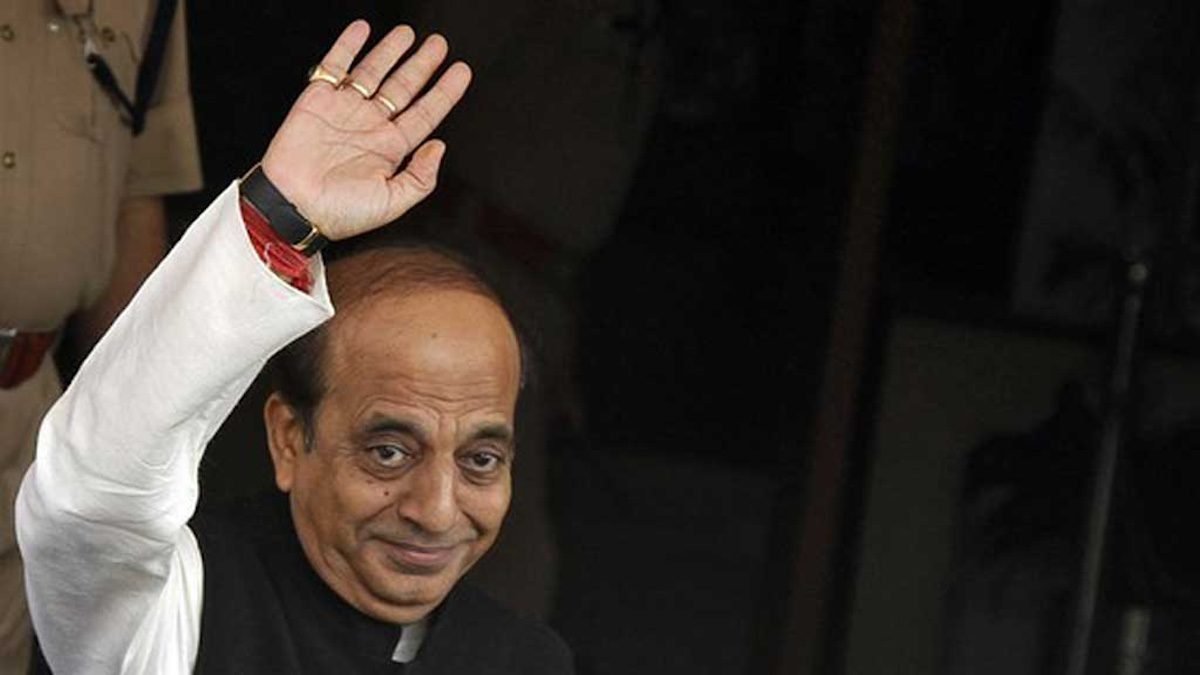
The appointment of Dinesh Trivedi as high commissioner-designate makes the intent unmistakable. He is no retired bureaucrat assigned a largely ceremonial posting, but a seasoned politician with cabinet-level experience, deep parliamentary connections and an instinct for strategic signaling.
Having served as railway minister and remained a fixture in national politics, he offers something a conventional diplomat often cannot: direct political access, finely tuned party instincts and a sensitivity to cues that seldom surface in official dispatches.
The logic of appointing him is not obscure. Career diplomats excel at continuity and incremental progress. But when ties fray for political reasons—misread intentions, perceived slights, or asymmetries of respect—it is often a political figure who carries the requisite heft to reset the relationship.
Such envoys bring authority, signaling that the sending government is willing to invest political capital in reconciliation. Considering figures such as Dinesh Trivedi for a prominent role in Dhaka are thus part of a series of strategic gestures. They imply that India recognizes the limits of its earlier posture and seeks to engage Bangladesh on a more explicitly political plane.
This marks a tacit admission that the previous phase of engagement fell short. During the Yunus-led interim government, Delhi’s reading of Dhaka was, at best, cautious and, at worst, misconceived. Concerns about political stability and continuity of policy appear to have led India to adopt a guarded, somewhat aloof stance.
In doing so, it underestimated both the domestic legitimacy of the interim arrangement and the sensitivity of Bangladesh to perceived condescension from its larger neighbor. Diplomacy is as much about optics as outcomes; by appearing hesitant or overly calculating, India risked eroding the trust it had painstakingly built over the past decade.
The consequence was a cooling of ties at a moment when both countries had much to gain from cooperation. Trade, connectivity, and regional security initiatives all require a baseline of political comfort. Without it, even the most technically sound agreements struggle to gain traction.
New Delhi’s current pivot — emphasizing a “neighborhood-first” approach and signaling renewed engagement — suggests a recognition that the relationship cannot be managed on autopilot. It needs active tending, and that requires political attention.
The question, then, is how Dhaka should respond. One option is symmetry. If India sends a political envoy, Bangladesh could reciprocate by upgrading its own representation in Delhi, replacing the seasoned diplomat M Riaz Hamidullah with a figure of equivalent political standing, perhaps at the rank of state minister.
Such a move would align with the logic that political problems demand political interlocutors. It would also ensure that Bangladesh’s voice in Delhi carries not just diplomatic nuance but direct access to the country’s political leadership, enhancing its ability to negotiate on equal terms.
Yet reciprocity need not be automatic. There is an argument—subtle but not trivial—that Dhaka might instead choose to retain a career diplomat, thereby signaling, without overt confrontation, that it was India that misjudged the situation during the interim period.
In this reading, Bangladesh would be acknowledging India’s effort to reset ties while quietly reminding it that the burden of correction lies primarily with New Delhi. Diplomacy often operates through such calibrated asymmetries, where what is not done speaks as loudly as what is.
Still, restraint has its limits. Bangladesh’s interests are best served by maximizing strategic gain rather than scoring symbolic points. If India is willing to elevate the relationship by investing political capital, Dhaka risks underplaying its hand by responding with bureaucratic continuity alone.
A political envoy in Delhi could do more than mirror India’s move; it could actively shape the next phase of the relationship. Such a figure would be better positioned to navigate the complex intersections of domestic politics and bilateral issues, from trade imbalances to water sharing and regional connectivity.
Moreover, the regional context favors proactive engagement. South Asia remains one of the least integrated regions in the world, despite obvious complementarities. Bangladesh’s economic rise, coupled with India’s strategic ambitions, creates a window of opportunity for deeper cooperation.
But this will not materialize through inertia. It requires deliberate, high-level engagement that can cut through bureaucratic inertia and political mistrust. Political envoys, by virtue of their stature, are often better equipped to perform this role.
None of this absolves India of its earlier missteps. The present recalibration is, in effect, an attempt to amend a relationship that was allowed to drift. But diplomacy is not a courtroom; it is a marketplace of interests. The relevant question for Dhaka is not who erred, but how best to leverage the current moment.
Matching India’s initiative with a political envoy of its own would send a clear message that Bangladesh is ready not just to repair ties, but to elevate them.
In the end, the choice is between signaling and substance. Retaining a career diplomat may offer a quiet satisfaction, a reminder that Bangladesh has not forgotten India’s attitude during its interim period.
However, appointing a political envoy would offer something more valuable. A chance to reshape the future of one of South Asia’s most consequential bilateral relationships. For two neighbors bound by geography, history and economics, that is an opportunity worth seizing.
Faisal Mahmud is a Dhaka-based journalist. He was the former Minister (Press) of Bangladesh High Commission in New Delhi.