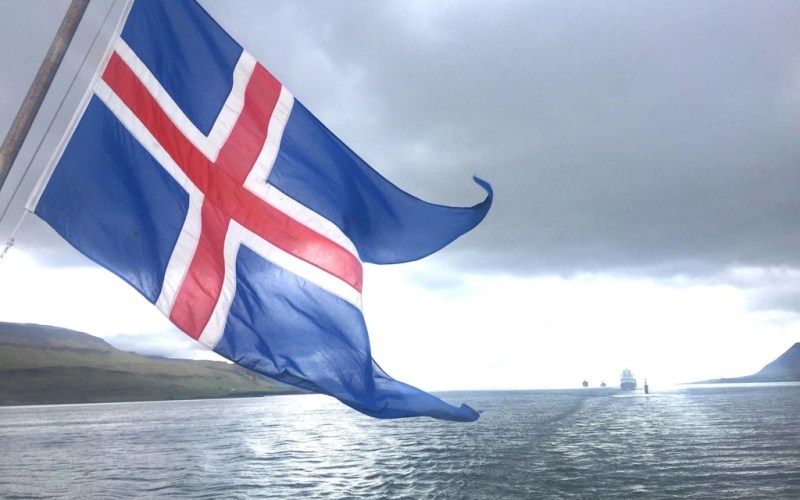
Iceland needs to find new ways to strengthen its security after voters rejected restarting accession talks with the EU, the country’s foreign minister told Reuters, including by seeking bilateral cooperation and deepening ties with the bloc.
The comments came after Icelanders on Saturday voted to reject a government push to reopen EU membership talks.
U.S. President Donald Trump, who has repeatedly said he wants to acquire neighbouring Greenland and has cast doubt on Washington’s commitment to NATO, has sharpened the security debate in Iceland in recent months.
“We didn’t vote away the geopolitical situation, it’s still there and we will have to find other ways to increase our security,” Thorgerdur Gunnarsdottir told Reuters in parliament after meeting the foreign affairs committee.
In rejecting EU membership talks voters brushed aside government warnings that EU membership could bolster its security.
“The EU is still a very important partner for Iceland, and we need to strengthen our cooperation further. We will look at bilateral agreements, we already have such agreements with Finland and Norway,” she said, also mentioning Japan and Canada as important partners.
Iceland, an Arctic island of 400,000 people, is a NATO member but has no standing army of its own. Its defence is based on a bilateral defence agreement with the United States from 1951 and NATO membership.
In Saturday’s referendum, 52.8% of ballots cast were against the government’s proposal to hold negotiations with Brussels, 47.2% were in favour, with 82.5% of eligible voters taking part.
Iceland has been part of the European Economic Area since 1994, an agreement with the EU that grants Iceland access to the EU’s single market but without being a full member.
“We will have to strengthen cooperation within the EEA. A very positive outcome of the referendum is that all Icelandic parties are now united behind the EEA agreement,” she said.
Source: Reuters