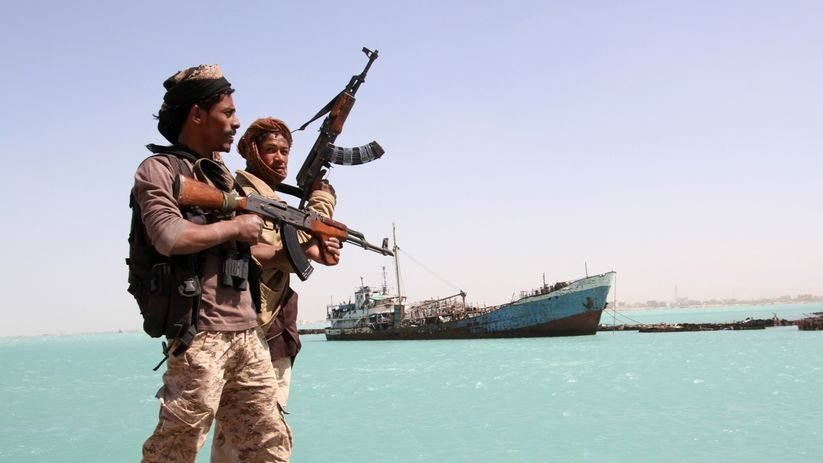
The Houthi seizure of Mokha has turned the Yemeni fishing city and nearby Bab el Mandeb Strait into a new front in the wider confrontation between Iran and the United States.
In How a Fishing City in Yemen Became a Second Front in the Iran-US Confrontation, The Media Line’s Khaled Al-Ansi traces the Houthi offensive that forced government and National Resistance forces south toward Dhubab District and dramatically altered control of Yemen’s West Coast.
The Houthis began attacking Mokha directly on August 9, firing more than 25 missiles at the city and port over several days. Their offensive expanded on September 3 across western Taiz and Hodeidah, and by September 10 they had seized Mokha, Hays and Khokha, gaining full control of Hodeidah governorate.
A Yemeni government military officer told The Media Line that government forces withdrew after facing heavy missile attacks and losing air cover, but said the battle around Mokha and Bab el Mandeb was continuing.
The advance has wider implications because disruptions in the Strait of Hormuz have increased the importance of Bab el Mandeb. Oil flows through the strait rose from around 5.4 million barrels per day in the fourth quarter of 2025 to approximately 8.1 million in the second quarter of 2026.
The fighting has displaced around 76,000 people from Taiz and Hodeidah since September 3, according to the International Organization for Migration.
Al-Ansi’s full report examines how the fight for Mokha has drawn Yemen deeper into a regional conflict extending far beyond its shores.