Israel marked Holocaust Martyrs’ and Heroes’ Remembrance Day on April 13 with a state ceremony at Yad Vashem in Jerusalem, focusing this year on the central role of the Jewish family.
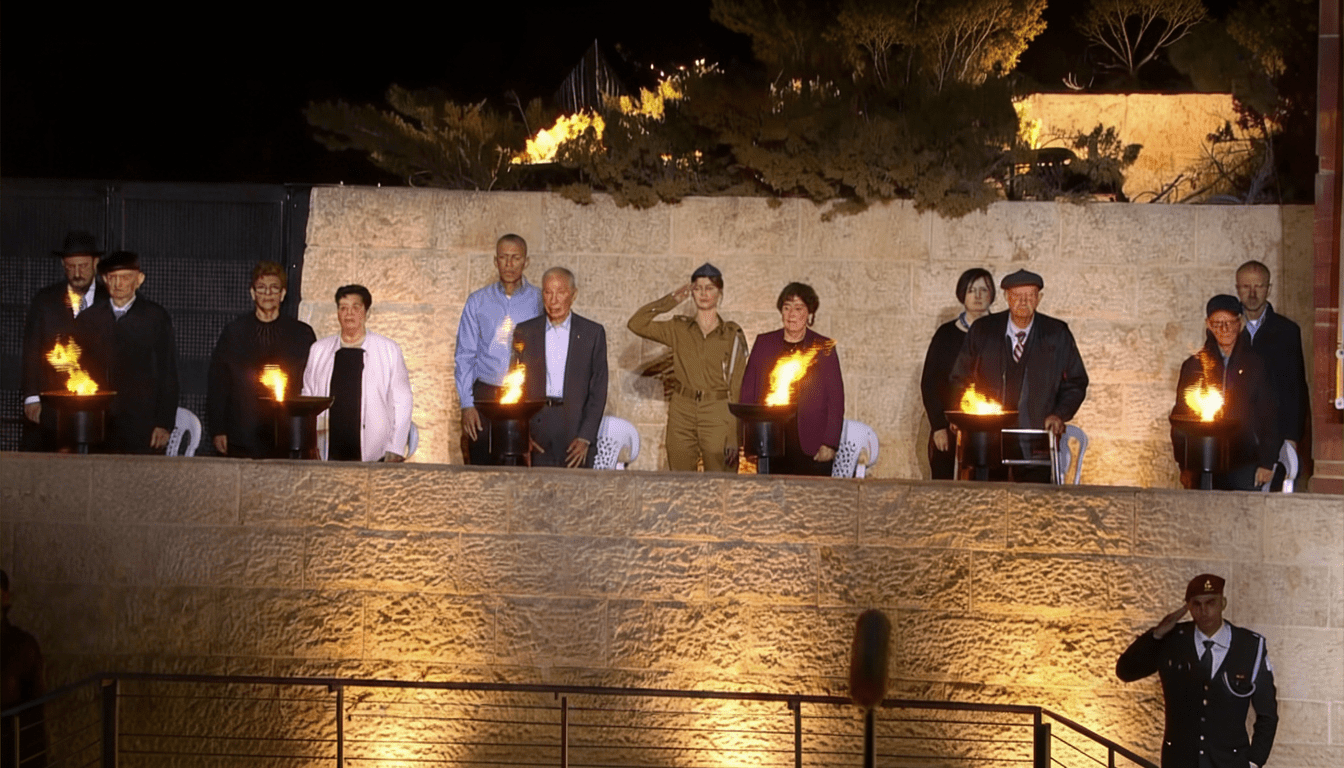
The ceremony opened with the lighting of the remembrance torch by Rabbi Yisrael Meir Lau, chairman of the Yad Vashem Council, followed by prayers for Israeli soldiers and bereaved families amid the ongoing war.
Organizers emphasized that the 2026 theme—” the Jewish family”—reflects both the destruction and resilience of family life during the Holocaust. Speakers described how Jewish families, once a foundation of stability and identity, were shattered under Nazi persecution, with deportations, hunger, and violence forcing children and parents into survival roles.
Despite this collapse, families often remained a source of emotional strength, even in ghettos, camps, and hiding. After the war, survivors sought to rebuild family life as a symbol of renewal and continuity.
President Isaac Herzog linked the theme to present-day Israel, noting the ceremony took place during wartime. He spoke of national resilience through the story of Holocaust survivor Magda Baratz and her great-grandson, Master Sergeant Asaf Cafri, who was killed in Gaza last year. Herzog described the generational bond between a survivor who endured Auschwitz and Bergen-Belsen and a soldier who died defending Israel, calling it a reflection of the Jewish people’s journey from destruction to rebirth.
He also emphasized the scale of the Holocaust, in which approximately six million Jews—one-third of the global Jewish population at the time—were murdered, stressing that Jewish identity has long been rooted in a shared sense of family, history, and destiny.
Prime Minister Benjamin Netanyahu addressed Holocaust survivors as “giants of spirit” and drew a contrast between Jewish vulnerability during the Holocaust and Israel’s current military strength. He said Israel has learned the lessons of history and pledged that the country would prevent any future existential threats, referencing ongoing operations against Iran and its regional allies.
The ceremony included the traditional lighting of six torches in memory of the six million victims. Each torch was lit by a Holocaust survivor accompanied by family members, symbolizing both remembrance and continuity.
The annual ceremony concluded with a message of remembrance, resilience, and the enduring role of family in Jewish life, linking the memory of the Holocaust to the present and future of the State of Israel.