Despite a ceasefire that has been in effect for more than a month, the cost of the U.S. war with Iran keeps spiking higher, a senior Pentagon official said on Tuesday.
Two weeks ago, the Pentagon claimed the war had cost $25 billion, a figure that analysts said was likely a gross undercount. In testimony before the House Appropriations defense subcommittee, the Department of War’s comptroller, Jay Hurst, said the cost of the war has risen “closer” to $29 billion because of the “repair and replacement of equipment” and “general operational costs” of keeping troops in the Middle East.
Experts also expressed skepticism at this revised count.
“The costs of this war are still growing, and the Pentagon is still not being straight with taxpayers or lawmakers about the numbers. If the numbers being thrown around in committee hearings were complete, why would the Pentagon continue withholding a comprehensive, itemized cost assessment from Congress?” said Gabe Murphy, a policy analyst at Taxpayers for Common Sense, a nonpartisan budget watchdog advocating for an end to wasteful spending. “Taxpayers deserve answers, and lawmakers need them in order to craft a responsible budget.”
“If they can’t defend the nation with a trillion dollars, they’re doing it wrong.”
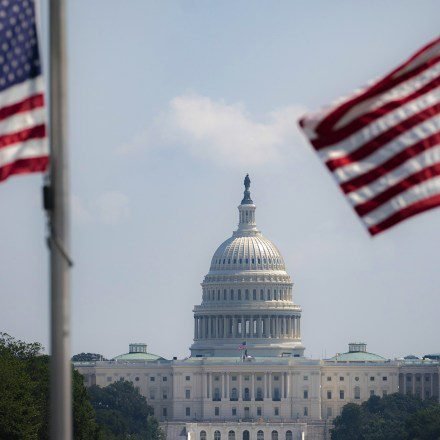
Hurst, War Secretary Pete Hegseth, and Gen. Dan Caine, chair of the Joint Chiefs of Staff are on Capitol Hill to discuss the Pentagon’s $1.5 trillion budget request for 2027 before House and Senate appropriations subcommittees on Tuesday. Hegseth said the massive sum — the largest request in history — “reflects the urgency of the moment” and would address both the “deferment of long-standing problems as well as position our forces for the current and future fight.”
Murphy called the dramatic 45 percent increase a negotiating tactic. “They’re seeking $350 billion through reconciliation and $1.15 trillion in the base budget, but they know reconciliation is a long shot. It’s all about trying to make a $1.15 trillion Pentagon budget seem reasonable in comparison,” said Murphy. “But there’s nothing reasonable about it. It’s a roughly $150 billion increase over last year.”
Americans, Murphy said, deserve an explanation for the runaway military budget. “If they can’t defend the nation with a trillion dollars, they’re doing it wrong.”
President Donald Trump said Monday that the ceasefire with Iran — which went into effect on April 8 — is “on life support” after Iran’s response to the latest U.S. peace proposal. Reuters, citing Iranian state media, reported that Iran’s proposal included war reparations from the United States, lifting sanctions on Tehran, and recognition of its sovereignty over the Strait of Hormuz. Trump rejected Iran’s reply as “totally unacceptable” and called it a “piece of garbage.”
Hegseth said the Pentagon was prepared to reignite hostilities with Iran. “We have a plan to escalate, if necessary; we have a plan to retrograde if necessary. We have a plan to shift assets,” the secretary testified, declining to say more in the public hearing.
An analysis by The Intercept found that Trump has embroiled the U.S. in more than 20 military interventions, armed conflicts, and wars during his five-plus years in the White House. The expenses of this wide-ranging war on the world are rising across the globe.
The Intercept was, for example, the first outlet to reveal that the U.S. military’s intervention in Venezuela and attacks on boats in the Caribbean and the Eastern Pacific — Operations Absolute Resolve and Operation Southern Spear, respectively — have already cost taxpayers at least $4.7 billion, according to an exceptionally cautious estimate from Brown University’s Costs of War Project.
The ultimate price tag of Americas wars in Latin America will further balloon in the decades ahead, saddling future Americans with soaring costs, according to the report. “War is financed by debt, adding interest costs to the public budget,” wrote authors Hanna Homestead, a research analyst with the National Priorities Project, and Jennifer Kavanagh, the director of military analysis at Defense Priorities, a nonpartisan research group. “Furthermore, the federal government undertakes an obligation to pay veterans benefits for decades into the future.”
Recently, Linda Bilmes, a former assistant secretary and chief financial officer of the U.S. Department of Commerce and currently a public policy professor at the Harvard Kennedy School, told The Intercept that the already-excessive expense of the Iran war would likely be pushed into the trillions of dollars by such long-term costs like veterans benefits and interest on the debt to pay for the war.