American control of the strategic waterway would have signaled that Washington remains prepared to guarantee freedom of navigation and prevent Iran from using the strait as leverage
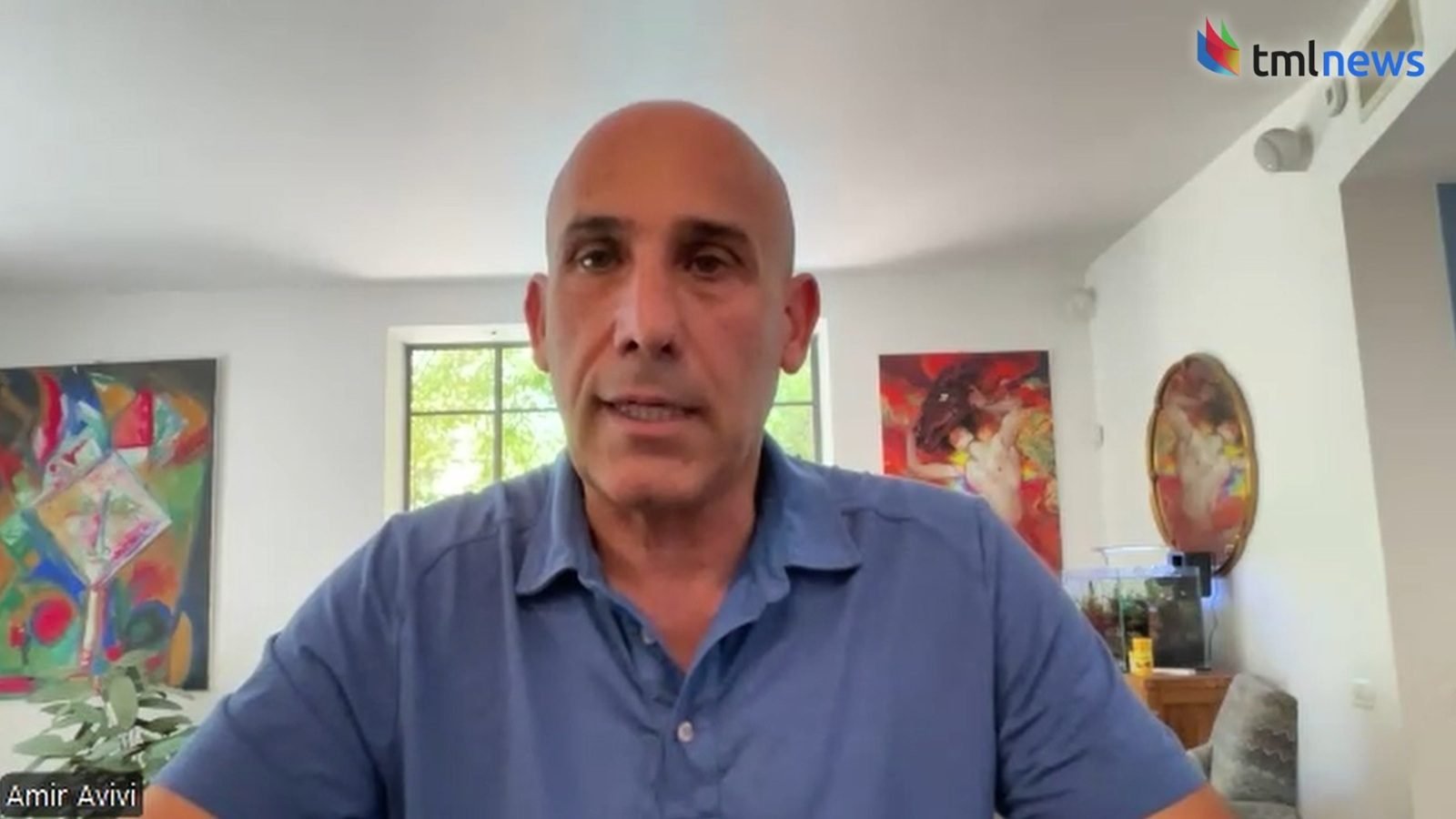
“As a general, I must say I’m very, very surprised the US didn’t take over militarily the strait,” Brig. Gen. (ret.) Amir Avivi told The Media Line, warning that the emerging US-Iran memorandum of understanding leaves dangerous uncertainty over the Strait of Hormuz, Israel’s freedom of action, and the future of pressure on Tehran.
As a general, I must say I’m very, very surprised the US didn’t take over militarily the strait
I asked the general whether the strait was truly open or whether the memorandum itself showed that the waterway remained contested. For Avivi, the strategic waterway is one of the clearest tests of whether the memorandum is a real step toward stability or a pause that allows Iran to recover.
The Strait of Hormuz is one of the world’s most important energy chokepoints, linking the Persian Gulf to the Gulf of Oman and the Arabian Sea. Any disruption there can affect global oil markets, shipping costs, insurance rates, and regional security. For Avivi, the question is simple: If the strait is truly open, why is a deal needed to open it?
“Yes, it’s not clear,” he said.
Avivi said US Central Command had cleared a passage near Oman to allow ships to leave the strait, but argued that this suggests the waterway is not fully open.
“If the strait was open completely, the way it’s described, you wouldn’t need this deal at all, because this deal is just about opening the strait,” Avivi said.
“It’s releasing the blockade in order to get Iran to agree to open the strait. So why would you need a deal if the strait is open? So obviously it’s not really open,” he asserted.
Avivi said he expected a stronger American military posture to guarantee freedom of navigation. A country as powerful as the United States, he argued, “should be able to control militarily the strait and ensure freedom of shipment in the strait.”
“And it’s not happening. This is not good news,” he said.
That criticism runs through Avivi’s broader assessment of the memorandum. In his view, the danger is not only what the document says, but what Iran, Hezbollah, and other Iranian-backed forces may believe it signals: that pressure is easing and Washington is less willing to fight.
“Now, we cannot be a power if you’re not willing to fight, if you’re not willing to take chances, and if you’re not willing to have casualties,” Avivi said.
He said that did not mean supporting open-ended wars with unclear goals.
“And I’m not saying you need stupid wars. I’m not saying we need 20 years in Iraq or Afghanistan or other wars which were not necessarily smart. We can do a smart war, but we need to be willing to sacrifice and fight for what you believe in, for your values, and for the freedom of shipment globally.”
Avivi described the US-Iran document as provisional and limited, not a final agreement that should reshape Israel’s military calculations.
It’s a memorandum of understanding. It’s not a binding contract. It’s not a final agreement.
“It’s a memorandum of understanding. It’s not a binding contract. It’s not a final agreement,” he said.
He said the memorandum defines a short-term framework rather than a settled strategic outcome.
“It’s a memorandum that defines what will happen in the next two months, and anything can happen. Israel hasn’t signed anything. It’s not part of the deal, and Lebanon is not part of the deal.”
For Avivi, that distinction is central. Israel, he said, is not party to the arrangement, yet could still be pressed to reduce its military activity while Iran and Hezbollah use the lull to regroup.
“And yet, we’re demanded again and again not to fight freely, not to defend our citizens and soldiers the way we should do,” he said.
Avivi said Israel is currently focused mainly on southern Lebanon rather than striking Hezbollah positions across the country. In his view, that restraint carries a price.
“We’re fighting mainly in south Lebanon, and this enables Hezbollah to regroup, to be more effective. This endangers our soldiers and our citizens, and this is not a good place to be.”
The concern, Avivi said, is that Tehran and its allies will read any visible gap between Washington and Jerusalem as an invitation to push harder.
“I think that when Iran and its proxies see a kind of daylight between the US and Israel, they get emboldened,” he said. “It’s obvious that they are going to try to embarrass the president. It’s obvious that they are going to try and deepen the daylight between Israel and the US.”
The retired general said Israelis are watching the diplomatic shift with deep unease.
“No. I must say in Israel, … we are very worried about where things are going,” Avivi said when asked whether the region was in a good place.
He contrasted the current uncertainty with what he described as a more decisive opening stage of the war.
“We started the war with a lot of resolution, fighting together with the US, with a clear message from President Trump saying there will be unconditional surrender of the regime.”
Avivi said military action and economic pressure had badly damaged Iran’s capabilities. He described the US blockade as especially important, saying it placed a severe strain on the Iranian economy.
“The US imposed a blockade that obviously was very, very effective and brought their economy to the point where if you continue the blockade, it might collapse,” he said.
That is why he sees any easing of pressure as dangerous.
“And now we’re in a different stage where the Iranians are getting emboldened,” he said. “They feel that maybe the US lost the willingness to fight. And we are talking about releasing money to the regime, about opening the blockade, which was relieved now and destroyed.”
Avivi did not argue that US-Israel relations had collapsed. He said some of the alarm in Israel may be premature, and that Washington may still use the next phase to pursue the original goals of the war: preventing Iran from acquiring nuclear weapons, stopping ballistic missile production, and cutting off support for its regional network.
“There is a tendency immediately to go to complete pessimism, and that’s it, and we are done, and the relationship between Israel and the US is terrible. I don’t think this is the case,” he said.
Still, Avivi made clear that his basic view of the Iranian regime has not changed.
They understand only one language, and this is power
“They’re not going to abide to any agreements. This is the way they work. They understand only one language, and this is power,” he said.
He argued that sanctions and military force remain the only tools capable of changing Tehran’s behavior.
“Whether economical sanctions or kinetic attacks, there’s no other way to bring this regime on its knees. They’re never going to give up nuclear potential capabilities without a fight. This is the reality on the ground.”
Avivi said he understands that the US president may be trying to ease a global energy crisis, but warned that diplomacy cannot replace the war’s stated aims.
“Now, maybe in the eyes of the president, there is a need to ease the crisis, the energy crisis globally that’s going on, and it’s understandable,” he said, “but the bottom line is we’ll have to go back and fight and bring this regime on its knees and do what we said we’ll do from the beginning. Bring them to a state of unconditional surrender.”
Asked what message he would send to Washington, Avivi said the United States should assume Iran will deceive.
“But I would say to the US, don’t believe to anything they say. They’re not going to do anything. You know, they say they will. We know the Iranians are going to deceive,” he said.
If Iran fails to comply, he said, Washington and Jerusalem should return to pressure.
“They’re going to lie. And the moment they don’t deliver, we need to go back to a blockade, and we need to go back to deal with them militarily, continue degrading their leadership and capabilities until we get to the point where this regime is not sustainable anymore.”
One of Avivi’s sharpest warnings concerned possible financial relief for Tehran. If money is released to Iran, he said, it will not strengthen moderates or produce stability. It will help rebuild Iran’s military capabilities and support its proxies.
“Definitely. Any money this regime will get will be used to strengthen their proxies, will be used to build up again military capabilities,” he said.
He tied the issue directly to future casualties.
“This will cost the lives of American soldiers, and this will cost the lives of Israeli soldiers.”
Avivi said he believes the Iranian regime must ultimately fall and that agreements with it cannot produce lasting security.
“It’s a very bad idea to give money to this regime. This regime must fall. We need a change of regime in Iran, and dealing with any agreement with this regime is a bad agreement,” he said.
I asked Avivi whether Israel could act without the United States if the memorandum failed to produce real Iranian concessions. His answer was immediate.
“Israel obviously can do it alone,” he said.
He acknowledged that American support remains important, but said Israel has the military ability to continue operating against Iran.
“We do need American support and so on,” he said, but “militarily, Israel can definitely deal with Iran. We completely control their airspace.”
Avivi said Israel has already demonstrated that capability.
“We’re able to strike them wherever we want, when we want, and the IDF is getting ready for that. We understand that we might be in a situation where we’ll have to deal with this alone. We started alone, by the way.”
He added, “Our first attack, the 12-day war, we went alone.”
Asked about the Iranian public and the possibility of renewed internal unrest, Avivi said the issue extends beyond any single ethnic or opposition group.
“I don’t know if it’s just about the Kurds. I think we’re talking about overall the Iranian people,” he said. “I would say that probably 90% of the Iranian society wants a change of regime.”
He said Iran’s internal conditions are dire, citing water shortages, electricity problems, a broken currency, and high inflation. Yet he warned that domestic opposition is less likely to move if the regime senses hesitation from outside powers.
“It’s very hard to predict when they will feel emboldened enough to go to the streets again and fight,” he said. “But when we see hesitation, when we see at this point lack of resolution, when we see this regime again emboldened, it’s hard to see how the Iranian people will rise.”
Looking beyond Iran, Avivi said the region needs a broader alignment built around Israel, the United States, and moderate Sunni states. He said Saudi Arabia should no longer keep its relationship with Israel behind the curtain.
“You know, before the war, we were on the verge of normalization. And Israel and Saudi Arabia, behind the scenes, have a lot of relations, and there’s a lot going on. But I think it’s time that Saudi Arabia moves out of the shadows and normalizes relations with Israel,” he said.
Avivi described Saudi Arabia as a central player in a larger regional structure.
“Saudi Arabia is the leader of the Sunni world,” he said. “In order to deal with the dangers that Iran and its proxies present, by the way, dangers that are existential for the Gulf states and Saudi Arabia, and also to deal with Sunni radicalism, Muslim Brotherhood—also a big danger to moderate Sunni states—you need an alliance. You need an Israeli-American-Sunni alliance.”
He said Gulf states have seen sharp changes in American policy between administrations and may conclude that Israel is the more consistent regional partner.
“They can only trust Israel always being resolute and always be willing to fight,” he said.
For Avivi, the memorandum may still lead somewhere useful if Washington uses the coming weeks to maintain pressure and demand real concessions. But he warned that if the document becomes a pause without leverage, Iran and its allies will use it.
His argument is blunt: diplomacy is not the problem; diplomacy without force is. The question now is whether the US-Iran track will contain Tehran or convince Tehran that the pressure is lifting.