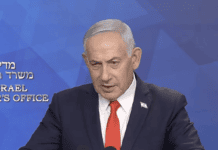
Differences in sampling, weighting, turnout estimates and bloc definitions can turn similar voter responses into sharply contrasting seat projections
Two polls published four days apart gave Israelis strikingly different projections of the next Knesset. An August 2 Kan 11 survey projected 52 seats for Prime Minister Benjamin Netanyahu’s bloc, well short of a majority. A July 29 Channel 14 poll put the right-wing bloc it classified as aligned with Netanyahu at 62 seats, enough to control the 120-seat parliament.
The results did not mean voters had shifted by 10 seats in four days. The pollsters reached different respondents, weighted their answers differently and made their own assumptions about turnout. The outlets also did not necessarily place the same parties in each political bloc.
A Media Line review of the latest available surveys from eight Israeli news outlets as of August 4 found a persistent divide. Six polling series placed the Likud between 20 and 23 seats and Netanyahu’s bloc between 49 and 53. A July 9 i24NEWS poll conducted by Direct Polls projected 29 seats for the Likud and 59 for the bloc. The July 29 Channel 14 poll, conducted by Next Data and analyzed by Shlomo Filber, gave the Likud 32 seats and the bloc 62.
The polls were conducted on different dates and did not always test identical party lineups or define the blocs in the same way. The difference between the two groups, though, has appeared across several polling rounds rather than in a single news cycle.
The i24NEWS poll surveyed 527 adults and reported a margin of sampling error of ±4.2 percentage points at a 95% confidence level. Channel 14 reported a sample of 539 adults but did not publish a margin of error with its July 29 results.
A poll’s margin of sampling error applies to estimates of voter support, not directly to projected seats or coalition totals. Israel’s electoral threshold can eliminate an entire party, so a relatively small difference in estimated support can produce a much larger change in the distribution of Knesset seats.
Israeli historian and sociologist Yoel Schvartz told The Media Line that the country’s fascination with polls dates to the period when Israel had one television channel and much of the population watched the same political coverage.
“A large part of the population watched a single television channel, and the forecasts, the polls and the way that channel presented politics became the central topic people discussed throughout the week,” Schvartz said.
After the Likud’s rise in the late 1970s sharpened competition between two large camps, watching which side was ahead became “almost a folkloric topic of discussion,” he added.
Polls also became working tools for political parties. Private surveys allow campaigns to test messages and identify weaknesses in their support. Public polls commissioned by news organizations and debated on air can shape campaign coverage and influence how voters view the race.
Among the surveys reviewed, Channel 12 worked with Midgam, Kan 11 with Kantar, News 13 with HaMadad, Maariv with Lazar Research, Zman Israel with Tatika, i24NEWS with Direct Polls, and Channel 14 with Next Data and Filber. Israel Hayom has also commissioned national election surveys, including polls conducted by Kantar.
Recent samples have generally ranged from about 500 to 1,000 adults reached online, by telephone or through mixed digital methods. A larger sample generally reduces random sampling error, but size alone cannot correct a survey that systematically misses parts of the electorate.
Every method has limitations. Many people ignore calls from unfamiliar telephone numbers. Online panels may overrepresent people who follow politics closely or are particularly willing to complete surveys. Automated questionnaires are fast and inexpensive, but respondents cannot ask for clarification. Telephone interviewers can explain questions, yet language barriers, cultural differences, and reluctance to speak with strangers may still leave some communities underrepresented.
Entire populations do not enter this type of survey, or are underrepresented
“Entire populations do not enter this type of survey, or are underrepresented,” Schvartz said.
Pollsters try to correct such imbalances by weighting the responses. A questionnaire may record a respondent’s age, place of residence, education, degree of religious observance, country of origin and previous vote. During the current campaign, a pollster might also ask whether someone in the household has served in the military reserves.
The public poll is never the raw numbers. It is the raw numbers after the pollster’s weighting.
“The public poll is never the raw numbers,” Schvartz said. “It is the raw numbers after the pollster’s weighting.”
Weighting requires judgment. If too few ultra-Orthodox respondents participate, for example, the pollster must decide how much additional weight to give their answers and which information best predicts how the community will vote.
One firm may rely heavily on previous voting patterns. Another may place more weight on responses from younger Haredi voters who indicate possible movement toward the Likud or Otzma Yehudit. Such decisions can lead to different projections even when the underlying responses are broadly similar.
Turnout must also be estimated. Telling a pollster which party one prefers does not guarantee that the respondent will vote. Arab turnout is particularly difficult to model because surveys need sufficient Arabic-language interviewing and geographically representative samples, while distrust may reduce participation.
Schvartz said Arab turnout has ranged from about 40% to 64% in recent elections. Different assumptions about participation can therefore change the projected balance of the Knesset.
The electoral threshold magnifies those differences. Israelis cast one ballot for a party list, and any list receiving less than 3.25% of valid votes is excluded from the allocation of seats. A slight movement may cost an established party one seat. For a party near the threshold, it can mean disappearing from parliament.
The 2022 election demonstrated the consequences. Meretz received about 3.16% of the vote and Balad about 2.9%, leaving both below the threshold. Together, the parties received nearly 289,000 votes, or about 6% of all valid ballots, but neither gained representation.
Because those votes were excluded from the allocation of seats, parties that crossed the threshold received a larger share of the Knesset than their share of the nationwide vote alone would suggest. Netanyahu subsequently formed a government supported by 64 lawmakers.
That experience may affect voters’ calculations in the current campaign. Someone may vote for a small party near the threshold to help keep it in parliament, even if the voter also considers a larger party in the same camp acceptable.
Undecided voters present pollsters with another choice. Some firms exclude them when calculating party percentages; others may try to allocate them using earlier answers, demographic characteristics or voting history. The published seat totals can therefore appear more exact than the underlying data warrants.
Near the threshold, the treatment of undecided respondents can change which parties are projected to enter the Knesset.
“For the larger parties, there is what Israel calls strategic voting,” Schvartz said. Someone seeking to strengthen a political bloc may choose the weaker of two acceptable parties to preserve it as a possible coalition partner.
Polls can encourage such decisions. A party near 3.25% may attract “rescue votes,” while favorable numbers can generate attention, donations and momentum. Campaigns also use private polling to test alliances, deploy volunteers and measure whether a message is working. Poor results can increase pressure on a small party to merge with another list or withdraw.
Consistent differences associated with a polling organization are known as house effects. They do not by themselves establish that a firm has manipulated its findings. They may result from different ways of recruiting respondents, weighting demographic groups, estimating turnout and classifying political affiliations.
“Differences are not errors,” Schvartz said. “They are different ways of weighting.”
It means reading the data through particular lenses, which are sometimes right and sometimes wrong
Ideology can affect how results are interpreted without necessarily making the underlying data false, he added. “It means reading the data through particular lenses, which are sometimes right and sometimes wrong.”
Schvartz also cautioned against placing too much weight on the recurring question of who is “most suitable” to serve as prime minister. Israelis vote for party lists, not directly for a candidate for prime minister.
The names offered in that question also vary. One survey may ask respondents to choose between Netanyahu and Gadi Eisenkot, while another may include Naftali Bennett and several other politicians. A respondent’s preferred prime minister does not necessarily indicate which party that person will support.
Someone who prefers Netanyahu as prime minister, for example, may vote for another party expected to join a Netanyahu-led coalition.
Schvartz said readers should begin with the balance among the blocs while checking how each outlet defines them. They should then examine which parties are near the 3.25% threshold and what assumptions the poll makes about turnout, particularly among Arab voters.
“The first thing we should look at is the bloc,” he said.
One week’s movement within a single polling series may reflect sampling variation rather than a genuine political shift. When several polling organizations detect the same movement over multiple surveys, the evidence of change becomes stronger.
In a close election, the decisive question may not be which party finishes first. It may be whether the smallest prospective coalition partner receives enough votes to enter the Knesset.