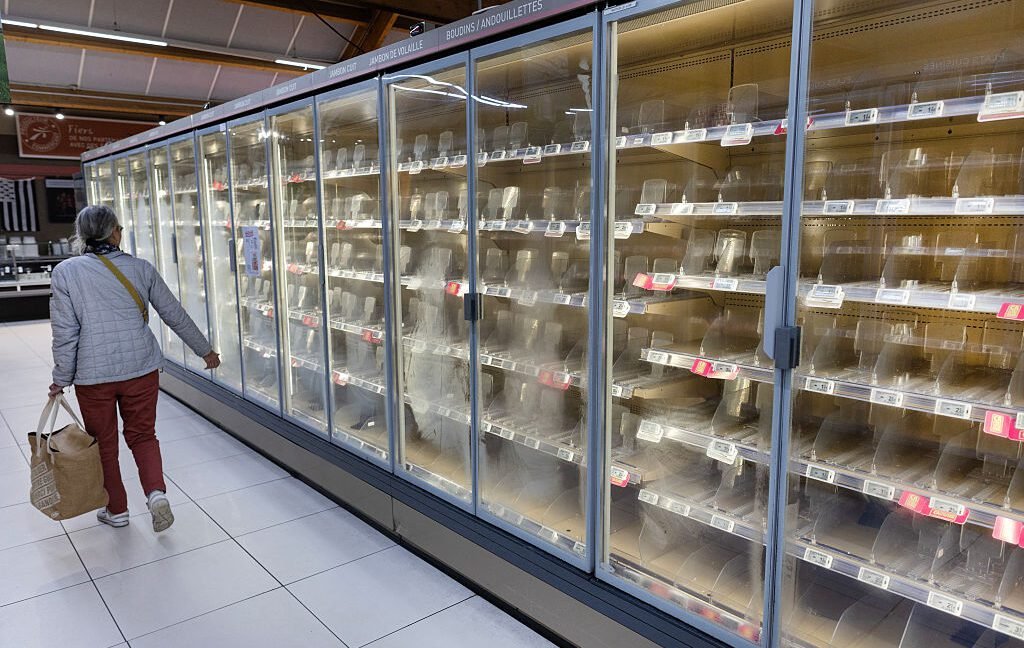
Earlier this week, a mass hack of refrigeration systems at an estimated 700 supermarkets throughout France caused them to suddenly malfunction, causing spoilage of untold tons of perishables and, in some cases, fires. As is now the norm, basic cybersecurity would have prevented it.
French authorities say the systems, made up of entire fleets of refrigerators and freezers throughout a store, were hacked. More specifically, Internet-connected controllers that allow technicians to remotely administer the store-wide systems were compromised. The unknown attackers responsible then activated defrosters long enough for the fridges to reach temperatures as high as 50° Celsius (122° Fahrenheit). By the time the mass compromise was discovered, food was spoiled, and in some cases their electrical systems caught fire.
The hacks that didn’t have to happen
Multiple security advisories and public research reports show that all three of the controller models reportedly hacked in the incident—sold by Danfoss of Denmark and Dixell and its parent company Copeland in the US—contained critical vulnerabilities that allow attackers to remotely log in to the devices with the same system rights as administrators. Until recently, Danfoss controllers, for instance, used a credential that changes each day. The password is generated by the publicly available firmware based on the date. A hacker who takes the time to analyze the code can do the same thing on any device that hasn’t received a recent update. Daily passwords are identical across models located in hundreds or thousands of stores.
A raft of critical vulnerabilities fixed in the past few months in Copeland/Dixel controllers also give similar remote access.
Besides running controllers with outdated firmware, the affected stores likely also failed to put the devices behind a VPN and create a restricted list of IP addresses allowed to log in. These protections are standard but often not followed. In this case, that failure enabled a mass hack that likely cost tens or hundreds of millions of euros. Spain, Portugal, Poland, Germany, and Belgium were also reportedly affected.
“Two things would have changed the outcome,” researchers at Pen Test Partners said Wednesday. “Cyber hygiene would have prevented the access: take the controller off the public internet, put remote access behind a VPN and an IP allowlist, bring third-party kit onto the network in a controlled, owned and documented way rather than leaving it on a contractor’s own connection, change known and default credentials, and patch to a current release.”
Researchers from security firm Claroty warned of the threat of ignoring these common-sense steps last October. The US Cybersecurity and Infrastructure Security Agency did the same in February.
In an email, Copeland acknowledged a vulnerability “identified in a discontinued, end-of-life generation of controllers” and said the company is working with customers to prevent similar incidents in the future. Danfoss representatives didn’t immediately respond to questions. CNN said the company also cited discontinued models.
So far, the party behind the attack has remained silent. That raises the possibility that the motive was vandalism on a mass scale. Another possibility is a nation-state or other international actor aiming to create a continent-wide disruption.
The incident underscores the tension between the financial and security departments in most businesses. Some companies are loath to spend large sums of money on new equipment when there are no tangible benefits or savings. Only after a devastating hack do they realize why the investment was worthwhile. Executives at affected supermarket chains will likely learn the hard lessons. Less clear is whether the cautionary tale will sway other businesses.