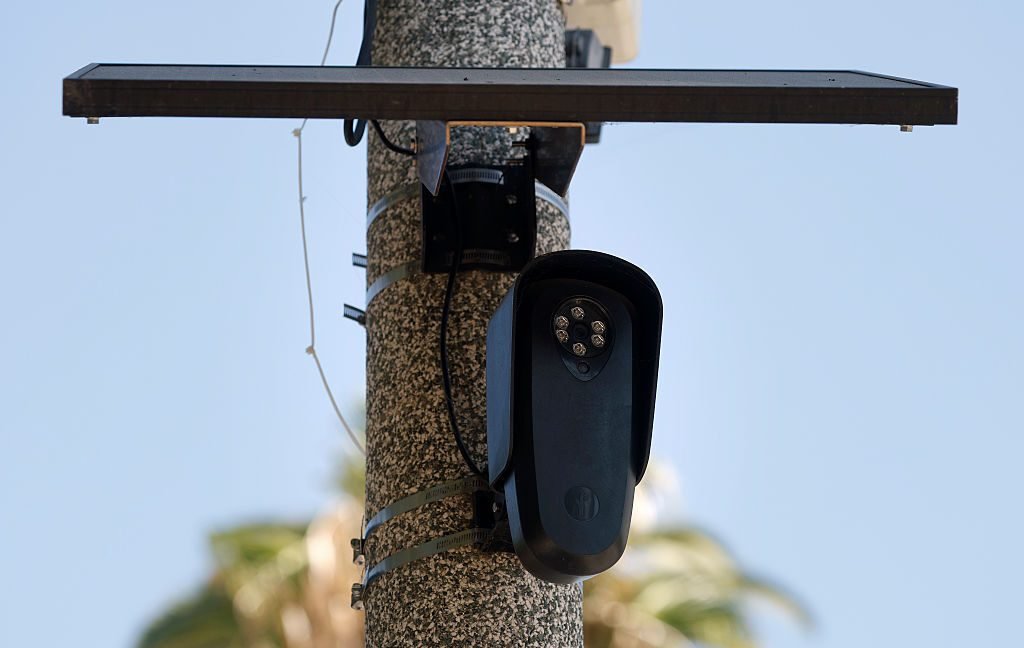
On Thursday, Flock announced plans to require all agencies with access to license plate reader data to use a safety tool that automatically detects abnormal activity and locks out cops who abuse their access to stalk people they know in their personal lives.
Flock’s audit assistance tool suspends access when user activity “meets defined criteria for abnormal behavior,” Flock said. The suspension can only be lifted by administrator review, with the goal being “to intervene before misuse becomes recurring or widespread.”
The tech has been available as an optional free feature since April, but only a third of agencies had opted in, Flock said. However, after a single Georgia sheriff’s office used the tool and subsequently arrested three cops who were separately using Flock cameras to stalk acquaintances, Flock CEO Garrett Langley told The Verge that dozens of incidents like these helped his company realize they made a mistake and had to act to correct it.
“This is such an obvious way to curb abuse,” Langley said, while admitting that “we got this one wrong. We should make it a requirement.”
No data on creepy cop-blocking tool
According to Flock, the Georgia case is not unique, and “identification of abuse predictably went up” for agencies that chose to activate the tool.
However, experts caution that there is no data to show how well the tool works to detect nefarious logins or malicious activity. In a press release, the ACLU recommended that an independent evaluator should review Flock’s tech. Until then, the ACLU warned that there is “no evidence that the tool works consistently” to address what The Washington Post found was a growing pattern of stalker cops using Flock cameras to spy on their exes. As of now, the ACLU said, “We don’t know if the tool is a real security measure or just window dressing.”
Additionally concerning—although Langley predicted to The Verge that “you are going to see more officers fired and more officers arrested for abusing police power”—experts warn that the public will only know the tool is working if agencies are fully transparent about how much abuse is found.
“Unless we know the number of officers misusing the system, we cannot conclude if Flock and its auditing tools are catching 95 percent of violators or 5 percent,” the ACLU said in a post analyzing Flock’s changes.
Former San Francisco District Attorney Chesa Boudin told SFGate that Flock’s changes “may not be enough.”
“The reforms may catch an officer misusing the tech, but the decision to discipline them falls on local agencies and ultimately falls on whether the agencies are really motivated to take corrective action,” SFGate reported.
Historically, police misconduct is often handled quietly internally, and Boudin pointed out that this makes it easy for cops to conceal bad Flock behavior. He also noted that pursuing criminal charges for misusing internal police tech is already difficult in states without specific statutes outlawing the abuses.
“It’s very difficult for anybody outside the department to know about it, and very easy for the department to sweep it under the rug,” Boudin said. “Even with the best intentions from Flock, it’s just not enough to ensure accountability.
Most likely, it seems the public will find out about abuses through evidence shared in lawsuits or other criminal investigations, since agencies may not be willing to voluntarily disclose cases that could draw unwanted negative attention.
“You can have all the technology in the world to oversee and monitor police behavior, but that technology and that evidence is not enough if there’s no political will to actually have consequences for people who break the rules,” Boudin said. “That’s the bigger challenge with police accountability.”
Detector may not flag lying cops
Another change that Flock introduced to help solve the stalker cop problem includes requiring case numbers for searches. However, a senior staff attorney at the Electronic Frontier Foundation, Saira Hussain, told SFGate that it seems trivially easy for cops to get around that requirement without triggering the audit assistance tool. A motivated bad actor could seemingly lie and give any case number, then conduct searches related to stalking romantic partners without triggering suspension, she suggested.
“That’s a significant concern, and I don’t think you, as Flock, are going to be able to tech your way out of it,” Hussain said.
The ACLU agreed, noting that the case number requirement was a previously optional feature that rolled out in July 2025 and seemed to do little to prevent police abuse when cops can manipulate the case numbers to suit their agendas.
“This leaves the public wondering how making an ineffective voluntary security measure mandatory will improve its functionality,” the ACLU said.
It matters whether the changes meaningfully block cops from stalking, as Flock continues to expand police access to more cameras in the US. Currently, Flock cameras are posted in every state but Alaska, leveraged by 7,000 law enforcement agencies, the New York Times reported. In total, that’s about 40 percent of all police departments in the US, and the ACLU noted that the same privacy concerns for Flock cameras exist for competitors’ automated license plate readers, which are signing contracts in areas where Flock isn’t.
While the ACLU acknowledged the problem goes beyond Flock, the group accused Flock of obscuring the problem by announcing changes that “seem to be a thinly veiled PR attempt to counter communities’ genuine privacy concerns with its mass surveillance system with largely hollow security promises, rather than an earnest effort to address them.”
Pointing to a database compiled by the Institute for Justice—which maps out where police Flock misuse and stalking are happening in the US—the ACLU said that “serious concerns” remain about how cops use Flock data and whether agencies or Flock are willing to stop abuse.
“Until Flock demonstrates they can develop a reliable, workable system to prevent improper searches, this promise of local control provides nothing more than a false sense of security,” the ACLU said.