Die Linke’s Berlin triumph has brought scrutiny of its ties to pro-Palestinian activists and disputes over antisemitism into negotiations over the capital’s next government
Germany’s far-left Die Linke won Sunday’s election in Berlin while the far-right Alternative for Germany (AfD) captured Mecklenburg-Western Pomerania, delivering major gains to parties on the political margins and a severe setback to Chancellor Friedrich Merz’s Christian Democratic Union (CDU). The results are putting new pressure on Germany’s governing parties while raising immediate questions in Berlin over Die Linke’s relations with pro-Palestinian activists and allegations of antisemitism within parts of the party.
Die Linke finished first in Berlin with 25.7% of the vote, according to the provisional final result, more than doubling its support from the previous election. The CDU, which has governed the capital, finished second, while the AfD placed third with about 16%, its strongest result in a Berlin election.
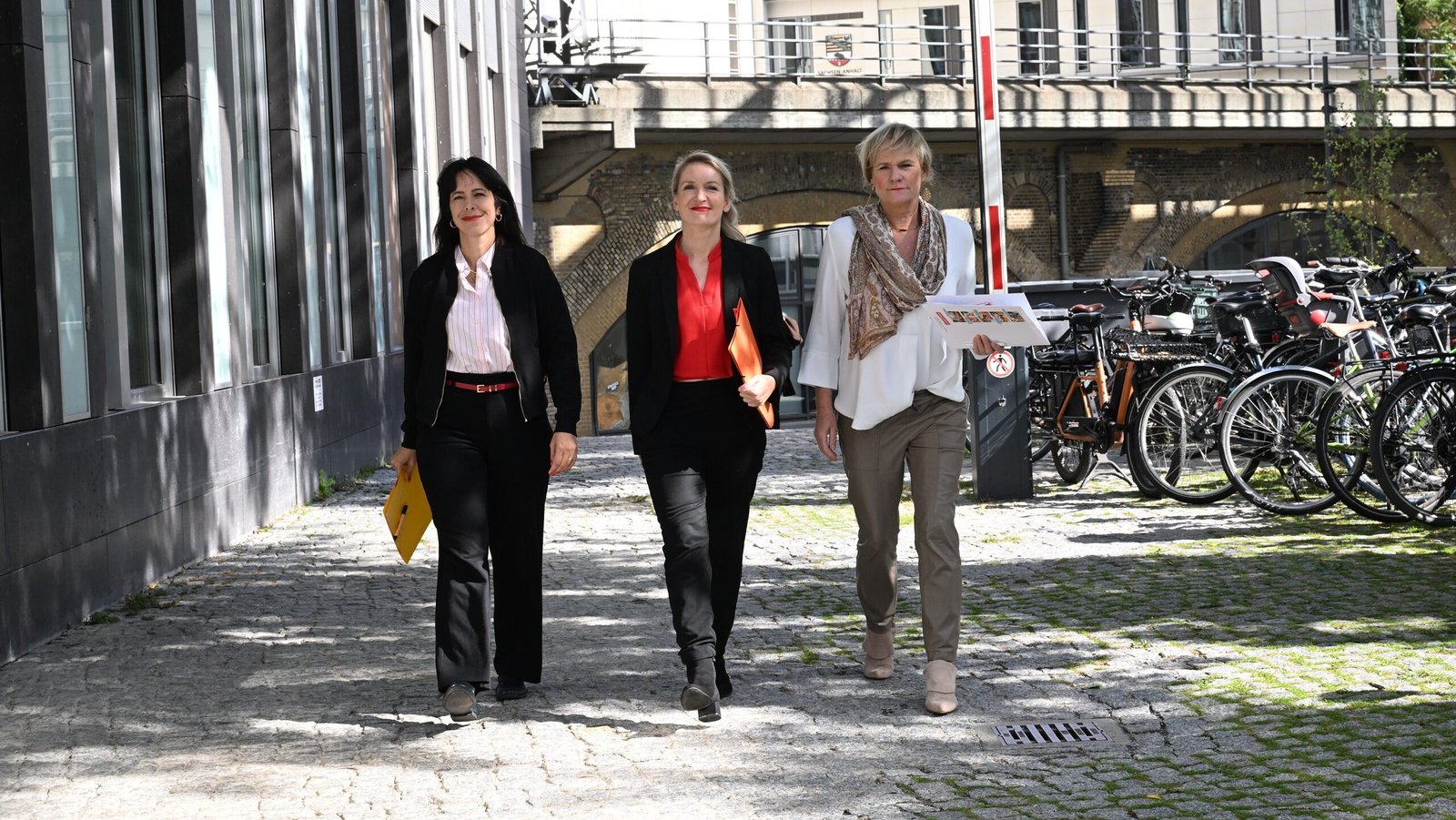
Die Linke’s lead candidate, Elif Eralp, is seeking to form a coalition with the center-left Social Democratic Party (SPD) and the Greens, a combination that would give the three parties enough seats to govern the capital. A CDU-SPD-Green coalition is also mathematically possible. If Eralp succeeds in forming a government, Die Linke would lead Berlin for the first time.
Eralp, the daughter of Turkish asylum seekers, campaigned heavily on Berlin’s housing shortage and high rents. Die Linke wants large corporate landlords to be brought into public ownership, following a 2021 referendum in which Berlin voters backed the expropriation of major housing companies. The proposal could involve more than 200,000 apartments and has emerged as one of the major potential points of disagreement in coalition negotiations.
Farther north, the AfD won Mecklenburg-Western Pomerania with 38.2% of the vote, ahead of the SPD. The CDU received only 4.9%, leaving it below the 5% threshold required to enter the state parliament. It was the first time the CDU had failed to enter a German state legislature and its worst state election performance of the postwar era.
The results continued a broader shift away from Germany’s traditional center-right and center-left parties. The AfD has expanded sharply in eastern Germany, campaigning against immigration, support for Ukraine and existing energy policies, while Die Linke has drawn support in Berlin through housing, cost-of-living and redistribution issues. The simultaneous gains by the two parties have complicated coalition building and intensified debate over the durability of Germany’s established political alignments.
Merz described the CDU’s performance as a “disaster” but rejected suggestions that he should step aside. He said he intended to remain in office and pursue planned economic, tax and pension reforms. The chancellor’s coalition of the CDU and SPD has faced dissatisfaction over the economy and living costs, while the rise of the AfD has also increased pressure on the longstanding policy by mainstream parties of refusing cooperation with the far-right party.
In Berlin, the election result quickly became intertwined with a separate controversy over Die Linke’s relationship with elements of the pro-Palestinian movement.
On election day, Die Linke candidate Basem Said shared an Instagram appeal by Palestinian activist Majed Abusalama, a co-founder of Palästina Spricht, or Palestine Speaks, which Berlin’s domestic intelligence service has classified as a confirmed extremist organization. Abusalama described the election as a “Wahlintifada,” or “election intifada,” and called for votes for several Die Linke candidates, including Eralp. Said thanked him for the appeal. The episode was first reported by German media and detailed by Berlin newspaper Tagesspiegel.
Further controversy followed Die Linke’s election-night celebrations. Ibrahim Ibrahim, a pro-Palestinian activist identified by the research group Democ as a supporter of the Popular Front for the Liberation of Palestine (PFLP), was photographed at a party event with Die Linke Bundestag member Ferat Koçak. The PFLP is listed as a terrorist organization by the European Union and is described as a Palestinian terrorist organization by Germany’s Federal Office for the Protection of the Constitution.
Issa Remmo, identified in German reporting as a leading member of Berlin’s Remmo family, whose members have been linked to organized crime cases, also appeared at Die Linke celebrations. Eralp distanced the party from his presence.
“He was not invited and was sent out again,” Eralp said. “We have nothing to do with organized crime; we fight it.”
The disputes follow an earlier campaign controversy involving rapper Dahabflex, who performed at a Die Linke event in Berlin’s Neukölln district in late August. His performance included the lines “Yalla Yalla Intifada” and “Death to the IDF,” referring to the Israel Defense Forces. Eralp subsequently criticized the event and demanded that the Neukölln organization investigate what had happened.
“I stand clearly for the protection of Jewish life and against every form of antisemitism,” Eralp said at the time.
Those incidents have now become an issue in negotiations over Berlin’s next government. SPD lead candidate Steffen Krach has demanded a clear commitment against antisemitism from Die Linke’s entire parliamentary group, while Green lead candidate Werner Graf has called on the party to confront antisemitism within its ranks and explain how it intends to restrain members whose positions have caused controversy.
Josef Schuster, president of the Central Council of Jews in Germany, went further, urging the SPD and Greens not to enter a Die Linke-led coalition. Schuster said the party had repeatedly crossed antisemitic boundaries during the campaign and accused it of failing to deal credibly with antisemitism in its ranks.
Die Linke’s national leadership has rejected the broader accusation. Heidi Reichinnek, leader of the party’s parliamentary group in the Bundestag, said the party has a clear position against antisemitism and described that position as a “red line,” saying anyone who crosses it has no place in Die Linke.
The dispute leaves Eralp facing two negotiations at once: one over the policy program of a possible left-wing Berlin government and another over whether prospective coalition partners are satisfied that Die Linke can contain the elements of its organization that have generated controversy over Israel, antisemitism, and ties to radical pro-Palestinian activists.
The broader election results present a different problem for Germany’s national leadership. With the AfD consolidating support in the east and Die Linke recording a historic victory in the capital, the weekend’s votes showed voters moving away from the parties that have dominated German politics for much of the postwar period, less than three years before the next federal election is due in 2029.