Formula 1 returned to what is a home race for most of the teams on the grid this past weekend with the British Grand Prix. Yet again this season, we saw the fastest car not win the race, as reliability has been a problem. But racing giveth and racing taketh away, and the beneficiary of one driver’s bad luck was another driver who really needed that win. Perhaps the bigger story, though, was the unfulfilled expectation that we’d see a late-race restart after the safety car came out on lap 48 of 52. An on-screen message told commentators and viewers this would be the case, but it was displayed in error, and what had been an entertaining race ended as something of a damp squib.
Silverstone, like many of Britain’s race circuits, was a World War II airbase before being demobbed, which means it’s quite flat and can be rather windy. It’s also pretty fast even in its current layout (which was changed in 2010), with corners that are among the best places in the world to watch an F1 car change direction. There were worries that the new cars would find their hybrid power units starved of energy part-way round the track, and in qualifying, the cars were limited to recovering and deploying just 6.5 MJ across a lap, compared to the 8 MJ per lap allowed in the sprint and main race.
That energy limit in qualifying was about right—unlike at Suzuka in Japan, where we had the rather pathetic sight of cars slowing down before the fast 130R corner, drivers in qualifying looked to be at the limit through corners like Copse, Maggotts, and Becketts.
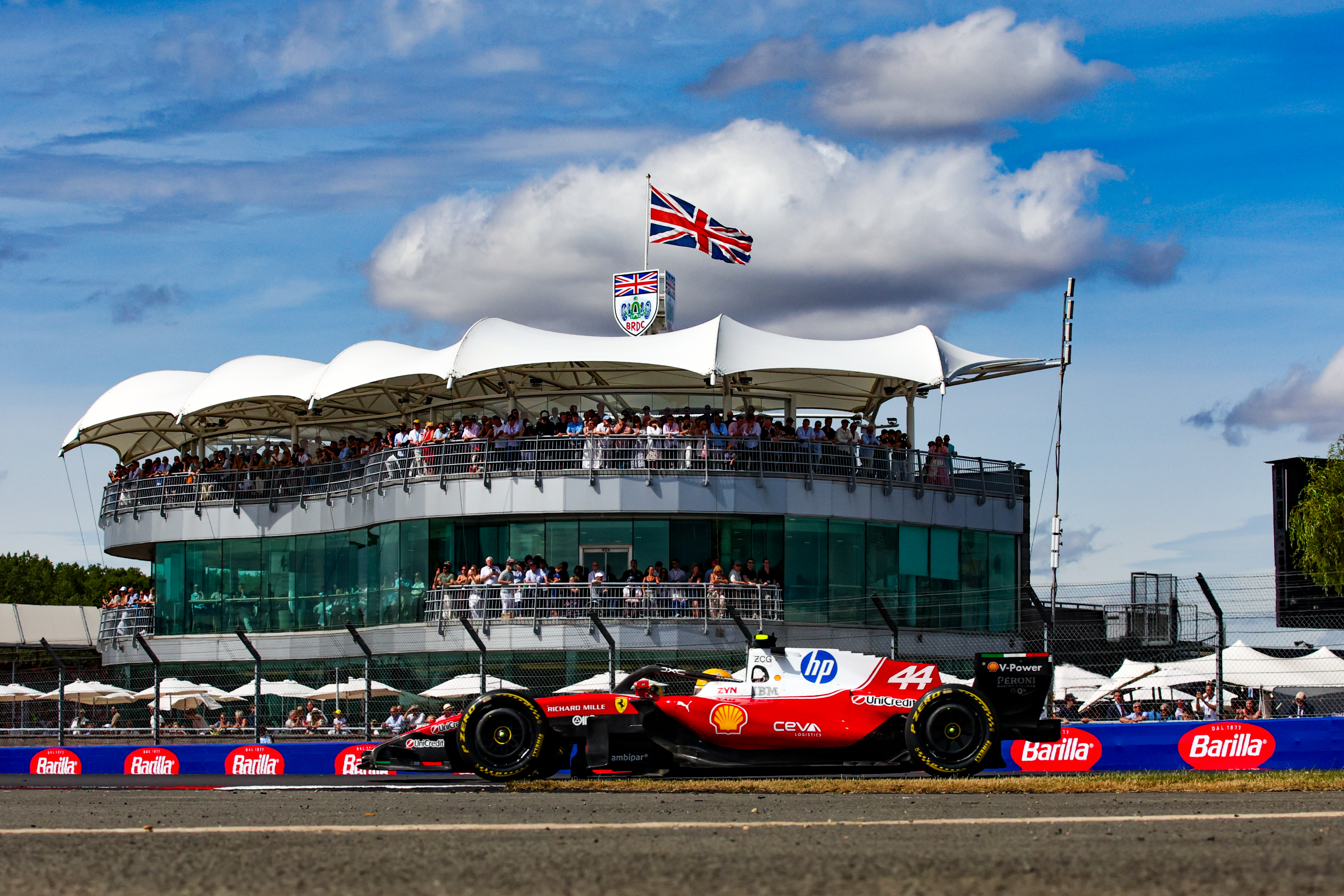
On Friday, one driver in particular stood out: Ferrari’s Lewis Hamilton. The most successful driver at Silverstone since its inception, the place named a straight after him as part of that 2010 update. It must be weird going to a track knowing they named part of it after you because you’re just that good; that honor usually comes in retirement. But Hamilton was on form, buoyed up by a massive crowd, most of whom were there to see him.
Much had been expected of a newly upgraded Ferrari engine in Austria, but a combination of altitude and heat meant we did not see it at its best. With thicker, cooler air, the gap to the Mercedes was much less, and an inspired lap from Hamilton, egged on by more than 100,000 spectators, saw him grab the sprint pole from Mercedes’ Kimi Antonelli by 11 milliseconds.
The following day, Hamilton managed to keep the young Mercedes driver at bay and held out for eight laps before the inevitable happened. But Hamilton still finished second, and less than 3 seconds back after 17 laps. That’s much less of a deficit than we’ve seen before. That afternoon saw qualifying for Sunday’s race, but this time Hamilton could only manage third on the grid. Antonelli snatched pole, but between them was Charles Leclerc, Hamilton’s teammate at Ferrari.
Leclerc has been ill at ease with his race car, and if you’re not comfortable in an F1 car, you won’t find its limit. He failed to finish in Monaco and Barcelona and finished a distant eighth in Austria, albeit after qualifying second. This past weekend looked like that trend might continue, until something finally clicked between Leclerc and his Ferrari SF-26. Both Ferraris made better starts than Antonelli with Leclerc in the lead.
Something’s broken
Then on lap 41, something broke in the steering or suspension of Antonelli’s Mercedes, possibly after riding heavily over one of the circuit’s serrated curbs. The Italian driver made another two pit stops to try to solve the problem but to no avail. He would end the race in ninth on the road but was scored 15th after being penalized for repeatedly driving off-track in an attempt to bring his damaged car home.
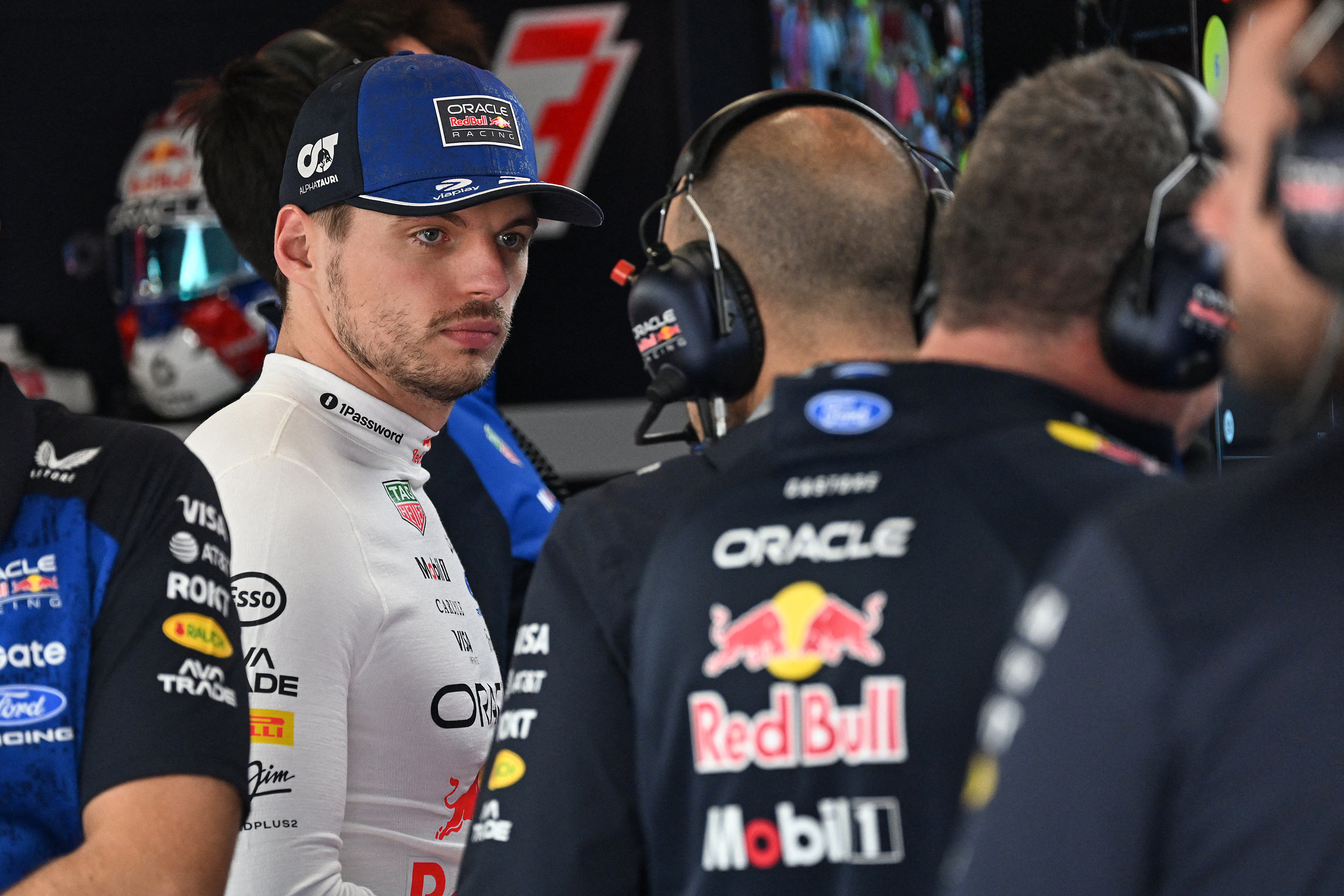
Up front, Leclerc looked set to cruise to his first win in almost two years. Then, on lap 48, the active rear wing on Max Verstappen’s Red Bull malfunctioned at Stowe corner. For 2026, F1 cars use a low-downforce configuration on the straights, then a high-downforce setting for the corners. But if front and rear wings don’t transition between the two states quickly enough, it can make the car uncontrollably unstable.
And this is what happened to Verstappen in qualifying in Austria, and now again during the race in Britain. The four-time champion had been in an engaging battle with the other Mercedes of Russell and the Ferrari of Hamilton up until this point; now speculation is stronger than ever that he might walk away from the sport at the end of the season to go GT3 racing instead.
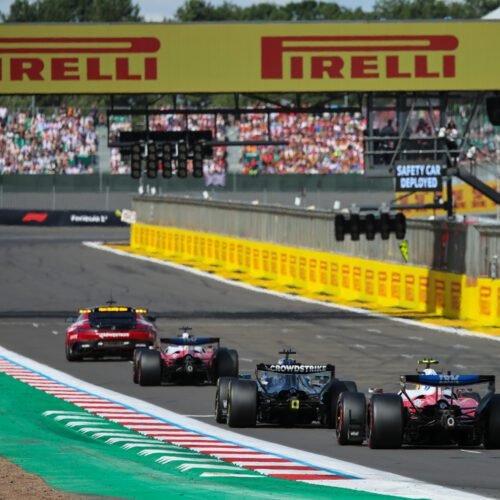
The safety car came out to allow the Red Bull to be recovered from the gravel trap it was parked in. With just four laps remaining, there was every prospect of the race finishing under caution as there wouldn’t be time to reorder the cars and then conduct a restart. Indeed, the rules state that one lap must be completed behind the safety car after the lapped cars are allowed to unlap themselves, and this only happened on lap 51. Leclerc took the win ahead of Russell and Hamilton, who swapped positions when the Ferrari made a pit stop, but the Mercedes didn’t when the safety car came out.
Unfortunately, the unlapping command also caused an automated message to show up announcing that the safety car would be in that lap, meaning a one-lap race to the end with shades of the title-deciding fiasco in Abu Dhabi 2021 (when the rules weren’t followed). But there was never an actual command issued from race control to bring in the safety car, and not enough time to bring the race back to green, and the automated message was erroneous. Eight seconds later, it was replaced by “safety car deployed” again.
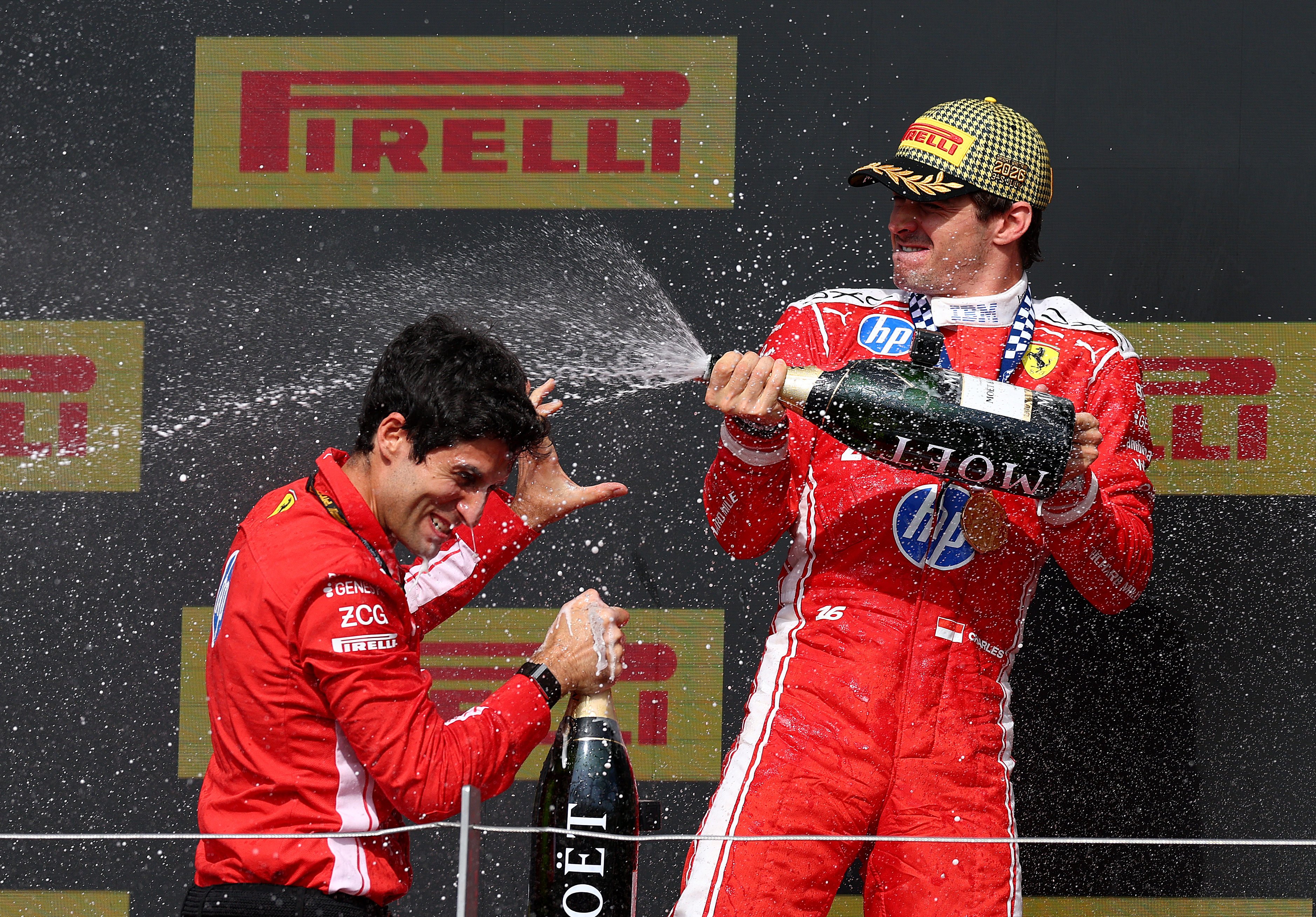
Races can and do end under cautions even if the race organizers try their hardest to avoid it. Sometimes late-race incidents can’t be cleaned up in time, even if it’s somewhat unsatisfying, although F1’s race director does have the option of a red flag and then a standing restart. Finishing under yellow flags is also easier to deal with when you know it’s going to happen, but yesterday’s on-screen display error caused a lot of false expectations and ruined the ending for more than a few, particularly after the commentators hyped it up. Here’s hoping the boffins at F1’s UK tech center in Biggin Hill can make sure it doesn’t repeat itself.