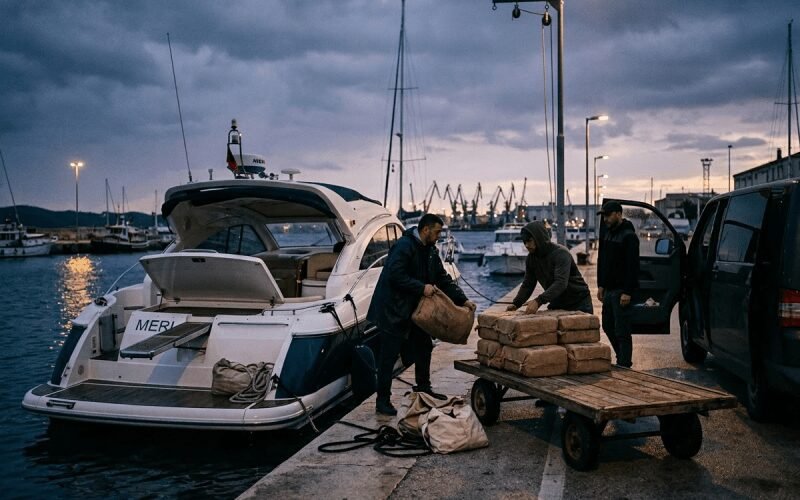
Albanian organised crime groups have significantly expanded their presence across Europe in recent years and, according to anti-mafia researcher Professor Vincenzo Musacchio, have become one of the main drivers of international drug trafficking.
In an interview, Musacchio said the groups possess substantial financial resources and increasingly rely on corruption, institutional influence and indirect infiltration rather than overt violence. He said they also use modern technology to improve logistics, communications and coordination while reducing the risk of detection.
According to Musacchio, criminal proceeds are often reinvested in businesses and industries in Albania, allowing illicit funds to be converted into apparently legitimate investments while strengthening the groups’ economic influence in Europe and beyond.
Asked whether Albania is equipped to counter the evolution of these organisations, Musacchio said he does not believe it is, citing corruption and weaknesses in the criminal justice system. He argued that authorities should strengthen asset seizure and confiscation measures, improve judicial integrity, introduce stricter prison isolation for high-risk offenders and expand the use of cooperating witnesses to support investigations.
Musacchio also reiterated his long-held view that Albania is a “narco-state”, arguing that Albanian criminal groups progressed from marijuana and heroin trafficking to becoming international cocaine brokers. He said their growing economic and political influence has been accompanied by similarities with the Italian ‘Ndrangheta, including strong family structures and infiltration into political and economic sectors.
He said Albanian criminal organisations now have a significant presence across Europe, particularly around major commercial ports including Rotterdam, Antwerp and Hamburg. According to Musacchio, investigative and judicial analyses indicate that the groups have expanded their influence in drug trafficking, prostitution and arms trafficking while establishing links with other transnational criminal organisations.
On drug interceptions, Musacchio said precise figures are difficult to establish but cited judicial statistics suggesting that only one or two out of every 10 drug shipments are intercepted, with the remainder reaching their destination. He said this underlines the need for stronger intelligence, international cooperation and financial investigations.
He also described Albanian criminal groups as commercial partners of the ‘Ndrangheta, saying these relationships have helped them establish operations in Latin America while maintaining links with major transnational criminal organisations in Europe and the Americas. He argued that European authorities confiscate less than 2% of illegally obtained assets, allowing most criminal proceeds to enter the legal economy, and called for greater coordination between judicial systems.
Reflecting on the evolution of Albanian organised crime, Musacchio said he first warned about the growing threat in 2005. He argued that groups once associated with localised criminal activity have since become major players in international narcotics trafficking, increasing their financial power through investments in several Albanian cities.
Commenting on Italy’s response, Musacchio said authorities remain behind in tackling non-native mafia organisations. He argued that Albanian groups display characteristics associated with traditional mafia organisations, including territorial control, influence networks and links with business and political figures, requiring stronger judicial responses, improved investigative coordination and more effective preventive measures.
Source: RAI News