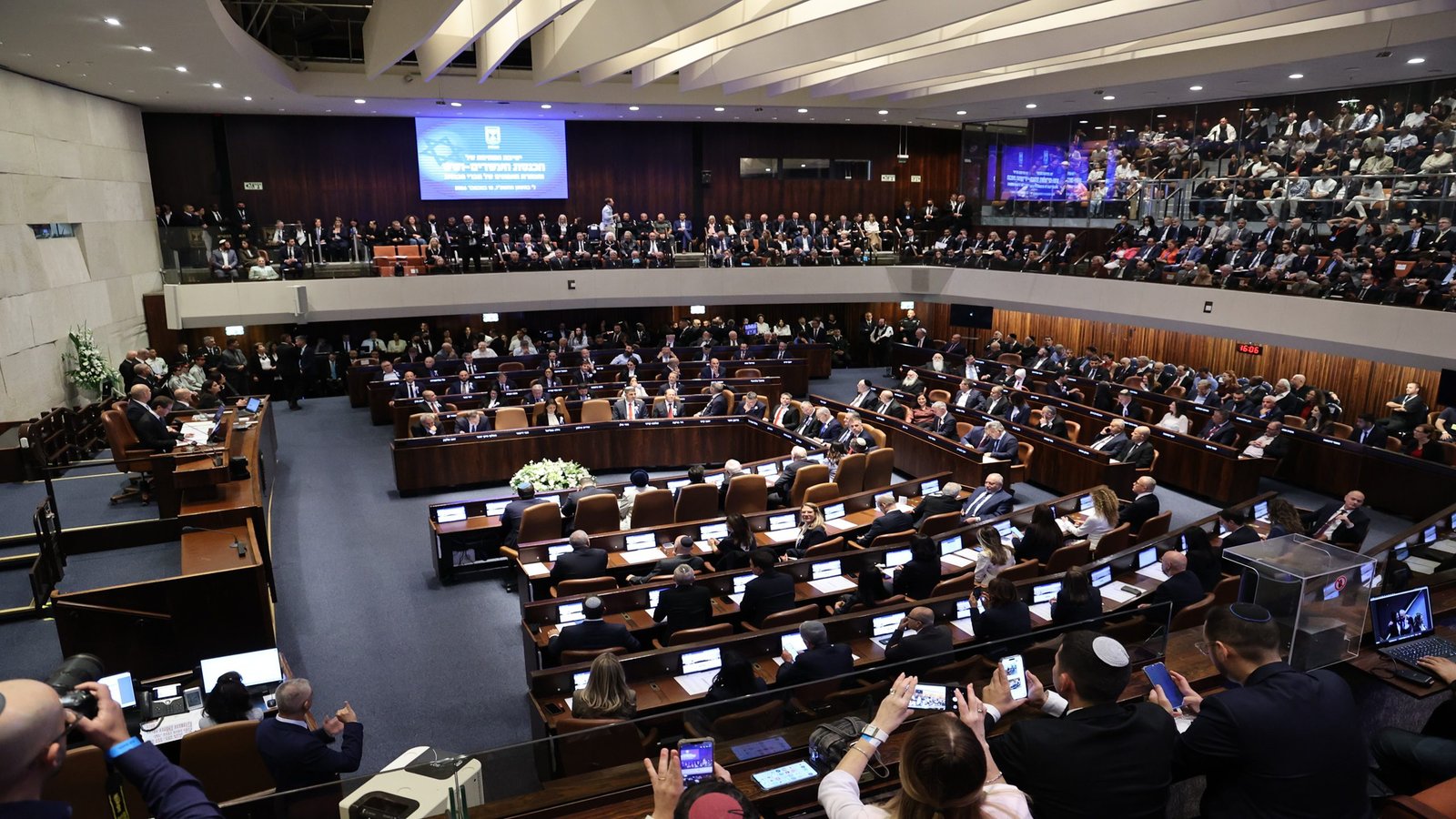
Eisenkot’s Yashar party has secured 67 lawmakers’ signatures demanding the replacement of Knesset Speaker Amir Ohana, a Netanyahu ally. A vote is scheduled for November 17, with Yashar lawmaker Matan Kahana nominated as his successor.
The opposition is also moving to establish a state commission of inquiry into the October 7, 2023, Hamas-led attacks, introduce prime ministerial term limits, and reverse elements of Netanyahu’s judicial overhaul. Its allies are seeking control of influential parliamentary committees.
But winning parliamentary votes is easier than assembling a coalition. President Isaac Herzog has given Eisenkot 28 days, with a possible 14-day extension, to form a government. His four-party alliance holds only 48 seats, while 19 belong to Arab-led parties. Netanyahu remains caretaker prime minister, although his bloc controls just 53 of the Knesset’s 120 seats.
The inauguration offered a glimpse of the divisions ahead. National Security Minister Itamar Ben Gvir interrupted Joint List leader Yousef Jabareen’s oath, prompting a warning from Ohana. Yet lawmakers across the political spectrum applauded newly elected Likud member Elisha Medan, a military reservist who lost both legs fighting in Gaza, as he stood on prosthetics to take his oath.
The coalition negotiations present an even tougher challenge. Avigdor Liberman rejects dependence on Arab-led parties and favors recruiting the ultra-Orthodox Shas and United Torah Judaism factions. Shas remains loyal to Netanyahu, while United Torah Judaism has opened preliminary contacts with Eisenkot’s camp.
Colodro explores the competing demands behind those discussions, including Arab political participation and military conscription. Eisenkot insists on “service for all,” while ultra-Orthodox lawmakers demand exemptions for religious students.
The arithmetic is unforgiving: United Torah Judaism’s seven seats and Shas’ six could give Eisenkot’s alliance a 61-seat majority, but their conscription demands threaten one of his central commitments.
Source: Iwpost.com