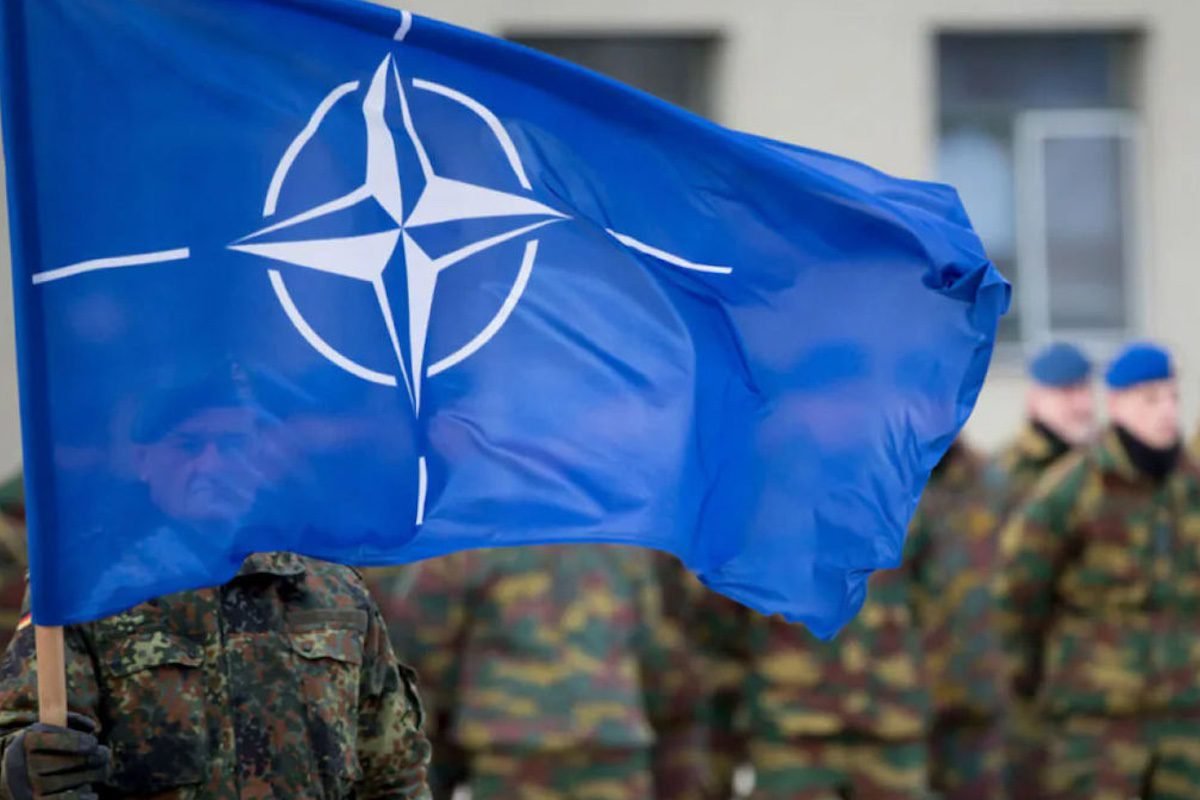
Every few years, like clockwork, the idea resurfaces from the salons of Brussels and the op-ed pages of Le Monde and Der Spiegel: Europe must build its own defense architecture, a “European pillar” of security, a NATO without Washington. The rhetoric is invariably stirring. The results are invariably modest.
The latest iteration of this perennial fantasy has been supercharged by Donald Trump and his administration’s barely concealed contempt for the alliance he once described as “obsolete.” European leaders, rattled by the new transatlantic chill and sobered by the grinding war in Ukraine, are now speaking with fresh urgency about “strategic autonomy.”
French President Emmanuel Macron, who has been making this argument since before it was fashionable, must feel vindicated. He shouldn’t celebrate too soon.
Let’s be clear about what a “European NATO” would actually require. It would demand a unified command structure, an integrated defense industrial base, a common strategic doctrine, a shared intelligence architecture, and — most critically — the political will to make binding collective defense commitments without an American backstop.
It would require, in other words, precisely the things Europe has conspicuously failed to build over the past seven decades of American-subsidized security. The obstacles are not merely bureaucratic. They are structural and, in some cases, civilizational.
Free-rider problem
For years, Washington complained that European allies were free-riding on American security guarantees, spending well below NATO’s 2% of GDP target while enjoying the benefits of Article 5.
The Trump administration turned this complaint into a cudgel. But here is the uncomfortable truth that advocates of European strategic autonomy prefer not to dwell on: the free-rider problem does not vanish simply because the Americans threaten to leave. It merely shifts.
Who, in a European NATO, plays the role of the United States? Germany, the continent’s largest economy, has spent decades cultivating a strategic culture of restraint, rooted partly in guilt over its 20th-century catastrophes and partly in a genuine pacifist civic ethos that has proven remarkably durable.
Berlin has begun to rearm in the wake of the Ukraine but the pace is slow, the bureaucracy is resistant, and German public opinion remains ambivalent.
France has the nuclear deterrent and the interventionist tradition, but an economy that has struggled to sustain its defense commitments, and a domestic political landscape that is increasingly fractured. Britain, post-Brexit, hovers awkwardly at the margins — too important militarily to exclude, too alienated institutionally to integrate seamlessly.
The smaller and newer NATO members in Central and Eastern Europe — Poland, the Baltic states, Romania — are the most motivated to invest in defense, and they have been doing so.
But they are also the most dependent on American hard power and the least likely to trust a Franco-German-led European security arrangement as a credible substitute for the American nuclear umbrella.
The nuclear question
Which brings us to the elephant in the room that European strategists tiptoe around with remarkable delicacy: nuclear deterrence. NATO’s credibility as a collective defense organization rests fundamentally on the American extended nuclear deterrent. Europe, outside of France and Britain, has no independent nuclear capability.
French President Macron has floated the idea of extending France’s deterrent to cover European partners — a proposal that is legally and strategically murky, and that countries like Poland received with polite skepticism.
Germany, constitutionally and politically, cannot acquire its own nuclear weapons. Britain’s deterrent, while real, is deeply integrated with American systems and dependent on American goodwill.
A “European NATO” without a credible nuclear backstop is not, in strategic terms, the equivalent of the current alliance. It is something considerably less. Moscow knows this. Ominously, so does Minsk — and the various hybrid actors that probe European vulnerabilities from the Baltics to the Balkans.
European defense cooperation has a long and humbling history. The joint combat aircraft projects, the interminable discussions about a common European defense procurement agency, the PESCO framework, the European Defence Fund — these initiatives are real, but they have consistently underdelivered against the ambitions attached to them.
European defense industries remain fragmented along national lines, shaped by domestic political economies in which governments protect jobs and contracts as much as they optimize for military capability.
Ukraine has exposed this starkly. When the war began, Europe struggled to supply ammunition at the scale required by a conventional land war. The gap was filled — partially and imperfectly — by American stockpiles and production capacity.
Building the industrial base to substitute for that would take years, possibly a decade or more, and require a level of sustained political commitment and fiscal investment that European electorates, squeezed by the cost of living and skeptical of defense spending, have not yet demonstrated they are willing to provide.
What Europe can and can’t build
None of this is an argument for European passivity or for the comfortable status quo ante.
The Russia of 2022 and beyond is not the Russia of the post-Cold War thaw, and the America of 2025 is not the America of 1949 or even 2001. Europeans are right to take their security more seriously and to invest in greater self-reliance. They should be doing so regardless of what Washington does.
But there is a significant difference between building greater European capacity within — or alongside — the existing transatlantic framework, and constructing a wholly autonomous European security architecture capable of replacing American power.
The first is achievable, desirable, and long overdue. The second is, in any realistic near-term timeframe, a fantasy dressed up in the language of geopolitical ambition.
The hard realist conclusion — and realism, not wishful thinking, is what the moment demands — is that Europe’s security for the foreseeable future will remain dependent on American engagement, however grudging and transactional that engagement has become.
The task for European leaders is not to pretend otherwise, but to manage that dependence more intelligently: to spend more, coordinate better, develop genuine strategic capabilities, and, above all, give Washington fewer excuses to disengage. That is not a grand vision. But it is an honest one.
The great strategic theorists remind us that there is a meaningful difference between what is desirable and what is feasible. A European NATO is, in the current political and strategic environment, desirable in concept and infeasible in practice. Europe would do well to stop confusing the two.