Syria climbed 36 places in the 2026 Reporters Without Borders ranking, but deep constraints on independent journalism remain.
[DAMASCUS] Syria’s rise in the 2026 World Press Freedom Index is a significant statistical development, but it does not in itself reflect a fundamental transformation in actual freedom of the press. The country moved from 177th place in 2025 to 141st out of 180 countries, a jump of 36 positions in a single year and one of the largest improvements globally.
Despite the scale of that improvement, Syria remains near the bottom of the global ranking. It is still characterized by an extremely fragile media environment, where security, political, and legal considerations shape journalistic practice. Its index ranking is therefore more meaningful when read in its broader context rather than as a numerical change alone.
Over the past 14 years, particularly since the outbreak of the conflict in 2011, Syrian media have experienced a near-total collapse of the traditional journalistic infrastructure. This has been accompanied by a significant hindrance to independent field reporting, turning Syria into one of the most complex and dangerous environments for journalists.
Estimates by the Committee to Protect Journalists indicate that more than 130 journalists have been killed in direct connection with their work, while Reporters Without Borders (RSF) estimates the total number at around 300 deaths when broader categories of media workers are included.
Regarding arrests and enforced disappearance, data from the Syrian Journalists Association document more than 450 cases between 2011 and 2024, reflecting the scale of violations suffered by journalists and the prevalence of unresolved cases due to the difficulty of obtaining accurate information inside the country.
This shift has reshaped Syrian media into a fragmented landscape, divided among state-run outlets, regional media operating in different areas, and organizations working from abroad. As the conflict escalated, many journalists were forced to leave the country, leading to the emergence of exile-based media networks that played an important role in covering events yet remained disconnected from field reporting inside Syria.
Within the country, journalists have faced multiple constraints, ranging from direct security risks to legal restrictions and limited access to information. As a result, journalistic practice is carried out under indirect and multilayered forms of oversight.
The improvement recorded in the 2026 report is linked to several factors, most notably the decline in the intensity of military operations compared with the peak years between 2012 and 2018. That contributed to reducing the direct risks faced by journalists during field coverage, while the report also recorded a relative improvement in certain categories, particularly those related to physical safety, although they remain at low global levels.
Digital transformation has also played an important role in reshaping the media landscape. Online platforms and social media have created more opportunities for publishing and exchanging information, especially for independent journalists or those operating outside the country, though they have also introduced challenges related to credibility and the spread of unverified reports.
Regarding the state’s role, available data point to ongoing efforts in recent years to reshape the media sector. These include updates to some laws governing journalism, changes to state media institutions, and a somewhat more open public discourse than in the conflict’s early years. However, according to RSF, these steps have not amounted to a fundamental improvement in press freedom
Laws restricting freedom of expression remain in place, and access to information is still subject to institutional and administrative constraints, particularly regarding politically or security-sensitive matters. The media outlets’ lack of independence from executive authority also remains one of the main obstacles to the development of a free media in Syria.
Official and professional reactions to the new ranking have differed. The Syrian Ministry of Information said the improvement is a direct result of new measures and represents an achievement in enhancing professionalism and media openness.
The Syrian Journalists Union described the ranking as transcending numbers, calling it a culmination of efforts by media institutions and journalists as well as evidence of improved national media performance and the restoration of its former role. In contrast, the Syrian Journalists Association offered a more cautious interpretation, saying the improvement remains limited and does not reflect a fundamental transformation in press freedom, given ongoing challenges and violations.
The improvement in the global ranking should be interpreted with caution
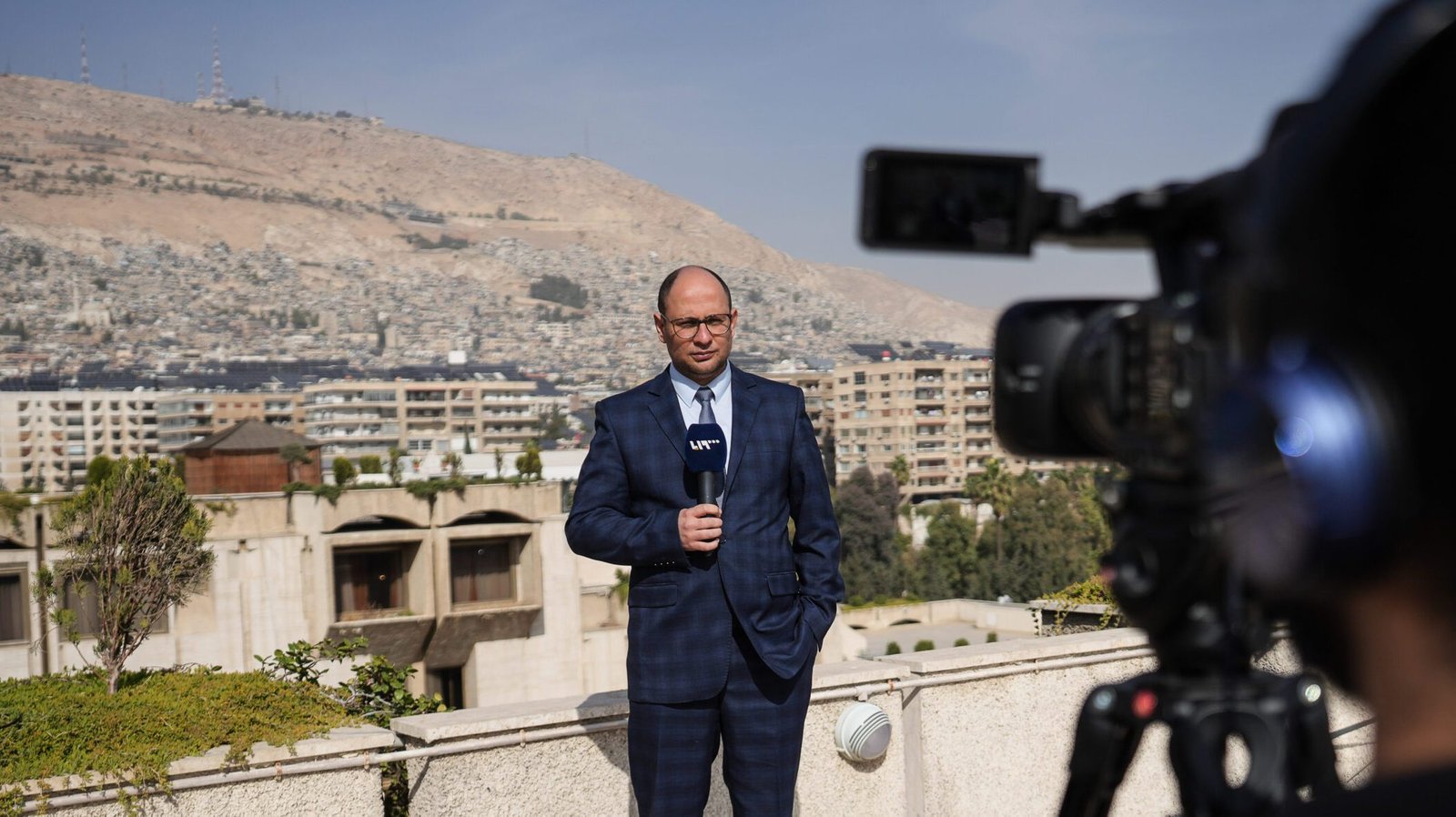
Independent Syrian journalist Raeed Khateeb, working inside the country, told The Media Line that “the improvement in the index reflects a less dangerous reality compared to the early years of the conflict, but that does not mean journalism is operating freely.”
He added: “Journalists today face indirect constraints, starting with difficulty accessing information and extending to self-censorship imposed by years of war.” He noted that “the risks have not disappeared, but they have changed in nature—from direct military threats to more complex legal and professional pressures.”
Jordanian journalist Khader Malkawi told The Media Line that “the improvement in the global ranking should be interpreted with caution, as it is primarily linked to a reduction in violence rather than a comprehensive improvement in media freedom,” explaining that “international indicators often reflect security changes more than structural changes in media systems.”
Journalist Ibtisam Darwish, who works with a Syrian state-affiliated media institution, offered a more analytical perspective, saying that “the index is based on four main pillars: political context, legal framework, economic environment, and security situation. In the Syrian case, the security factor played a decisive role in improving the ranking, while the other pillars still suffer from deep imbalances, particularly regarding independence and pluralism.”
The index is based on four main pillars: political context, legal framework, economic environment, and security situation
Despite the relative improvement in ranking, the reality of journalism in Syria remains defined by contradiction. There is more room for digital publication and less direct danger in some areas than during the peak years of the war, but the legal and institutional environment still does not support genuine press freedom.
The continuing divide between domestic and foreign-based media also affects the depth, diversity, and credibility of coverage. Syria’s rise in the 2026 Press Freedom Index is therefore real as a statistical shift, yet limited in what it says about structural change in the country’s media landscape.