We loved the first season of Daredevil: Born Again, Marvel’s hotly anticipated revival of the popular series in the Netflix Defenders universe, and its sophomore outing did not disappoint. The show just wrapped its critically acclaimed second season, with a third already well underway—all part of MCU’s Phase Six master plan.
(Some spoilers below, but we’ll give you a heads up before any major S2 reveals.)
From its inception, Daredevil: Born Again was built around the conflict between Matt Murdock/Daredevil (Charlie Cox) and Wilson Fisk/Kingpin (Vincent D’Onofrio), with Fisk attempting to leave his criminal past behind as the newly elected mayor of New York, and Murdock determined to abandon his vigilante activities as Daredevil to focus full time on his law practice.
Those intentions prove to be relatively short-lived, as personal tragedy and political machinations eventually drove both men down their familiar old paths. The S1 finale saw Fisk pulling a major power move by declaring martial law in New York City and outlawing any masked vigilante heroes. The second season takes place six months later and deals with the inevitable fallout of that momentous decision. Murdock and his vigilante allies have been forced underground, while Fisk imposes multiple harsh authoritarian measures on the city to cement his power.
S1 proved Born Again to be an entertaining, character-driven series that felt very much a part of its Netflix predecessor while still having its own distinctive feel. Much of that was due to cinematographer Hillary Fyfe Spera, working in conjunction with the broader production team to bring Born Again’s distinctive aesthetic to vivid life. (You can read our 2025 interview with Fyfe Spera here.) Fyfe Spera and her team returned for S2, giving us a welcome continuity to the series’ overall design.
For the first season’s overall look, Fyfe Spera drew much of her inspiration from 1970s films like Taxi Driver, The French Connection, The Conversation, and Klute. For the second, she cites Michael Mann’s 1981 film Thief as a major inspiration. “It’s set in Chicago as opposed to New York, but the texture of that film, the grit of it, the use of darkness and contrast, was a really good reference for us,” Fyfe Spera told Ars. “Our goal was to take where the story left off [in S1] and evolve it, and that lent itself to getting a bit darker and grittier.”
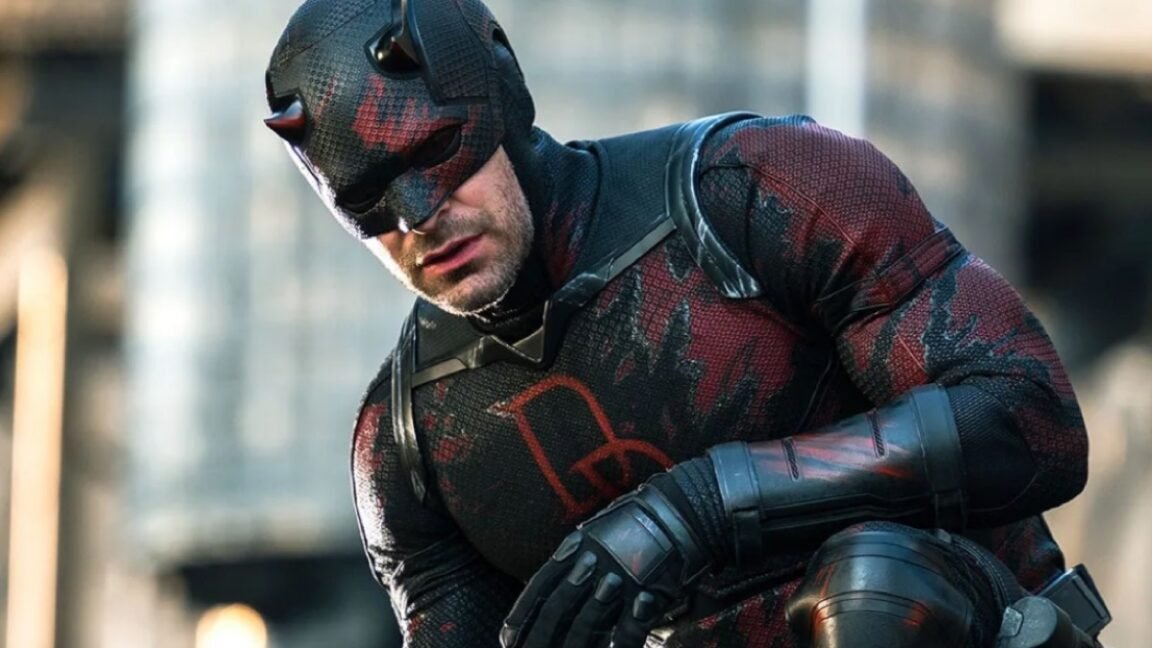
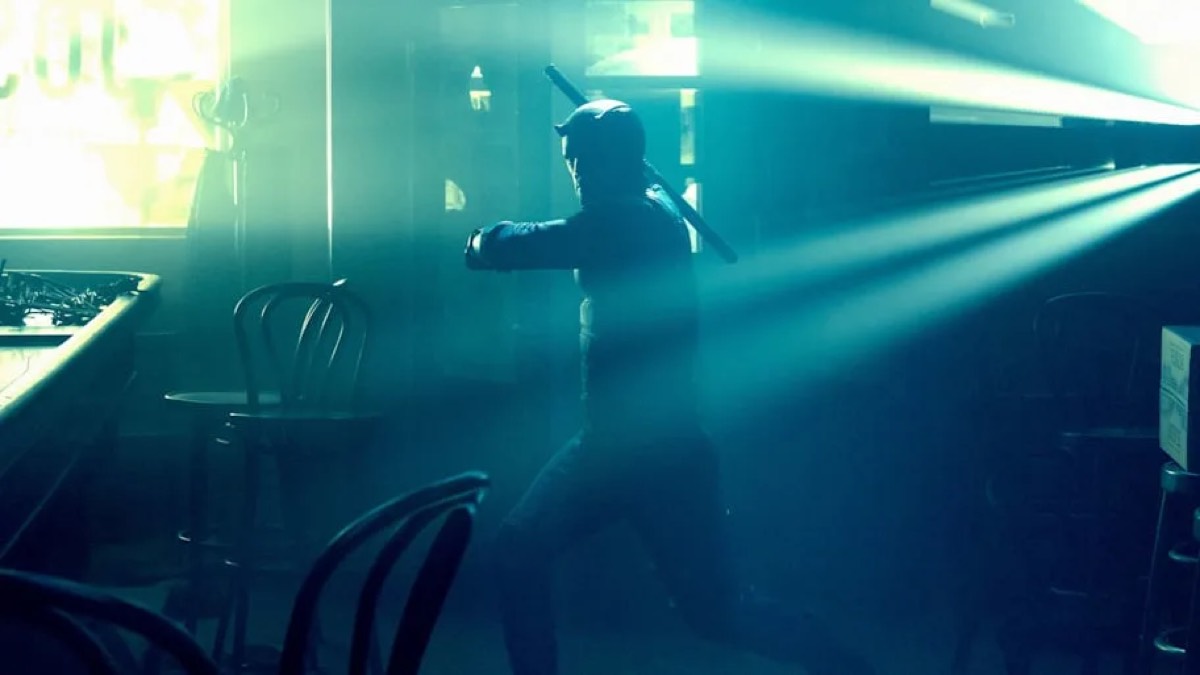
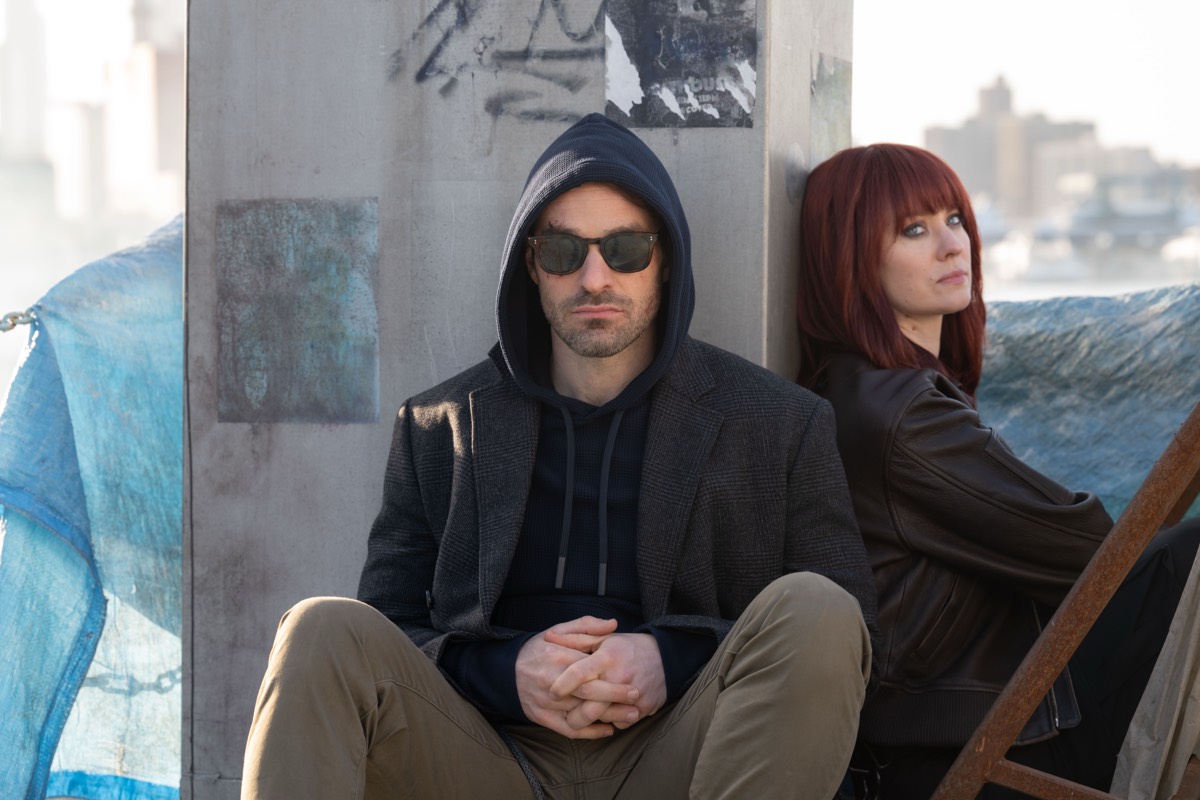
S2 also preserves the crucial central dynamic of Murdock and Fisk as two sides of the same coin, darkness and light. For the first season, Fyfe Spera translated that into two distinct camera languages. Last year, as Fisk trended back toward his Kingpin persona, she lit him with more white light, representing institutional oppression; Murdock, by contrast, was typically filmed in a warmer, red-lit environment. That visual vocabulary has been extended to the second season, augmented by a new black Daredevil suit with a red double D emblem on the chest—straight out of the 2010 Shadowland comic storyline.
Reds and whites
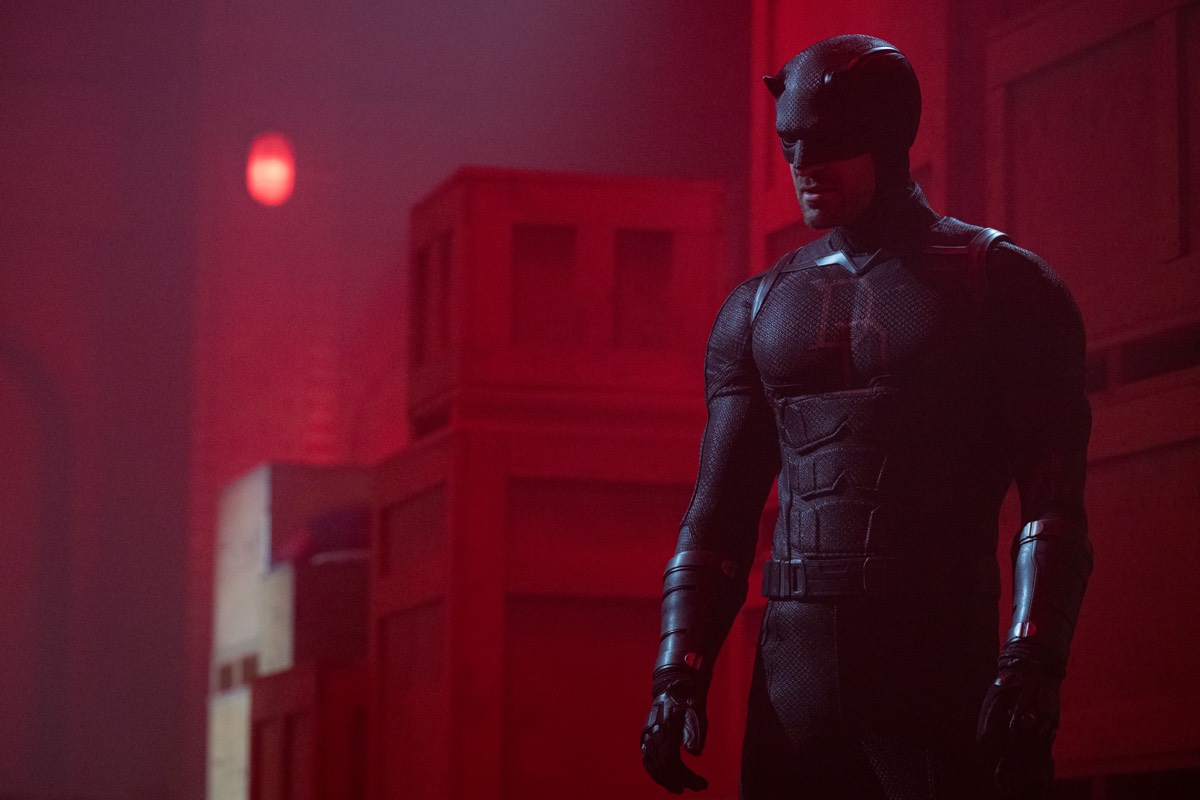
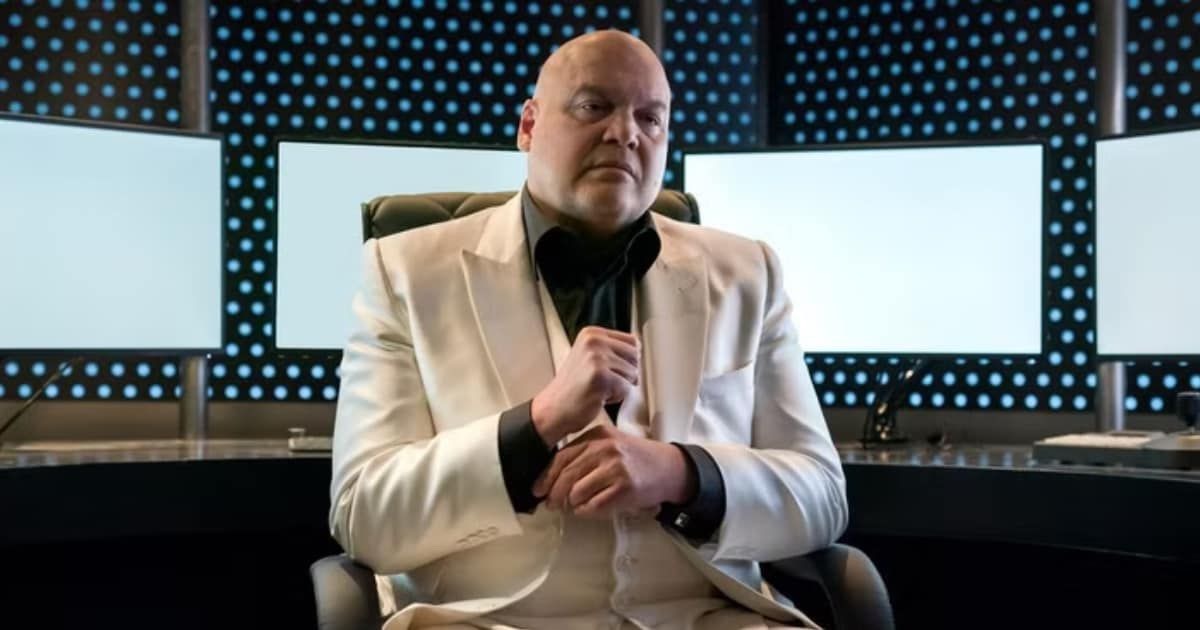
“There’s the vigilantes versus the institution of Fisk this season,” said Fyfe Spera. “[That theme] lent itself to opportunities to use darkness as a way to create those separate worlds in a really specific way. Fisk is hiding in the light, and the vigilantes are hiding in the darkness, but [in this case] light does not represent anything holy or just. So the vigilante world is warmer and more intimate, featuring the use of longer lenses, and the Fisk world feels more stark and white, with a more controlled dolly-mounted camera and very specific, centered frames.”
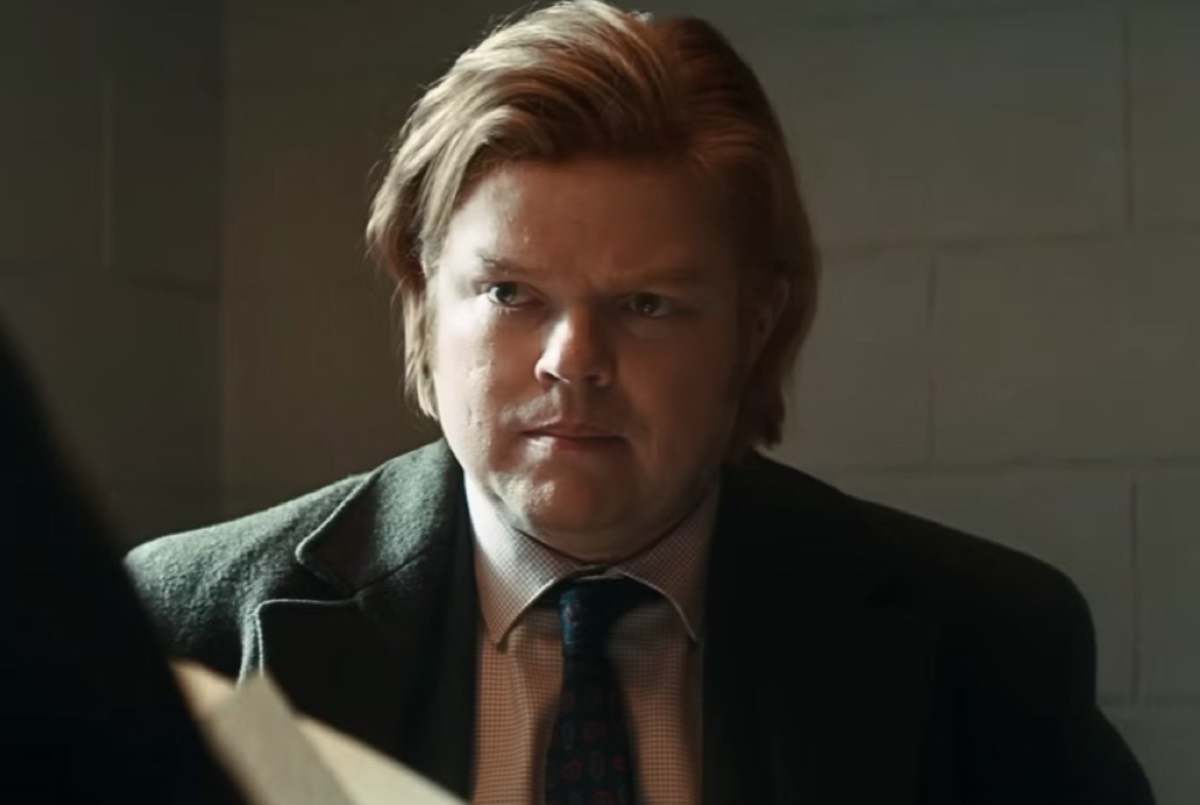
Fan speculation ran rampant about the apparent return of Matt’s old law partner, Foggy Nelson (Elden Henson), brutally gunned down at the start of the series’s pilot episode. Foggy is still dead, guys, sorry. But he does appear in pivotal flashback scenes as Matt is wrestling with his conscience, and those scenes were designed to evoke the original Netflix series, per Fyfe Spera.
“Not only did we go back to the spherical aspect ratio—as opposed to [Born Again’s] anamorphic screen—but we really wanted to lean into the greens and yellows with really saturated lighting,” she said. “It was fun to go back and call upon that DNA aspect of the show. We tried to stay true not just to the Netflix version but to the myth of Daredevil, of what both series have built up in terms of the story.”
The second season kicked off with a big set piece on a cargo ship in Red Hook’s free port. Fyfe Spera confessed to being a bit intimidated at first by the unique challenges of filming at that location, with no blue screen, despite living near the site and being familiar with the local waterways. “We’re going to do stunts on the deck, bring cameras there, a crane, and that entails [dealing with] tides, wind, currents, fog, cold—it’s a whole force of nature,” she said.
Staying true to the myth
Her team collaborated with a Staten Island ship and tugboat company to pull off the very complicated logistics, starting with figuring out how to anchor the cargo ship in such a way that the boat wasn’t completely fixed. Lighting posed another challenge, since she wanted to include the kind of practical lighting one would use on the ship: sodium lights, LED sources, and so forth. The team also used drones for critical back lighting to get full 360 coverage, although the drones only had a 12-minute runtime, so this required careful coordination with the performers and manned camera crew. She adopted a similar interactive lighting approach for the scenes shot in the ship’s undersection, timed to the beats of the choreography.
“You have to be on your toes,” said Fyfe Spera. “We learned the choreography with the cameras and stunt performers, but we also had to learn it with the drone path, teach the drones where to fly consistently and hit the performance with a backlight throughout. If anything was off, the whole thing would fall apart. I’m so fortunate that we had the same team from S1, where we can finish each other’s sentences and everyone knows people’s abilities and how to push them. It’s a really collaborative process.”
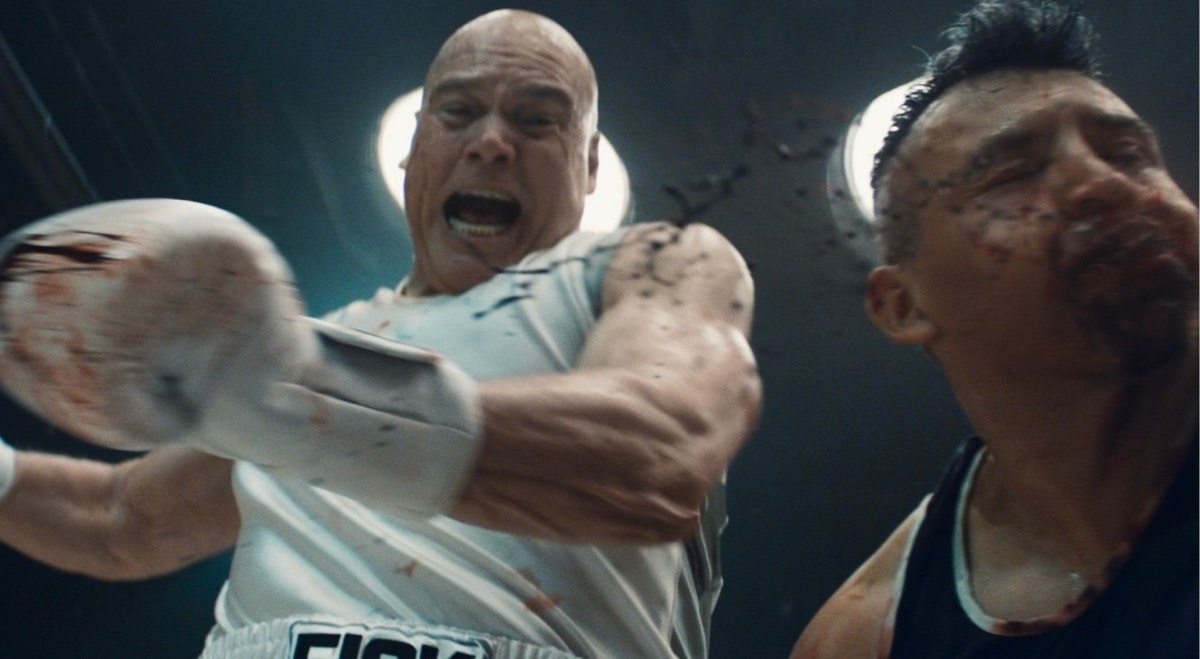
Fyfe Spera credits stunt coordinator Phil Silvera and gaffer Charlie Grubbs with helping her capture the many action sequences and fast-paced fight choreography, such as Bullseye’s (Wilson Bethel) brutally efficient attack on Fisk’s anti-vigilante task force (AVTF) goons in a diner, or Fisk’s equally brutal beatdown of his opponent in a public boxing match.
“We want to show cause and effect, always,” she said. “There’s an A side and a B side but instead of cutting from A to B, we show [the transition] by panning with the camera or otherwise revealing it in some way. The violence is not sensationalized, where nothing comes of it. You are forced to see the result of the violence and you see the characters struggle with that. We were able to make the camera athletic enough to [capture] that. Showing it in a longer take makes it feel more authentic. It plays out so you can watch the whole arc of it.”
There were two sequences that Fyfe Spera is particularly fond of. The first is the episode 2 altercation in a bodega, which quickly escalates into an outright riot, culminating with Angela del Toro/White Tiger’s (Camila Rodriguez) Aunt Soledad (Ashley Marie Ortiz) being arrested by Fisk’s AVTF goons on a trumped-up charge. “It’s a scene that mirrors a lot of events that are unfortunately happening right now, so it meant a lot to me to get it right,” said Fyfe Spera. “We used a lot of practical lighting, like flashlights and headlights, to make the scene feel disorienting and hard to watch.”
WARNING: Major spoilers below.
Mirrored moments
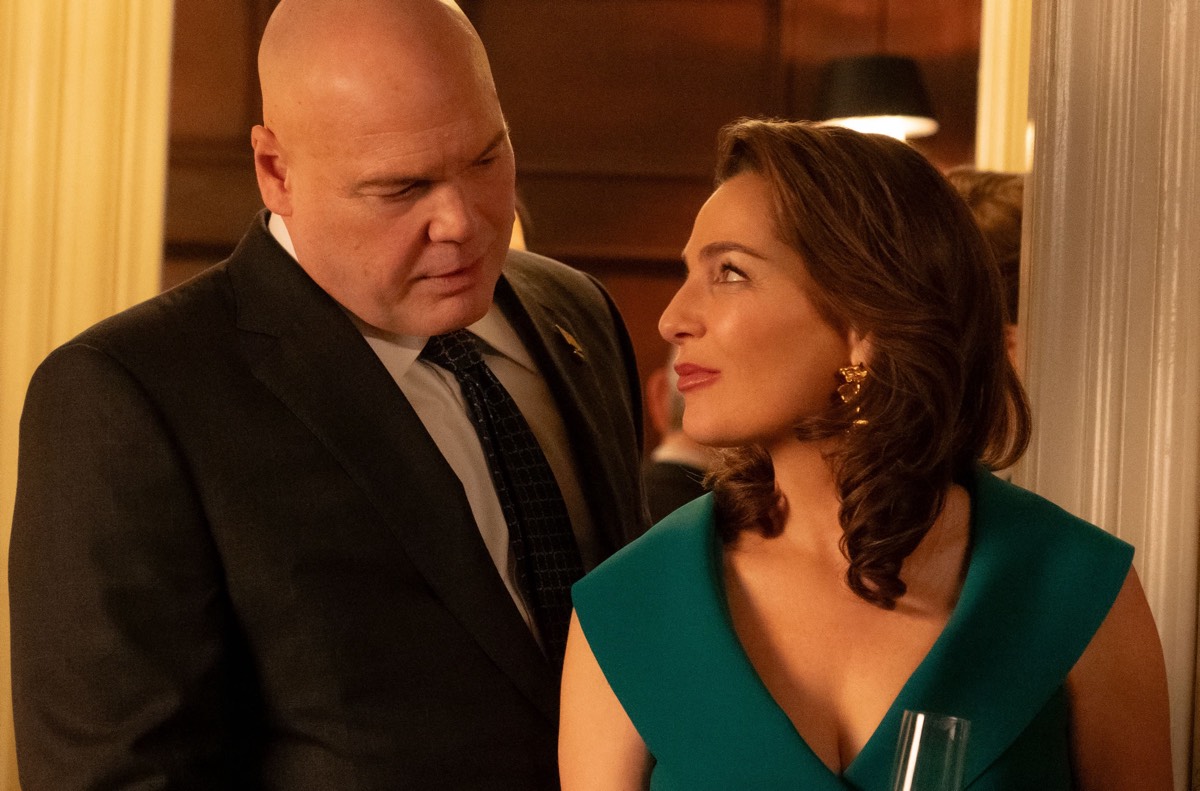
Fyfe Spera’s second favorite sequence was the death of Fisk’s wife, Vanessa (Ayelet Zurer), in episode 5. The love story between Fisk and Vanessa has been a major linchpin of both the Netflix and Disney+ series. She humanized the monster and brought out his softer, art-loving side. Granted, Vanessa is ruthless in her own right, orchestrating Bullseye’s killing of Foggy in S1. That act created some tension between the two, but together, they are a force to be reckoned with.
The relationship between Matt and Karen Page (Deborah Ann Woll) this season is a mirror image of Fisk and Vanessa. Fyfe Spera described the pairings as “two power couples who need each other in desperate ways. It’s like those relationships during wartime that you know are probably doomed, ultimately, but they’re the only safe harbor.”
So when a shard of glass pierces Vanessa’s skull in the chaos that erupts when Bullseye tries to take out Fisk after the mayor’s brutal victory in the ring, and she collapses, the stakes are suddenly very high indeed for the mayor. Initially, it seems as if Vanessa will survive, but she finally succumbs to her injuries, and we watch Fisk’s tough, controlled facade crumble to pieces as she dies. It’s a powerful, heartbreaking scene, anchoring one of the single best episodes of television you’re likely to see this year.
“He’s completely broken down and all his defenses are gone,” said Fyfe Spera. “He can’t do anything to bring back the woman he loves. So our camera language changes. We used handheld cameras and longer lenses to make it feel really human and intimate—the last calm before the storm, because Vanessa is his anchor and he loses that. It was an emotional beat. You could have heard a pin drop on that set, everyone was keyed in on being there for the actors. And Vincent and Ayelet just nailed it.”
All episodes of Daredevil: Born Again S2 are now streaming on Disney+.