China has responded to the joint US-Israeli attacks on Iran with strong diplomatic condemnation. In an article published on March 1, China’s state-run Xinhua news agency called the attacks a “flagrant violation” of the purposes and principles of the UN charter. The same article called the intervention a departure from “fundamental norms of international relations”.
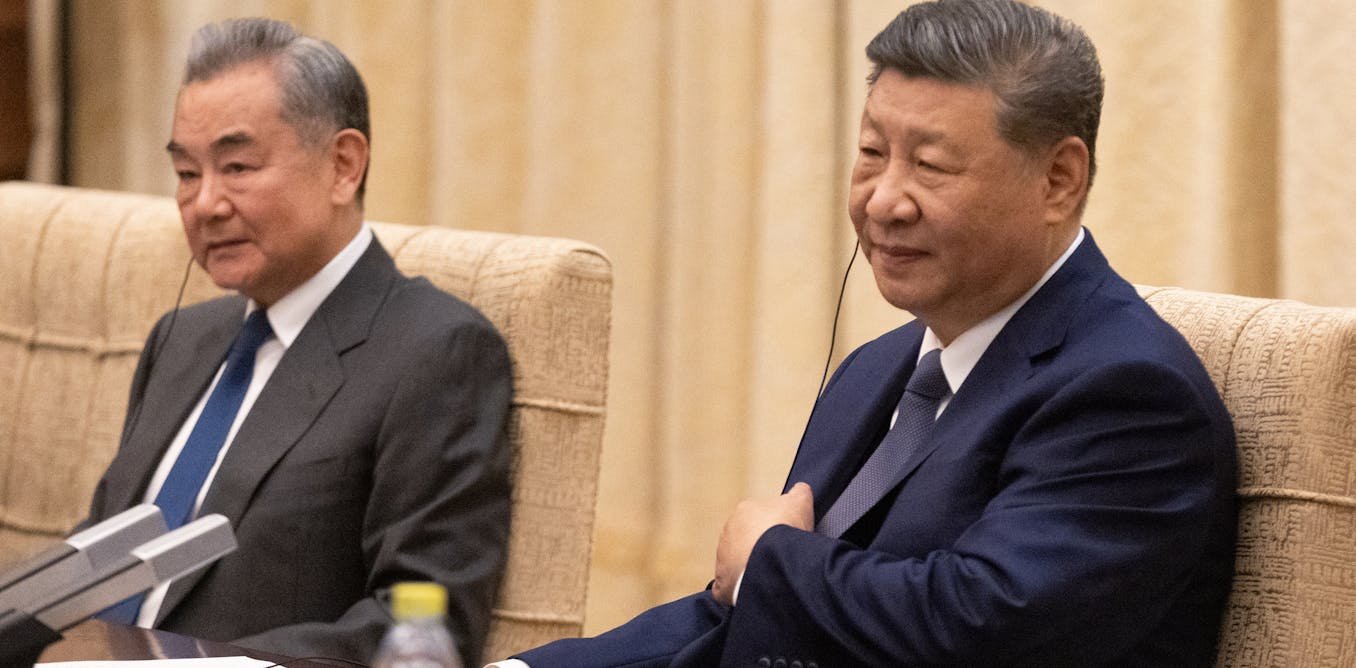
This reaction resembled China’s response to the US capture of the former Venezuelan leader, Nicolás Maduro, in early January. At that time, Chinese officials condemned what they described as a violation of international law. The Chinese foreign minister, Wang Yi, warned that no country should act as a “world policeman” or “claim itself to be an international judge”.
Beyond diplomatic condemnation, China’s most significant contribution to the conflict in Iran so far has come through its satellite navigation system, BeiDou. In recent years, BeiDou has emerged as a possible alternative to the dominant Global Positioning System (GPS), which is owned and controlled by the US government.
During the 12-day war between Iran and Israel in 2025, widespread GPS jamming caused significant disruption to Iranian civilian and military systems. Deactivating GPS and switching to BeiDou has thus given Iran’s military more strategic depth. It has done so by, for example, enabling better monitoring of American military assets.
The conflict in Iran is likely to lead to several issues for China. Iran is a key source of oil for the Chinese government, exporting more than 520 million barrels of crude oil to China in 2025. Only Saudi Arabia supplied China with more oil than Iran that year.
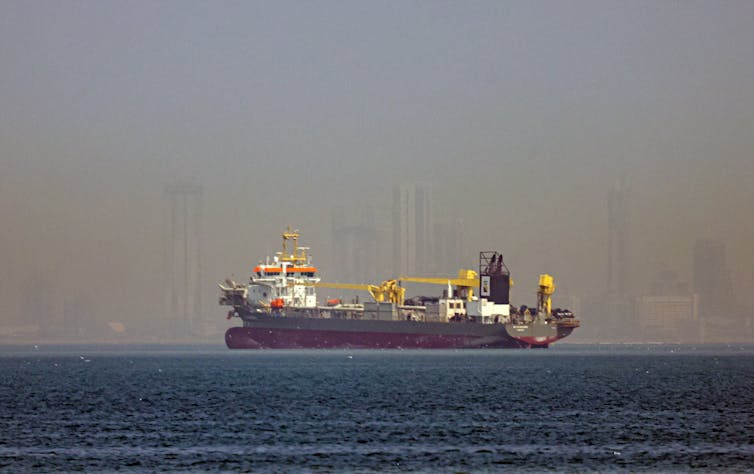
What effect the conflict ultimately has on Iranian oil exports remains to be seen. But it is already causing significant disruption to the strait of Hormuz, the main route connecting Iranian ports in the Persian gulf and also some of the Gulf region’s other major oil suppliers to the open ocean.
The economic pain caused by this disruption is likely to be felt acutely by China, which imports more than half of its crude oil from countries in the Gulf.
At the same time, the perceived weakness of China in failing to respond to the conflict proactively may make some states cautious about pursuing a closer relationship with Beijing. Some countries, particularly in Latin America, have already looked to address their overreliance on China over the past year following pressure and threats from the US government.
In January, for example, Panama’s supreme court invalidated a contract that had allowed Panama Ports Company, a subsidiary of a Hong Kong-based firm, to operate two ports on the Panama canal. The ruling came one year after Trump threatened to take control of the canal to limit Chinese influence over the waterway.
However, it is equally possible that the war assists Beijing’s wider efforts to position itself as a global counterbalance to the US. Countries that had previously maintained frosty relations with Beijing such as Canada, Germany and the UK have already all looked to boost economic ties with China in recent months amid concerns about the reliability of the US as a partner.
And Wang Yi used his appearance at the Munich Security Conference in February to speak of the need for the UN and more global cooperation and collaboration. The unpredictability of the Trump administration, most recently displayed by its decision to attack Iran, may serve to strengthen China’s message of stability.
Meanwhile, Beijing may point to Iran’s retaliatory strikes against the Gulf states as a warning for countries of the consequences of aligning with Washington. This may raise questions among traditional US allies in Asia such as Japan and South Korea over whether the alliance system in the region that has long been maintained by Washington can truly guarantee the security of these states.
Pivot to Asia
While it is difficult to predict how the conflict in Iran will play out, some analysts view a drawn-out war as a possibility. This scenario also has implications for China, as it could distract the US away from its pivot to Asia. The US has long wanted to shift its foreign policy focus away from Europe and the Middle East towards the Indo-Pacific to counter the rise of China.
The US is no stranger to protracted wars in the Middle East, having become bogged down in conflicts in Iraq and Afghanistan since the early 2000s. Both of these wars significantly hindered and delayed the pivot to Asia, leading to what some observers call a “lost decade” for the US that allowed China to expand its influence.
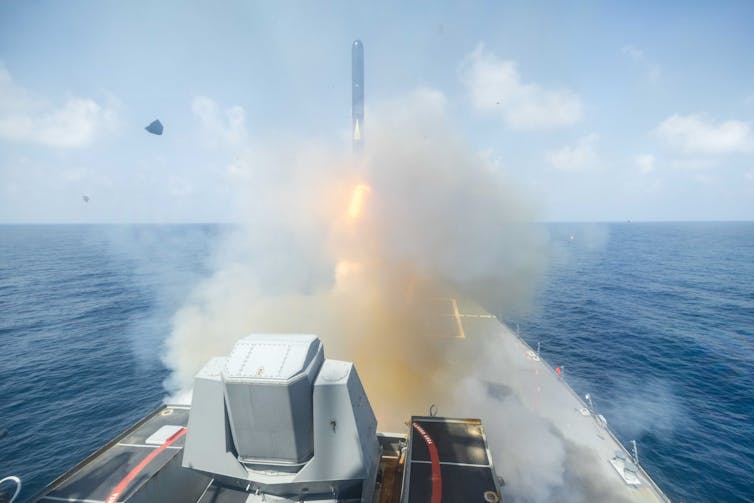
A long entanglement in Iran would drain resources that might otherwise reinforce US deterrence in the Indo-Pacific, creating an opportunity for China to further to cement its role as the dominant regional player in Asia. And it could also help Beijing with its preparations for future conflicts.
The war in Iran is fertile ground for China to study American and Israeli weaponry. This may inform its future military strategy. The demonstration of the military value of drones in Ukraine, for example, has been key in China’s decision to develop and test new types of drones and drone swarm technologies.
The Iran conflict may inflict short-term damage on China economically. But, as time goes on, we may look back on this moment as a key point in China shoring up its influence across Asia and the world.