This week brought two Indonesia stories that sat side by side but pointed in different directions.
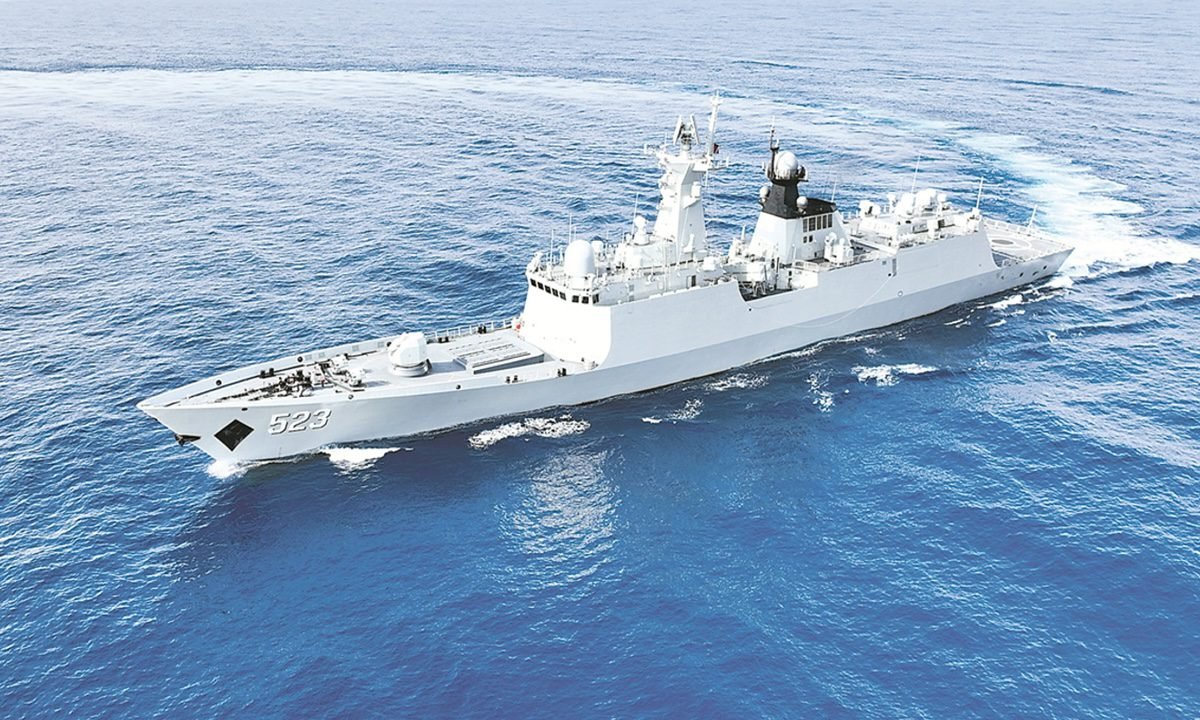
In Jakarta, US Under Secretary of War for Policy Elbridge Colby met Indonesia’s defense minister, Sjafrie Sjamsoeddin, as part of a Southeast Asia tour that also took him to the Philippines, Thailand and Cambodia. At almost the same time, China’s Global Times reported that a Chinese warship, the Honghe, would hold a joint navigation exercise with an Indonesian navy ship in mid-August, in waters east of Taiwan.
One event was public and photographed, with gifts exchanged and statements about strengthening defense ties. The other was announced through a short report from a state-run Chinese outlet, in plain and calm language, with no press conference to match it. Both, in their own way, were about the same thing: winning a bit more trust and standing from Jakarta.
It is worth asking whether the timing was planned or simply coincidence. Indonesia is the largest country in Southeast Asia, sits on major shipping lanes and has the biggest economy and population in the region, so both Washington and Beijing have long wanted closer military ties with it. Either way, a friendly Chinese exercise announced during a high level US defense visit is a useful reminder of how much competition goes on quietly around Indonesia, even when it is not the headline story.
The Global Times report itself deserves a close read. It describes the coming drill in soft terms: communication practice, supply exercises, and language about deepening cooperation and “safeguarding regional peace and stability.”
But the same article, without much transition, also includes footage of the Honghe facing off with a much larger foreign warship near the Taiwan Strait earlier this year, a 20 hour standoff in which the two ships came within one to two hundred meters of each other. Placing a friendly drill announcement next to a clip of a tense confrontation is not an accident. It links Indonesia’s navy, even loosely, to a show of Chinese strength near Taiwan, one of the most sensitive flashpoints in the region.
Indonesia and China do have a real history of naval cooperation, though it has been uneven. Their first joint drills, known as Sharp Knife, were suspended around 2015 after friction over illegal Chinese fishing near Indonesia’s Natuna Islands, waters Jakarta considers its own but where Beijing claims historic fishing rights. Bilateral drills only resumed in 2021, and interest picked up again after 2024, when President Prabowo Subianto met China’s foreign minister to discuss restarting joint exercises.
Seen against that history, this drill looks less like a sudden shift and more like the next step in a slow rebuilding of ties once frosty over Natuna.
Indonesia trains with other militaries too, often in the very same disputed waters. Jakarta has hosted the Multilateral Naval Exercise Komodo, led the first ASEAN Solidarity Exercise in the Natuna Sea in 2023 and holds the large annual Garuda Shield exercise with the United States. Its foreign policy has long been described as “free and active,” meaning it avoids joining either side and tries to keep good relations with everyone, including Russia, which has also held naval drills with ASEAN.
Seen that way, a drill with China this month and a meeting with a US official the same week could simply be Jakarta doing what it always does, keeping its door open to all sides.
Still, the choice of location east of Taiwan raises a fair question that deserves a clearer answer than either government has given so far. Was this picked mainly for practical reasons, tied to the route Chinese ships were already sailing, or does it also serve as a signal, showing China can bring other navies into waters close to a dispute many nations try to stay away from?
Indonesian officials have not explained why this stretch of water was chosen, and Chinese state media is not a neutral source on that question. Its language about “peace and stability” reflects Beijing’s own framing, not an independent account. The same caution applies to Washington, whose own statements about the tour speak of building “durable peace through strength,” a phrase just as chosen as Beijing’s.
None of this means Indonesia has done anything wrong. Small and mid sized countries here are used to managing pressure from bigger powers, and hedging between them is a reasonable strategy, not a betrayal of either side. Indonesia has shown before that it can accept help from China without giving up its own position, as when Beijing sent rescue ships to assist after an Indonesian submarine sank in 2021, an offer accepted even as trust over Natuna remained thin.
But when a naval exercise is tied, even by name, to waters near Taiwan, the public deserves a plainer explanation from Jakarta about what it involves and why that location was chosen.
Quiet announcements that arrive during high profile visits are worth noticing, not because they prove a hidden plan, but because they show how easily ordinary military cooperation can be used to send a message that has little to do with the exercise itself. Jakarta does not need to choose between Washington and Beijing. But it does need to keep explaining its choices clearly to its own people, especially when those choices touch a place as sensitive as the waters near Taiwan.
Bhima Yudhistira Adhinegara is the executive director of the Center of Economic and Law Studies (CELIOS). Muhammad Zulfikar Rakhmat is the director of the China-Indonesia and MENA-Indonesia desks at CELIOS.